
EC & AI Commerce News Digest (January 30, 2026)

Akihiro Suzuki
Twitter
Source: www.ecommercetimes.com
Key Takeaways
- A major gap exists in agentic commerce payment infrastructure, making bot payment standardization an urgent priority
- Amazon Rufus moves beyond debate to prove real sales impact, validating the effectiveness of agentic shopping
- Mastercard completes Australia's first AI agent payment, accelerating agentic commerce commercialization
Top Stories
Major Gap in Agentic Commerce Payment Infrastructure — Bot Payments Remain Underdeveloped

Bot payments lag in agentic commerce

Within the emerging world of agentic commerce, a broad gap exists between bot shopping and autonomous payments.
According to Payments Dive, a significant gap exists in the world of agentic commerce between AI bots' ability to search and compare products and their ability to autonomously complete payments.
AI shopping agents are rapidly improving their capabilities in product search, price comparison, and optimal selection recommendations, but the actual payment process still requires human intervention. The lack of infrastructure, authentication frameworks, and standard protocols for bots to autonomously complete payments represents the biggest bottleneck to mainstream agentic commerce adoption.
This challenge is an area where major payment companies like Mastercard and Visa have begun addressing through Agent Suite and tokenization technologies, making it the most critical theme to watch in the agentic commerce space in 2026.
Full Article: The Gap Between Bot "Shopping" and "Payments" — The Current State of Agentic Commerce
Amazon Rufus Moves Beyond Debate to Drive Real Sales — Proving Agentic Shopping's Effectiveness

While everyone debates agentic shopping, Amazon's Rufus is racking up sales
While everyone debates agentic shopping, Amazon's Rufus is racking up sales.
According to The Drum's analysis, while the industry continues debating the potential of agentic shopping, Amazon's AI shopping assistant "Rufus" is already contributing to real sales growth.
Rufus accelerates user purchase decision-making through answering product questions, supporting comparison shopping, and providing personalized recommendations. In contrast to other AI commerce initiatives where theoretical discussions lead the way, Amazon stands out by implementing AI agents on top of its existing marketplace infrastructure to achieve concrete results.
For EC businesses, this case demonstrates that AI shopping agents are not a "future prospect" but a present reality already boosting competitors' sales.
Full Article: Amazon's AI Assistant "Rufus" Contributing $10 Billion in Sales — Moving Beyond Debate to Demonstrate Agentic Commerce Results
Agentic Commerce
Mastercard Completes Australia's First AI Agent Payment

Mastercard pulls off Australia's first AI agent payment as agentic commerce goes live
The way we shop online is about to undergo its most significant shift in decades with the rise of AI-powered shopping agents.
Mastercard has successfully completed Australia's first AI agent payment. This represents the first commercial deployment of the company's recently announced "Mastercard Agent Suite" in a live environment.
The end-to-end flow was demonstrated — from an AI agent selecting products on behalf of the user to securely completing payment through Mastercard's tokenization technology. This marks an important milestone showing that agentic commerce is transitioning from proof of concept to actual commercial transactions.
The successful live transaction just days after the Agent Suite announcement on January 28 demonstrates how rapidly payment infrastructure is being prepared.
Full Article: Mastercard Executes Australia's First AI Agent Payment — Agent Pay Enters "Live Transaction" Phase
Super Bowl LX as a Litmus Test for Agentic Commerce

Super Bowl LX will be a real stress test for agentic commerce
Super Bowl LX will reveal which retailers have the product intelligence to handle complex shopping missions, not just advertising.
According to Kantar's analysis, Super Bowl LX will be the biggest event testing the real capabilities of agentic commerce.
A scenario is anticipated where large numbers of consumers simultaneously search for and purchase products through AI shopping agents, putting retailers' product intelligence (product information structuring and optimization) to the test. The question is not just about advertising effectiveness, but whether AI agents can handle complex shopping missions.
Agentic Shopping Creates Fraud Detection Blind Spots
Agentic Shopping Is Creating a Zero-Signal Fraud Crisis
As agentic shopping automates checkout, retailers face a zero-signal fraud crisis driven by friendly fraud and the loss of behavioral signals.
According to E-Commerce Times, as agentic shopping automates the checkout process, retailers face a new challenge called "zero-signal fraud."
Traditional fraud detection relies on behavioral signals such as mouse movements, typing patterns, and browsing time. When AI agents handle purchases on behalf of users, these signals disappear. As a result, detecting friendly fraud (illegitimate chargebacks from legitimate users) becomes extremely difficult.
Why Marketplaces Are Blocking AI Shopping Agents

Why Marketplaces Block AI Shopping Agents
Autonomous AI shopping agents threaten the role of marketplaces in product discovery and purchasing decisions.
According to Practical Ecommerce's analysis, major marketplaces are increasingly blocking access from AI shopping agents.
The reason is that AI agents threaten marketplaces' role as a "product discovery destination." If consumers can find optimal products directly through AI agents, marketplace advertising revenue models and traffic value could significantly decline. This resistance from platforms represents a significant barrier to agentic commerce adoption.
Building Trust in Agentic Commerce: Lessons from Visa and Walmart
Building confidence in agentic commerce: Lessons from Visa and Walmart
Announcements from Visa and Walmart in 2025 mark a pivotal moment in the emergence of agentic commerce.
Finextra's long-form analysis argues that Visa and Walmart's 2025 initiatives marked a turning point in building trust for agentic commerce.
Lessons from Visa's tokenization technology and Walmart's large-scale implementation experience show that winning consumer trust requires transparent authentication flows, clear responsibility allocation, and gradual delegation of authority. The mainstreaming of agentic commerce depends not only on technology but on building a trust framework.
Corporate Developments & Partnerships
Alibaba Partners with Robovan Company Zelos in $2 Billion Deal
Alibaba Teams Up With Zelos on $2 Billion Robovan Business
Alibaba's logistics arm Cainiao partners with Chinese robovan developer Zelos on a $2 billion autonomous delivery vehicle business.
According to the Wall Street Journal, Alibaba's logistics division Cainiao is investing in Chinese robovan (autonomous delivery vehicle) developer Zelos, partnering on a $2 billion robovan business.
This move accelerates the commercialization of autonomous delivery in EC logistics, aiming to reduce costs and improve efficiency in last-mile delivery. As major Chinese EC companies advance large-scale investments in robotics, logistics automation competition has entered a new phase.
Limy Raises $10 Million for Agentic Web Infrastructure

Limy: $10 Million Raised To Help Brands Optimize For The Agentic Web And AI Storefronts
Limy, an infrastructure platform focused on optimizing brand performance in what it describes as the agentic web.
Limy, an infrastructure platform for the agentic web, has emerged from stealth mode announcing $10 million in funding.
Limy provides a platform that optimizes brand product information for AI agents and AI storefronts. This funding reflects the growing infrastructure demand for brands to be "selected" by AI agents in the era of agentic commerce.
Global EC Trends
South Korean Police Conduct Search and Seizure at Coupang
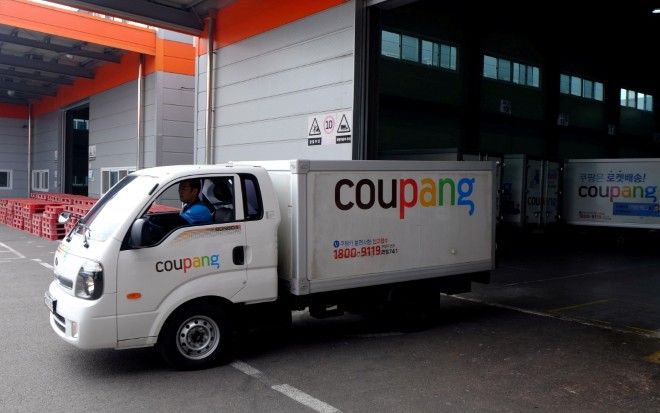
South Korea police conducting search and seizure at Coupang
SEOUL--South Korean police are conducting a search and seizure operation at e-commerce giant Coupang.
According to the Asahi Shimbun, South Korean police have conducted a search and seizure operation at EC giant Coupang.
Detailed charges have not been disclosed, but regulatory oversight of major EC companies in South Korea has been intensifying, with successive investigations into labor conditions and platform operations. Coupang, backed by SoftBank Vision Fund, is South Korea's largest EC platform, and the progress of the investigation will be closely watched.
EU Imports of Cheap Parcels Rise 26%

EU import of cheap parcels rises 26%
The number of low-cost ecommerce parcels that the European Union received from outside the bloc rose 26%.
According to Ecommerce News Europe, the number of low-cost EC parcels received by the EU from outside the bloc has risen 26%.
The rapid growth of Chinese EC platforms such as Temu and SHEIN is the driving factor, and EU authorities are considering regulatory tightening including revision of the 150-euro customs exemption threshold. The surge in cross-border EC raises new challenges for EU consumer protection and fair competition.
AI Commerce Tools
Hakuhodo DY Group Showcases eGenie at NRF 2026
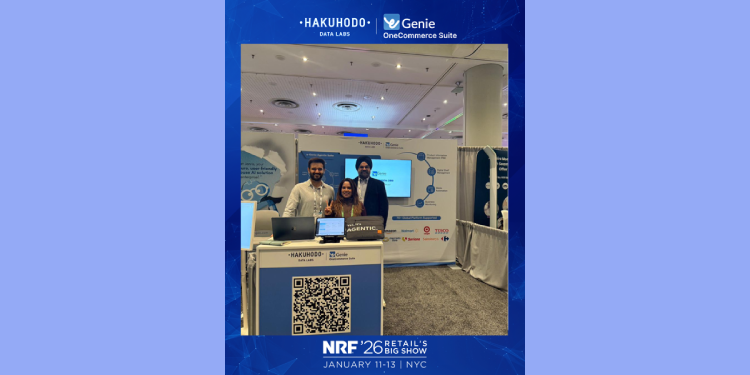
Hakuhodo Data Labs showcases AI-powered eGenie for agentic commerce at NRF 2026
Hakuhodo Data Labs' eGenie, a unified commerce intelligence platform, showcased at NRF 2026.
Hakuhodo Data Labs, part of the Hakuhodo DY Group, showcased "eGenie," an AI-powered unified commerce intelligence platform, at NRF 2026.
eGenie is an AI product recommendation platform designed for agentic commerce, providing high-precision consumer intent understanding and product matching. This represents a notable move by a major Japanese advertising and marketing group into the agentic commerce space.
Summary
Today's news strongly indicates that agentic commerce is transitioning from "concept" to "implementation." Concrete results such as Mastercard's first AI payment in Australia and Amazon Rufus's sales contribution were reported, while structural challenges including underdeveloped bot payment infrastructure, marketplace resistance, and fraud detection blind spots were also highlighted.
With the massive event of Super Bowl LX approaching, agentic commerce's "real capabilities" will be tested at scale for the first time. Readiness across three axes — payment infrastructure, product intelligence, and security — will be the critical factors determining future winners and losers.
Related Articles

EC & AI Commerce News Digest (January 29, 2026)
Today's top EC and AI commerce news: Zuckerberg previews agentic commerce tools, McKinsey analyzes automation curve, IPG reveals legacy brands losing agentic commerce war
The Wide Gap Between AI Bot 'Shopping' and 'Payments' — Where Agentic Commerce Stands Today
AI bots excel at product search and comparison but a significant gap remains before autonomous payment completion. Visa, Mastercard, and Google compete with proprietary protocols as industry standards proliferate. E-commerce operators should begin evaluating agent support as a new customer channel.
Mastercard Completes Australia's First AI Agent Payment — Agent Pay Enters Live Transaction Phase
Mastercard completes Australia's first authenticated AI agent payment using CBA and Westpac cards. How Agent Pay works and what it means for e-commerce businesses
Tags
Share this post