
Mastercard Completes Australia's First AI Agent Payment — Agent Pay Enters Live Transaction Phase

Akihiro Suzuki
Twitter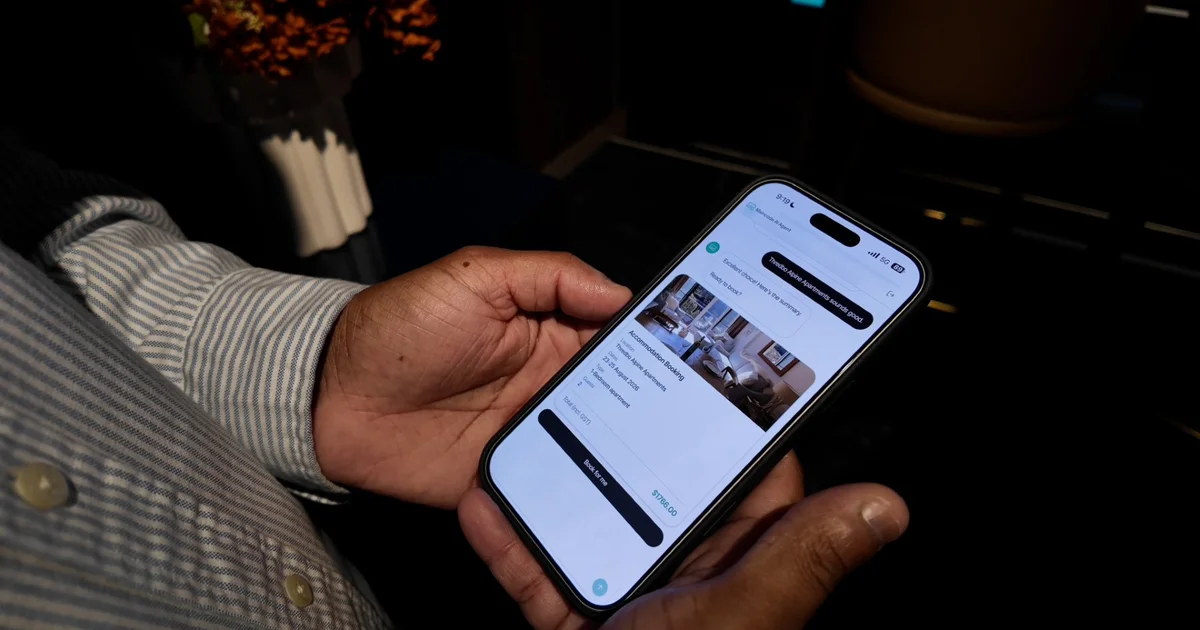
Source: techau.com.au
Key Takeaways
- Mastercard completes Australia's first authenticated AI agent payment using CBA and Westpac cards
- Live transactions achieved just days after Agent Suite launch, marking agentic commerce's shift from concept to reality
- E-commerce businesses must start preparing now to accept purchases from AI agents
Australia's First AI Agent Autonomously Purchases Movie Tickets and Accommodation

Mastercard pulls off Australia's first AI agent payment as agentic commerce goes live

The way we shop online is about to undergo its most significant shift in decades with the rise of AI-powered shopping agents.
The way we shop online is about to undergo its most significant shift in decades with the rise of AI-powered shopping agents.引用元:techAU

On January 28, 2026, Mastercard officially announced the successful completion of Australia's first Authenticated Agentic Transaction. The transactions used a Commonwealth Bank (CBA) debit card and a Westpac credit card.
Two specific transactions were completed. A CBA debit card was used to purchase movie tickets from Event Cinemas, and a Westpac credit card was used to book accommodation at Thredbo. Both were executed through a large language model (LLM) named "Matilda."
Industry Context
The significance of this announcement must be understood alongside the Agent Suite launched on January 27. Mastercard Agent Suite is a comprehensive support service for enterprises to build and deploy AI agents. The Australian live transaction, on the other hand, is a demonstration of the payment infrastructure "Agent Pay" — these are services operating at different layers.
Agent Pay was announced in April 2025 and has been piloted in the United States. Its success in Australia — using real cards and real merchants for the first time — clearly signals the transition from proof of concept (PoC) to commercial deployment.
According to McKinsey estimates, agentic commerce could become a market worth up to $5 trillion in B2C physical goods alone by 2030. Behind Mastercard's urgency to achieve live transactions is the competitive landscape, with rival Visa partnering with NAB and ANZ and announcing "Intelligent Commerce."
How Agent Pay Transactions Work with "Matilda"
The Australian-built LLM "Matilda" played a central role in these transactions. The Agent Pay transaction flow works as follows.
First, the AI agent is "registered and authenticated" on the Mastercard network. Each agent is assigned a unique identifier and conducts transactions using encrypted dynamic credentials called "Agentic Tokens." This allows banks, payment processors, and merchants to recognize that "this transaction is being made by an AI agent."
On the security front, users must clearly specify what they want to purchase and approve it via biometric authentication. Additionally, a verification process is built in to confirm that the actual purchase matches the user's instructions. Mastercard representatives told techAU that "there is no risk of the AI agent going rogue."
Why Australia Was Chosen as the World's First Live Market
Australia's selection as the first live transaction market carries strategic significance. Of Australia's four major banks, CBA and Westpac are aligned with Mastercard, while NAB and ANZ have sided with Visa, creating a bifurcated agentic commerce competitive landscape within the country.
Australia also has one of the world's highest contactless payment adoption rates, making it a market with high consumer receptivity to new payment technologies. Mastercard likely aims to use success in Australia as a springboard to accelerate expansion across the broader Asia-Pacific region.
Implications and Actions for E-Commerce Businesses
Mastercard has signaled a rollout to Australian consumers "within months." There are three key areas e-commerce businesses should prepare for now.
Technical readiness for AI agent transactions — to accept transactions through Agent Pay, merchant systems need to recognize Agentic Tokens. Businesses should verify their payment provider's integration status.
Structured product information is also critical. AI agents search, compare, and make purchase decisions. If product names, prices, availability, and specifications are not properly structured, there is a risk of being excluded from agent purchasing.
Security policy updates are also necessary. Traditional fraud detection systems are designed assuming human buyers. Rules must be updated to avoid incorrectly blocking legitimate transactions from AI agents.
Summary
Mastercard's Australian live transactions are a landmark event signaling that agentic commerce has moved from the "announcement" phase to the "execution" phase. The successful live transactions just one day after the Mastercard Agent Suite launch demonstrate that Mastercard is moving to secure the market on both the infrastructure side (Agent Pay) and the service side (Agent Suite).
In the coming months, consumer rollout in Australia will begin and competition with the Visa camp will intensify. For e-commerce businesses, the window to build systems capable of accepting AI agent purchases is rapidly closing. Mastercard is also advancing integration with Microsoft Copilot Checkout, and the agentic commerce ecosystem is expanding rapidly.
Related Articles

Mastercard Launches "Agent Suite" for Agentic Commerce — AI Agent Building Service for Banks and Merchants
Mastercard announces Agent Suite for AI agent building and deployment. Analysis of the difference from Agent Pay and integrations with Google, Microsoft, and OpenAI

What is Agentic Payment? AI-Powered Next-Gen Automated Payments
[2-Minute Read] Learn about Agentic Payment, where AI agents autonomously handle payments. Discover the mechanisms, key players like Visa, Mastercard, and Stripe, and implementation strategies for automated payment systems.

Fiserv and Mastercard Expand Partnership to Advance Agentic Commerce
Fiserv becomes the first major payment processor to adopt Mastercard's Agent Pay Acceptance Framework at scale, enabling standardized AI-initiated autonomous payments.
Tags
Share this post