
EC & AI Commerce News Digest (January 29, 2026)

Akihiro Suzuki
Twitter
Source: www.businesswire.com
Key Takeaways
- Zuckerberg previews agentic commerce tools, signaling Meta's full-scale entry
- McKinsey analyzes the automation curve in agentic commerce, outlining retail transformation
- IPG study reveals legacy brands losing the agentic commerce war to challengers
Today's Top News
Zuckerberg Previews Agentic Commerce Tools and Major AI Rollout

Zuckerberg teases agentic commerce tools and major AI rollout in 2026

Mark Zuckerberg says 2026 will be 'a big year for delivering personal super intelligence.'
Meta's Mark Zuckerberg revealed plans to roll out agentic commerce tools in 2026 during the Q4 2025 earnings call. He stated they will "start shipping new models in the coming months" and positioned 2026 as "a big year for delivering personal super intelligence."
Meta reorganized its AI research division as "superintelligence labs" in mid-2025, and this announcement builds on that foundation. If AI purchasing agents operate across massive platforms like Facebook, Instagram, and WhatsApp, it could have a significant impact on the adoption of agentic commerce.
The key question going forward is how deeply Meta will venture into payments, logistics, and product data layers.
Full article: Zuckerberg Previews "Agentic Commerce" — Meta's Full 2026 AI Strategy Revealed in Earnings
McKinsey Analyzes the "Automation Curve" in Agentic Commerce

Agentic commerce: How AI shopping agents can change retail
Discover how agentic AI and AI shopping agents are transforming agentic commerce through automation, machine-readable retail strategies.
McKinsey & Company published a report systematically analyzing the progression of automation in agentic commerce as an "automation curve." The report presents a phased framework showing how AI shopping agents will transform the retail industry.
The report organizes the journey from preparing machine-readable product information, to building AI agent integration interfaces, to achieving fully automated purchasing flows. For retailers, understanding where they stand on this curve and preparing for the next step is urgent.
The fact that a major consulting firm has seriously addressed agentic commerce could influence executive decision-making across the industry.
Full article: McKinsey's "Automation Curve in Agentic Commerce" — How AI Shopping Agents Will Transform Retail
Agentic Commerce
IPG Study: Legacy Brands Losing the Agentic Commerce War
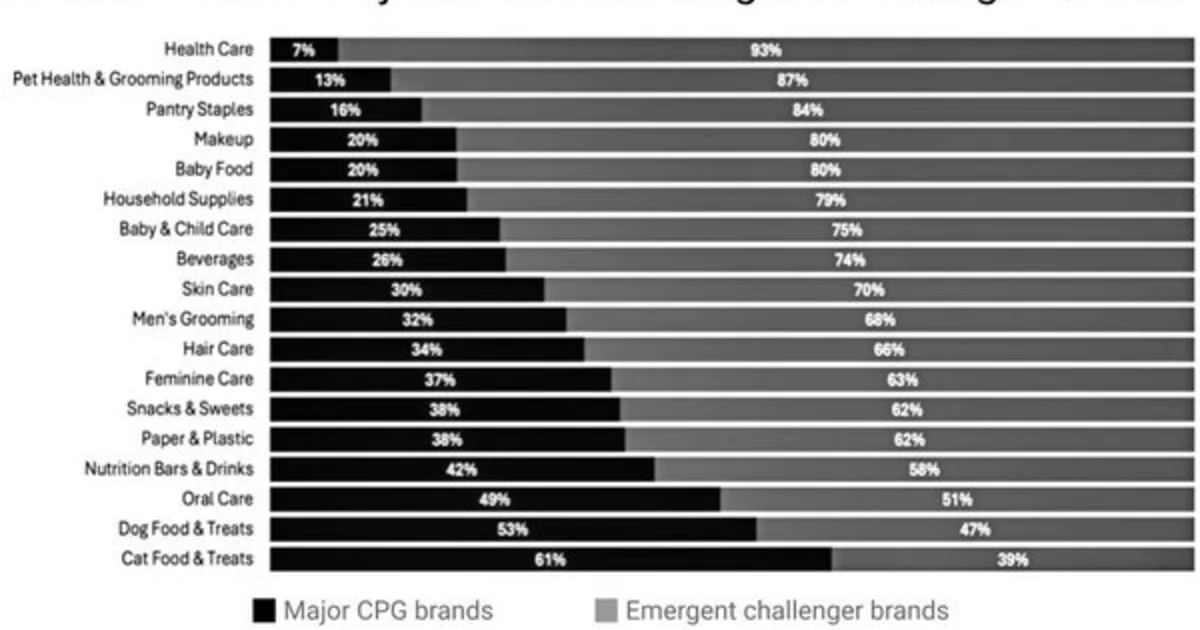
IPG Study Reveals Legacy Brands Losing Agentic Commerce War
IPG Study Reveals Legacy Brands Losing Agentic Commerce War - 11/26/2025
A report from major advertising group IPG's "Agentic Systems in Commerce" division analyzed Amazon Marketplace data and revealed a significant performance gap between legacy brands and challenger brands.
The study found that challenger brands won in 16 out of 18 analyzed categories, with win rate differences exceeding 15% in 15 categories. In healthcare, the gap reached 86 points. The underlying structural issue is that up to 90% of major CPG brands' product pages haven't been updated for months to years.
As AI tools like ChatGPT become primary channels for product discovery, brands that continuously update their content will have the advantage. For legacy brands, modernizing operations is urgent.
Full article: IPG Study Exposes the "Agentic Commerce War" — Why Legacy Brands Are Losing
Talon.One Announces Unified Incentives Protocol for Agentic Commerce

Talon.One Announces Unified Incentives Protocol to Power Loyalty and Promotions in Agentic Commerce
Talon.One launches Unified Incentives Protocol making loyalty and promotions machine-readable for AI agents, including native MCP server support.
Promotion and loyalty platform Talon.One announced the "Unified Incentives Protocol" that makes loyalty and promotion information machine-readable for agentic commerce, including native MCP server support.
AI agents will be able to programmatically read incentive information such as coupons, points, and discounts, presenting consumers with optimal offers. Promotion information that was previously checked manually will be automatically integrated into AI agent workflows.
This demonstrates that standardization is progressing in the loyalty domain, following payments and product information, as an implementation layer for agentic commerce.
Full article: Talon.One Announces "Unified Incentives Protocol" — A New Standard for Making Loyalty Visible to AI Agents
VGS Announces "Agent Connect" Event

VGS Announces Agent Connect: A One-Day Event Exploring the Future of Agentic Commerce
VGS, the leader in payment tokenization and agentic commerce infrastructure, today announced Agent Connect, a one-day event exploring the future of agentic commerce.
VGS, a leader in payment tokenization, announced "Agent Connect," a one-day event exploring the future of agentic commerce.
VGS positions agentic commerce infrastructure as its core domain, specializing in the secure handling of payment data and integration with AI agents. The company's event symbolizes that agentic commerce is forming an independent ecosystem as an industry.
AI Commerce Tools
AI Search to Reshape $595B E-Commerce Market by 2028: Euromonitor

Tech in Asia - Connecting Asia's startup ecosystem
Tech in Asia (YC W15) is a media, events, and jobs platform for Asia's tech communities.
According to a Euromonitor International report, AI-powered search and discovery features are poised to fundamentally transform the retail e-commerce market, reshaping a $595 billion market by 2028.
The traditional purchasing flow of "keyword search → scroll product listings → compare" is increasingly being replaced by conversational AI interactions. This dramatically compresses the purchasing journey, fundamentally changing the path from product discovery to conversion.
AI Referrals to E-Commerce Sites Surge 302% in 2025

AI referrals to e-commerce sites surge 302% in 2025: report
Referrals from AI tools to e-commerce sites rose 302% in 2025, according to Euromonitor International, highlighting a shift in product discovery.
According to Euromonitor International data, referrals from AI tools to e-commerce sites increased 302% from January to December 2025. Compared to the 23% increase from other referral sources, the growth is overwhelming.
Notably, about half of existing US skincare brands may lose market presence as consumers increasingly discover products through AI tools. Euromonitor's global insight manager Rabia Yasmeen noted that "consumer behavior has shifted from typing keywords and scrolling through product lists to natural language conversations."
Payments & Fintech
Payment Processors Choose Sides in AI Commerce War: Stripe vs PayPal

Payment Processors Choose Sides in AI Commerce War: Stripe vs PayPal
In response to the rise of AI commerce, major payment processors are pursuing different strategies. Stripe is focusing on building AI-native infrastructure, optimizing APIs for developers and AI agents. Meanwhile, PayPal is leveraging its existing consumer base for AI commerce adaptation.
The difference in approaches demonstrates that the future of payments in agentic commerce is not monolithic. For merchants, choosing a payment partner aligned with their business model is becoming increasingly important.
Global EC Trends
Latin American E-Commerce Market to Surpass $215 Billion

Latin American ecommerce set to surpass $215 billion
Half of surveyed Latin American ecommerce consumers said they would abandon a platform after a single negative experience.
According to a Digital Commerce 360 report, the Latin American e-commerce market is projected to surpass $215 billion. Led by MercadoLibre, the region's e-commerce growth rate exceeds the global average.
Notably, half of surveyed consumers said they would "abandon a platform after a single negative experience." While it is a growth market, it is also a demanding market where customer experience quality determines competitiveness.
Corporate News
Allbirds Closes All US Stores, Shifts to E-Commerce Only
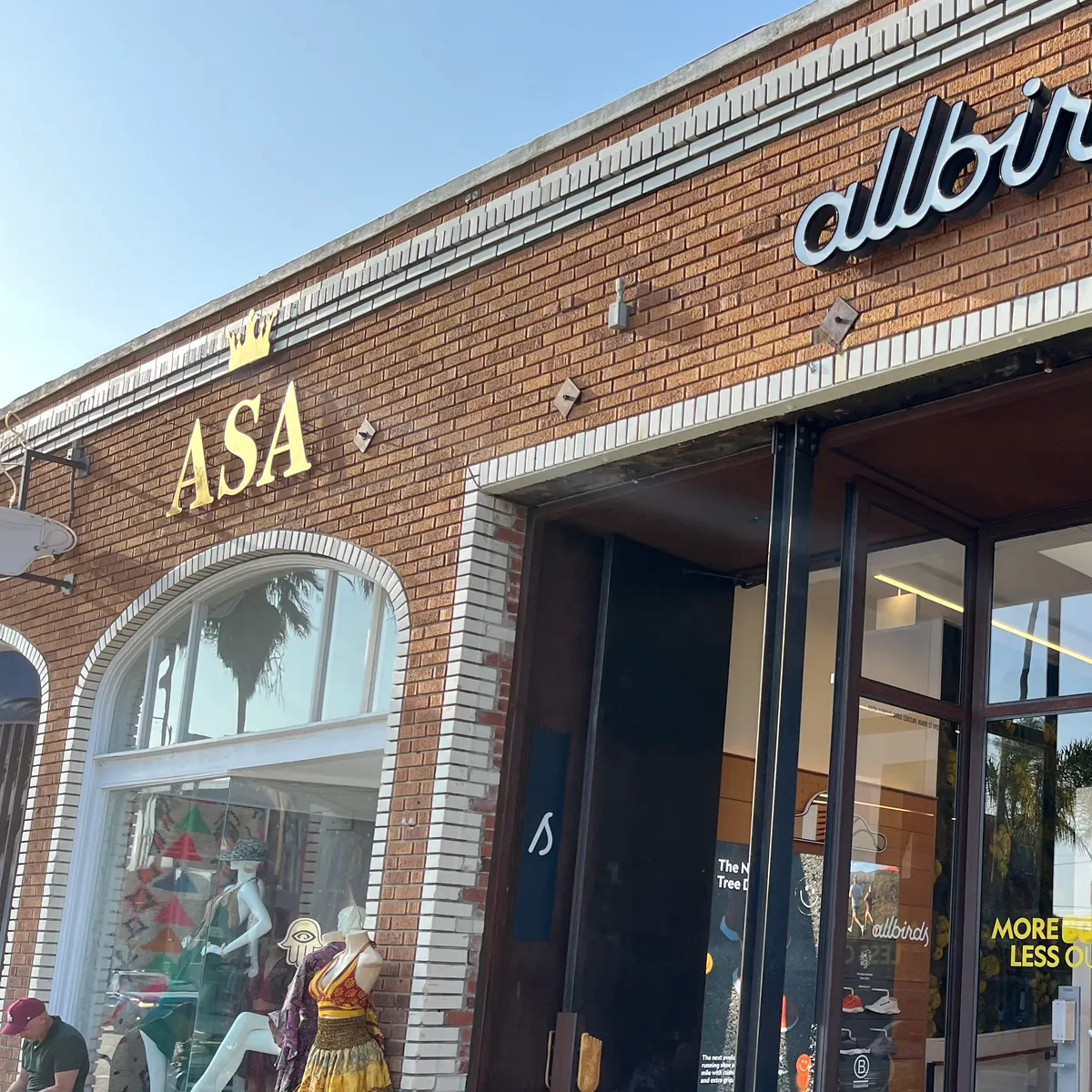
Allbirds to close all US stores, save 2 outlets
The one-time DTC darling operated more than 60 locations at its peak, but will have just four company-run stores globally.
Allbirds, once a poster child of DTC (Direct-to-Consumer) brands, announced it will close all full-price US stores, keeping only two outlet locations. At its peak, the company operated over 60 stores, but will now have just four company-run stores globally.
Allbirds was once a Silicon Valley favorite "tech bro" brand, but intensifying competition and slowing growth forced a rethink of its physical retail strategy. The return to e-commerce-only operations symbolizes both the limitations and evolution of the D2C model.
Forbes: Will AI Doom Physical Retail or Save It?

Will AI Doom Physical Retail Or Save It? Yes!
As e-commerce growth slows, retailers are turning to AI to reinvent in-store shopping with personalization, guidance, and discovery.
A Forbes analysis examines how retailers are using AI to reinvent in-store shopping experiences against the backdrop of slowing e-commerce growth.
The use of AI in personalization, guidance, and product discovery is accelerating efforts to enhance the experiential value unique to physical stores. As AI continues to blur the boundaries between online and offline, the role of physical stores is shifting from "places of sale" to "places of experience."
Logistics & Fulfillment
DHL and Others Obtain US Customs Postal Import Parties Approval

DHL, others land US CBP approval to handle postal duties
The logistics giant's eCommerce and Global Forwarding divisions joined dozens of providers now able to collect and remit postal duties.
DHL's eCommerce and Global Forwarding divisions obtained "Qualified Postal Import Parties" approval from US Customs and Border Protection (CBP), certifying them as operators authorized to collect and remit postal duties.
This expands customs process options for cross-border e-commerce businesses, enabling optimization of delivery speed and costs. Combined with changing tariff policies under the Trump administration, the cross-border e-commerce logistics landscape is evolving.
Summary
Today's news featured particularly active developments in agentic commerce. Zuckerberg previewed Meta's full-scale entry, McKinsey published a systematic analysis, IPG's study highlighted legacy brand challenges, and Talon.One announced loyalty domain implementation — clearly showing agentic commerce transitioning from "concept" to "implementation" phase.
Euromonitor's data showing 302% increase in AI referrals to e-commerce sites also confirms that AI commerce is beginning to directly impact real traffic and sales. Looking ahead, watch for Meta's specific tool announcements and industry responses to McKinsey's report.
Related Articles

EC & AI Commerce News Digest (January 28, 2026)
Today's top EC and AI commerce news: Amazon closes all Go/Fresh stores, UPS cuts 30,000 jobs, Mastercard launches Agent Suite
Zuckerberg Previews Agentic Commerce: Meta's Q4 Earnings Reveal Full 2026 AI Strategy
Meta's Q4 2025 revenue hits $59.9 billion beating estimates, as Zuckerberg declares 2026 'a big year for delivering personal super intelligence' and previews agentic shopping tools. 3.58 billion users' personal context forms the core of Meta's AI strategy.
McKinsey's Automation Curve: A 6-Level Framework for the Future of AI Shopping
McKinsey introduces a 6-level automation curve (Level 0–5) for agentic commerce, predicting AI agents will mediate $3–5 trillion in global consumer commerce by 2030. The competitive axis shifts from eye-catching UI to data quality that AI agents can accurately understand.
Tags
Share this post