x402 vs UCP — The Future Two Major AI Agent Payment Protocols Envision and the Barriers to Real-World Implementation

Akihiro Suzuki
Twitter
Source: hackernoon.com
Key Takeaways
- Coinbase's x402 (HTTP 402-based stablecoin payments) and Google/Shopify's UCP (commerce standardization protocol) emerge as foundations for AI agent commerce. The two are complementary rather than competing
- While both are technically production-ready, infrastructure challenges like bot detection, proxy management, and session handling are the biggest bottlenecks for commercial deployment
- E-commerce businesses should prioritize UCP adoption to be "discoverable by AI agents" while monitoring how x402's micropayment infrastructure impacts API integrations and B2B transactions
AI Agent Payments: Two Approaches Collide

x402 vs UCP: What Challenges Lie Ahead for AI Agent Commerce? | HackerNoon

UCP and x402 are two protocols shaping how AI agents buy things online. Here's how they work, where they differ, and why proxy infrastructure is the real need.
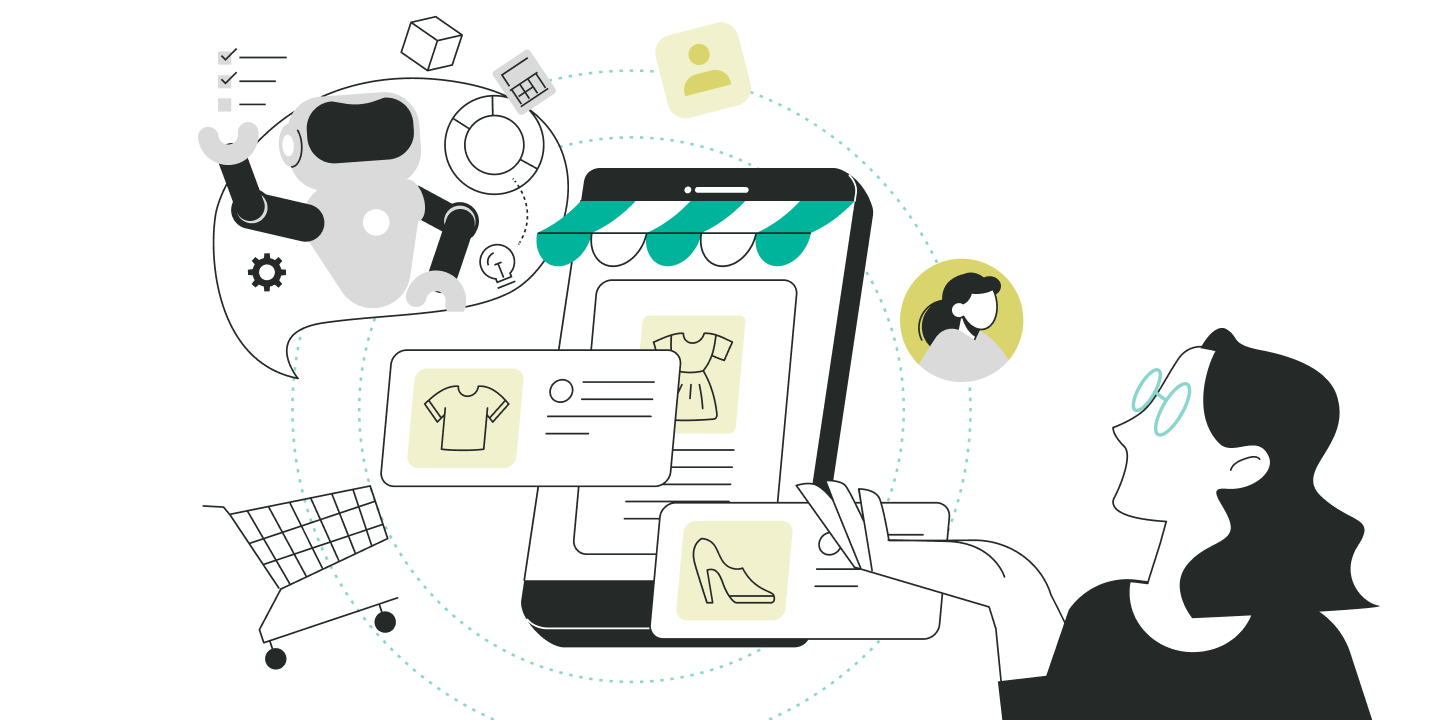
According to HackerNoon's analysis, two major protocols are forming for an era where AI agents purchase products and services online. One is "UCP (Universal Commerce Protocol)" co-developed by Google and Shopify, and the other is "x402" developed by Coinbase. Adobe research shows traffic from AI platforms to e-commerce sites increased 4,700% year-over-year in 2025, and Morgan Stanley estimates agentic commerce could account for $190-385 billion of the U.S. e-commerce market by 2030.
Background and Industry Trends
Agentic commerce—a purchasing model where AI agents autonomously discover, compare, and buy products on behalf of consumers—is the most watched area in retail for 2026. At the NRF (National Retail Federation) conference in January 2026, Google CEO Sundar Pichai announced UCP, with Shopify, Target, Walmart, Visa, Mastercard, and over 20 other companies joining. Meanwhile, Coinbase released x402 in May 2025 and co-founded the x402 Foundation with Cloudflare in September. Google Cloud, AWS, and Anthropic have also joined the ecosystem.
Behind this movement is the limitation of traditional API billing models. Subscription-based monthly billing doesn't suit a world where AI agents execute thousands of microtransactions per hour. At the same time, individual API integrations with each e-commerce merchant lack scalability and hinder AI agent adoption. UCP and x402 address this challenge from different angles.
UCP and x402 — Fundamental Differences in Design Philosophy
UCP: A Full-Stack Protocol Standardizing All of Commerce
UCP is an open-source protocol covering the entire commerce lifecycle from product discovery to cart building, checkout, returns, and tracking. It adopts a multi-layer architecture inspired by TCP/IP, with the core "Shopping Service" defining basic transaction primitives (checkout sessions, line items, totals, etc.). "Capabilities" like Checkout, Orders, and Catalog are layered on top with independent versioning, and "Extensions" add domain-specific features like fulfillment and loyalty.
According to Shopify's engineering team, merchants and agents each publish profiles declaring their supported capabilities, and the protocol automatically negotiates the common ground. Transport supports REST, MCP (Model Context Protocol), Agent-to-Agent (A2A), and others, with payments using existing methods like Google Pay, PayPal, and credit cards.
x402: A Payment Protocol Embedding Payments Directly in the HTTP Layer
x402 is a payment-focused protocol leveraging HTTP's "402 Payment Required" status code. It doesn't handle commerce workflows—it purely provides a mechanism for "paying for access to resources."
The flow is straightforward. When an agent requests a paid resource, the server returns HTTP 402 with payment terms. The agent's wallet signs a USDC transaction and resubmits the request with payment proof. The server verifies the on-chain payment and grants access. Settlement completes in 4-8 seconds on Base or Solana, with zero protocol fees.
By December 2025, x402 had recorded 75 million transactions and $24 million in volume. The V2 upgrade adds multi-chain support, pluggable facilitators, the "Bazaar" discovery layer, and compatibility with legacy payment rails like ACH and card networks.
Comparison Table: Scope and Design Philosophy
| Aspect | UCP | x402 |
|---|---|---|
| Scope | Full commerce lifecycle | Payments only |
| Developer | Google / Shopify | Coinbase |
| Payment Methods | Google Pay, PayPal, cards, etc. | USDC (on-chain) |
| Settlement Speed | Variable (depends on existing payments) | 4-8 seconds |
| Fees | Standard processing fees | Zero |
| Primary Use Cases | Retail purchases, agentic checkout | API billing, micropayments, M2M payments |
| Ecosystem | Shopify, Walmart, Target, 20+ others | Cloudflare, Google Cloud, AWS, Anthropic |
Importantly, these two are complementary rather than competing. On February 8, 2026, UQPAY announced a commercial stablecoin payment platform supporting both UCP and x402, demonstrating that traditional merchant payments and autonomous AI agent payments can be processed on a single infrastructure.
The Biggest Barrier to Real-World Deployment — Bot Detection and Infrastructure Challenges
The core challenge HackerNoon's article identifies isn't protocol design but the infrastructure layer. Both protocols are technically production-ready, but connecting to actual merchant sites runs into the wall of "bot detection."
The problem is that merchants cannot distinguish between legitimate AI agent purchases and malicious bot behavior like scrapers or credential stuffing attacks. Access from data center IPs is almost immediately blocked, and transaction success rates reportedly stay at 15-25%.
Furthermore, both UCP and x402 require "sessions" that execute multiple HTTP requests sequentially. If the IP address changes mid-session, merchants flag it as account takeover. UCP retail transactions require 10-30 minute sessions, and even x402 micropayments need 5-10 minutes. Securing these "sticky sessions" is a major technical challenge in real-world deployment.
Impact and Actions for E-Commerce Businesses
Prioritize UCP adoption preparation. Shopify merchants will likely have UCP enabled automatically through the platform, but custom e-commerce operators will need API support or MCP server implementation. Review the specifications at ucp.dev and start with structured data preparation for product catalogs.
For API providers and B2B transactions, watch x402. If you provide APIs or digital content, x402's pay-per-request billing could become a new revenue model. Particularly as Cloudflare integrates x402 as a "pay per crawl" feature, mechanisms to directly monetize AI agent data access are coming together.
Redesigning bot protection is urgent. The traditional approach of "blocking all automated access" directly translates to lost opportunities in the agentic commerce era. Authentication mechanisms and access policies to identify and allow legitimate AI agents are needed.
Summary
UCP and x402 are complementary protocols handling different layers toward the same goal of AI agent commerce. UCP standardizes the entire workflow of "what AI agents buy," while x402 handles the payment layer of "how AI agents pay." UQPAY's integrated platform announcement suggests these two could function as a single stack in the future.
However, what's constraining the $190-385 billion market opportunity isn't protocol design but infrastructure challenges like bot detection, session management, and authentication. Going forward, watch the progress of UCP V2's roadmap items like multi-item carts and loyalty program integration, x402 V2's multi-chain rollout and legacy payment rail integration, and how infrastructure providers like Cloudflare and Google Cloud approach "agent authentication" standardization. More than protocol choice, the quality of infrastructure built on top will determine the success or failure of agentic commerce.
Related Articles

Google Announces Universal Commerce Protocol (UCP), Forms Major Coalition for Agentic Commerce Standardization
Google unveiled UCP at NRF 2026, an open standard co-developed with Shopify, Walmart, and 20+ partners to standardize AI agent-powered shopping experiences.

What is Agentic Payment? AI-Powered Next-Gen Automated Payments
[2-Minute Read] Learn about Agentic Payment, where AI agents autonomously handle payments. Discover the mechanisms, key players like Visa, Mastercard, and Stripe, and implementation strategies for automated payment systems.

MCP, A2A, UCP — Making Sense of the Proliferating Agentic AI Protocols
The Register systematically categorizes and explains major agentic AI protocols including MCP, A2A, and UCP. Standardization gains momentum with the Linux Foundation's AAIF establishment
Tags
Share this post