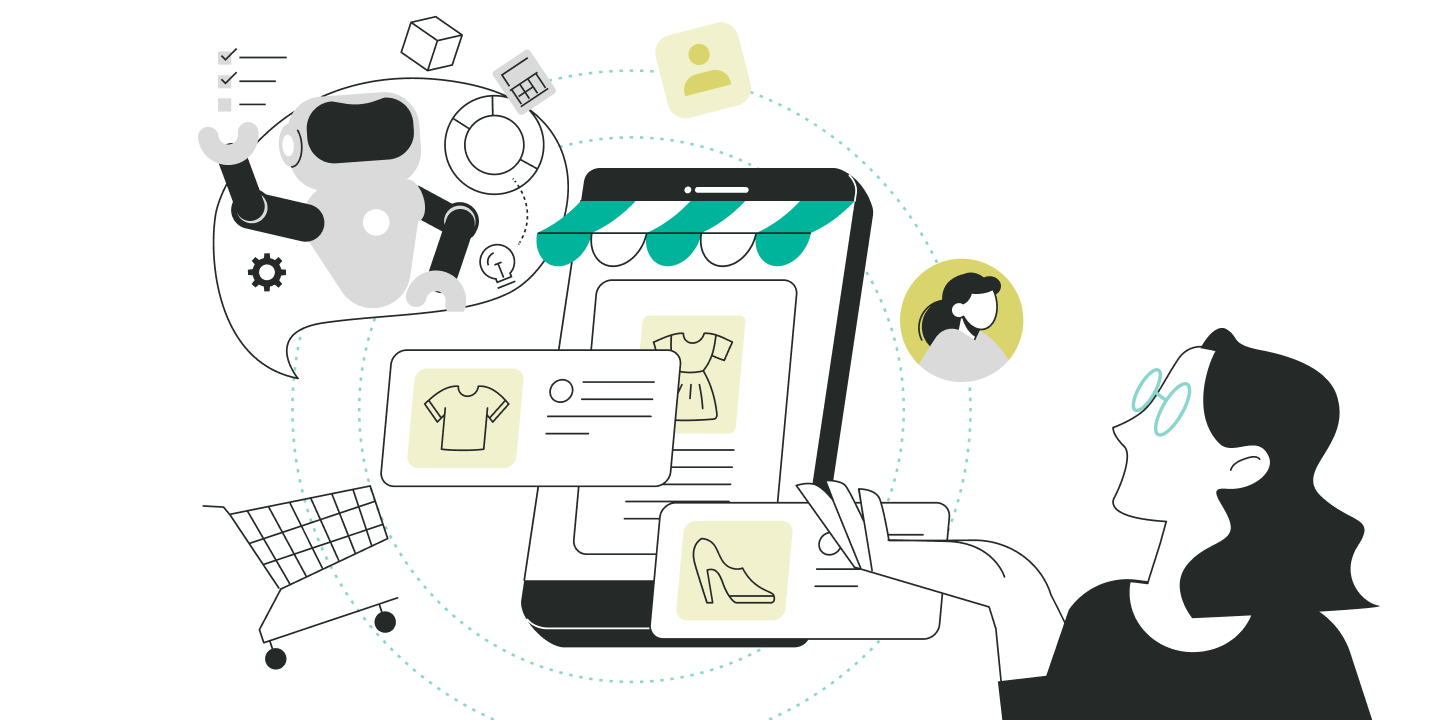
Google Announces Universal Commerce Protocol (UCP), Forms Major Coalition for Agentic Commerce Standardization

Akihiro Suzuki
Twitter
Source: blog.google
Key Takeaways
- Google announced the open standard "UCP" at NRF 2026, with 20+ participants including Shopify and Walmart
- Standardizes AI agent shopping experiences, enabling direct purchases within Google Search and Gemini
- E-commerce merchants urgently need multi-protocol strategies and improved product discoverability for the AI agent era
Google's New Open Standard Announced at NRF 2026

New tech and tools for retailers to succeed in an agentic shopping era

An overview of Google's new open standard for agentic commerce and AI tools to help retailers connect with shoppers and drive sales.
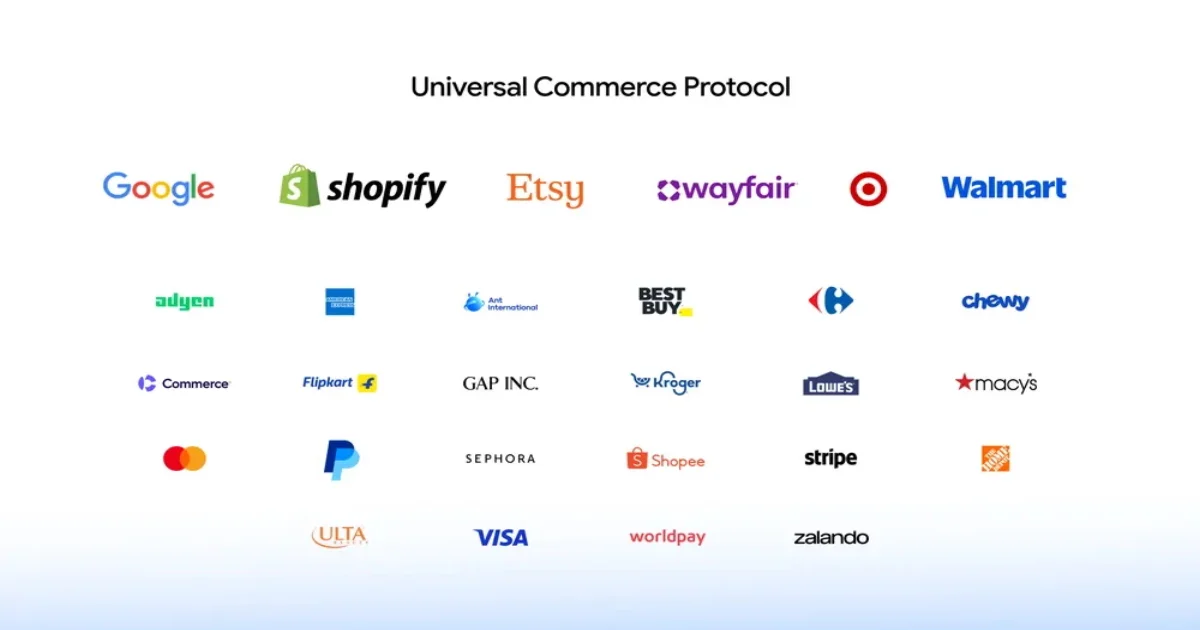
On January 11, 2026, Google announced the "Universal Commerce Protocol (UCP)" at the National Retail Federation's annual conference. UCP is an open standard for standardizing AI agent-powered shopping, co-developed with major retailers including Shopify, Walmart, Target, Wayfair, and Etsy.
Furthermore, over 20 companies including payment providers such as Adyen, American Express, Best Buy, Flipkart, Macy's, Mastercard, Stripe, The Home Depot, Visa, and Zalando have endorsed this protocol.
Background and Industry Trends
Agentic commerce—a new form of commerce where AI agents discover, compare, and purchase products on behalf of consumers—is attracting attention as the next major transformation in the e-commerce industry. According to McKinsey's forecast, it could grow to $3-5 trillion globally by 2030.
Multiple protocols are emerging to compete in this market. In September 2025, Stripe and OpenAI announced the Agentic Commerce Protocol (ACP), enabling Instant Checkout within ChatGPT. On January 8, 2026, Microsoft announced Copilot Checkout. Google's UCP announcement represents its full-scale entry into this competition.
Technical Features and Architecture of UCP
Under the Hood: Universal Commerce Protocol (UCP)
UCP: An open-source protocol by Google and partners to power agentic commerce. It ensures secure, seamless shopping across consumer surfaces.
According to the Google Developers Blog, UCP is positioned as "an open-source standard supporting the next generation of agentic commerce." Key features include:
Unified Language and Functional Primitives
UCP establishes a common language between AI agents, consumer interfaces, merchants, and payment providers. It covers the entire shopping journey from product discovery to purchase, order management, and post-purchase support with a single protocol.
Eliminating N-to-N Complexity
Previously, AI agents required individual integrations to connect with multiple retailers. UCP significantly reduces this complexity by providing a "single integration point." Merchants can dynamically publish their capabilities through a /.well-known/ucp manifest.
Compatibility with Existing Protocols
UCP doesn't function in isolation but maintains compatibility with existing protocols like Agent2Agent (A2A), Agent Payments Protocol (AP2), and Model Context Protocol (MCP). Merchants can select specific extensions as needed through a flexible design.
Security Features
Built-in mechanisms ensure agent-to-agent communication security, including encrypted request signatures, tokenized payment processing, and verifiable user consent.
Direct Checkout in Google Search and Gemini
As UCP's first implementation, direct checkout functionality within Google Search's AI mode and the Gemini app will be released soon for eligible US retailers.
Specifically, while users search and research products, a "Buy" button will appear, allowing them to complete purchases without leaving the conversation using payment methods and shipping information saved in Google Pay. PayPal support is also coming soon.
For retailers, this enables presenting "new member prices," instant loyalty program enrollment, and special offers based on purchase history during AI mode product recommendations.
Comparison with Competing Protocols
Multiple protocols currently exist in the agentic commerce space.
| Protocol | Lead | Features |
|---|---|---|
| UCP | Full coverage from product discovery to post-purchase support, 20+ participants | |
| ACP | Stripe/OpenAI | Focused on checkout and merchant integration, running on ChatGPT |
| AP2 | Focused on trust and authorization models, used alongside UCP |
According to Orium's analysis, these function as "different layers of the agentic commerce stack" rather than direct competitors. ACP handles checkout and merchant integration, AP2 handles trust and authorization models, and UCP handles the comprehensive commerce journey.
Notably, UCP includes Stripe—the maintainer of ACP—among its supporting companies. This suggests future interoperability.
Impact and Strategies for E-commerce Merchants
Short-term Actions (First Half of 2026)
- Optimize Google Merchant Center account: Sales through UCP require a Merchant Center account with eligible product data
- Structure product data: Prepare product information in formats easily recognized by AI agents
- Verify existing payment methods: Confirm Google Pay and PayPal support
Medium to Long-term Strategy
- Multi-protocol support: Consider supporting multiple protocols including UCP, ACP, and Microsoft Copilot Checkout
- Enhance agent-oriented product discoverability (GEO/AEO): Optimize product information to be "chosen" by AI agents
- Advantage for Shopify users: Shopify is a UCP co-developer, expecting early integration
According to TechCrunch, retailers can maintain their status as "seller of record" while enabling direct sales on Google. This means brands can maintain their independence without delegating sales rights to the platform.
Conclusion
Google's Universal Commerce Protocol announcement indicates that agentic commerce has entered a serious "standardization" phase. A large-scale coalition of over 20 participants—from major retailers like Walmart, Target, and Shopify to payment giants like Visa, Mastercard, and Stripe—could influence the entire industry's direction.
For e-commerce merchants, it's important to build flexible systems that can support multiple standards without over-relying on any specific protocol. At the same time, preparing product information to be "chosen" by AI agents will be a crucial factor in future competitive advantage.
Global expansion is planned for the coming months, and attention should be paid to its impact on the Japanese market as well.
References
- Google Official Blog: New tech and tools for retailers to succeed in an agentic shopping era
- Google Developers Blog: Under the Hood: Universal Commerce Protocol (UCP)
- Google Cloud: A new era of agentic commerce is here
- TechCrunch: Google announces a new protocol to facilitate commerce using AI agents
- PYMNTS: Google Debuts 'Universal' Protocol for Agentic Commerce
- McKinsey: The agentic commerce opportunity
- Stripe: Developing an open standard for agentic commerce (ACP)
- Microsoft Advertising: Copilot Checkout and Brand Agents
Related Articles
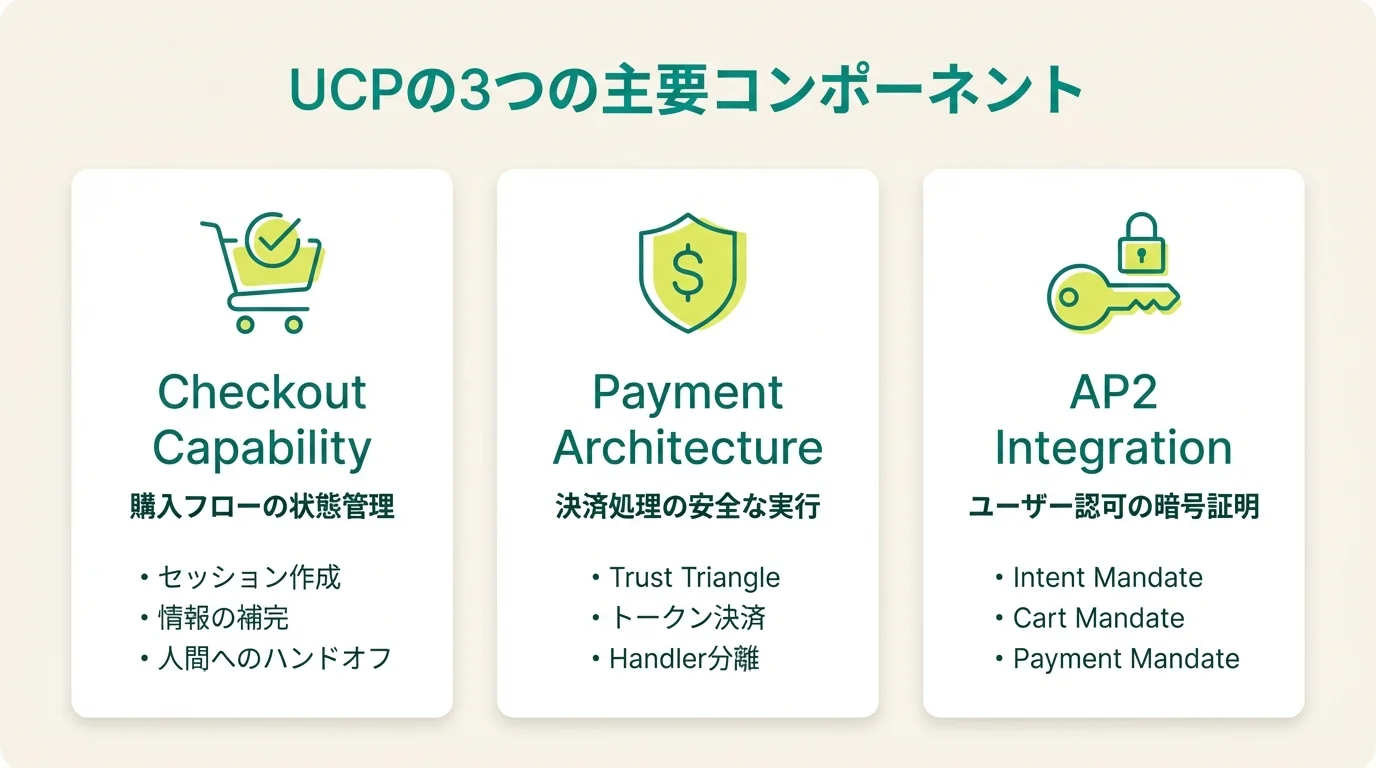
Understanding UCP Technical Specifications: How AI Agents Purchase Products
A deep dive into the technical architecture of Google's Universal Commerce Protocol (UCP). Learn about checkout state transitions, the Trust Triangle payment model, and AP2 mandates for conditional automatic purchases.
Wayfair Partners with Google to Co-develop New Standards for Agentic Commerce
Wayfair co-develops Google's Universal Commerce Protocol (UCP), establishing new standards for AI-driven shopping. Direct checkout from Wayfair now available through Google Search AI Mode and the Gemini app.
Google's UCP Announcement Reshapes Agentic Commerce Landscape, Questions Amazon's Retail Dominance
Google announces Universal Commerce Protocol with over 20 partners including Walmart and Shopify, while Amazon notably absent. The agentic commerce era's power dynamics may be shifting significantly.
Tags
Share this post