MCP, A2A, UCP — Making Sense of the Proliferating Agentic AI Protocols

Akihiro Suzuki
Twitter
Source: www.theregister.com
Key Takeaways
- The Register systematically categorizes and explains major agentic AI protocols including MCP, A2A, and UCP
- The Linux Foundation establishes AAIF, accelerating protocol standardization and consolidation
- E-commerce merchants need to prepare now for agent-mediated transactions through UCP and AP2
Deciphering the Alphabet Soup of Agentic AI Protocols
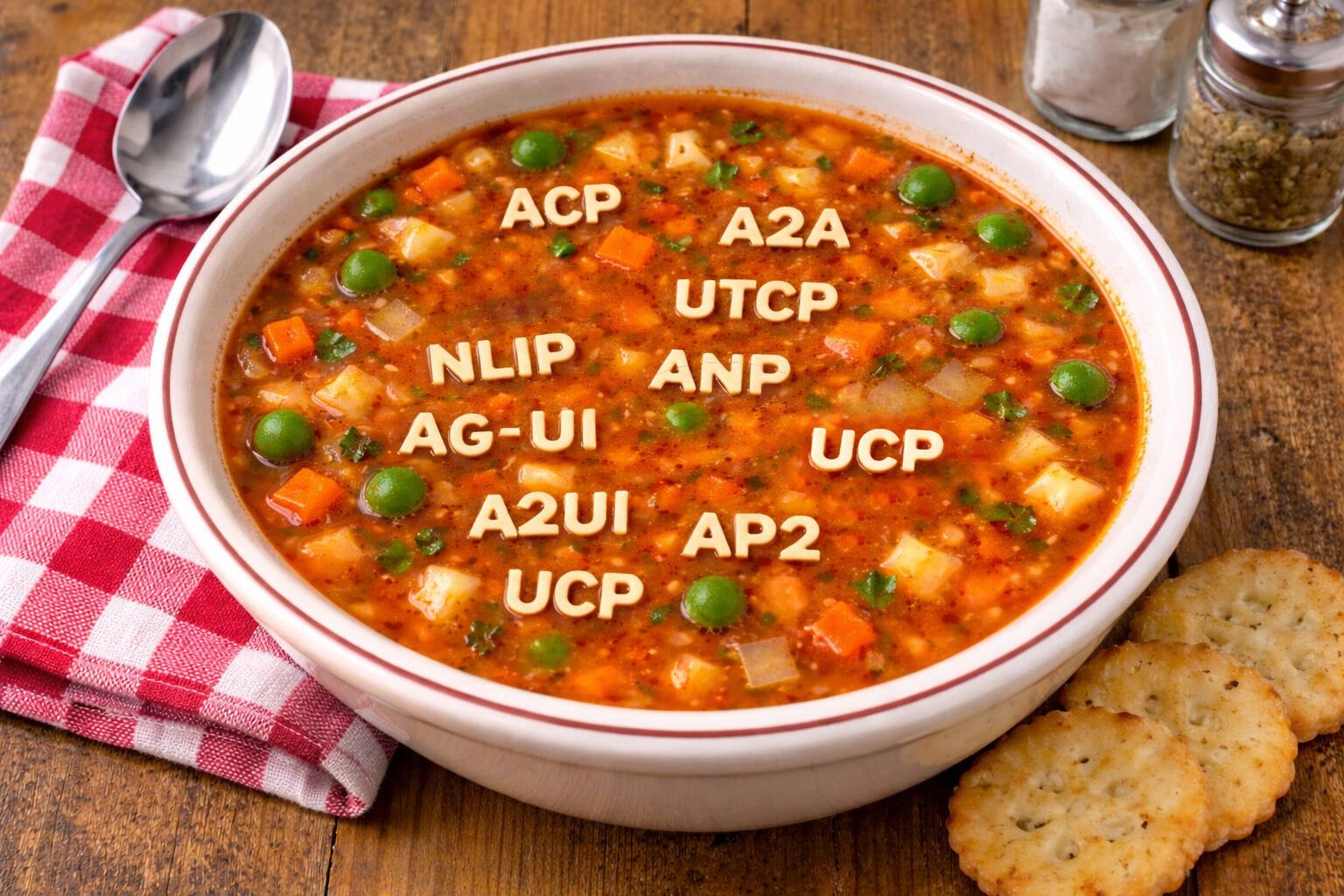
Deciphering the alphabet soup of agentic AI protocols

Tools, agents, UI, and e-commerce - of course each one needs its own set of competing protocols
On January 30, 2026, technology media outlet The Register published a comprehensive analysis organizing the proliferating agentic AI protocols. The article categorizes MCP, UTCP, A2A, ANP, NLIP, A2UI, AG-UI, UCP, AP2, and other emerging protocols into four categories — "tool integration," "agent-to-agent communication," "UI integration," and "domain-specific" — clarifying each protocol's role and relationships.
Background and Industry Context
As AI agents move toward practical deployment, the biggest challenge is standardization — how agents communicate with each other and with external systems. Currently, companies are proposing their own protocols, creating a standards competition reminiscent of VHS vs. Betamax.
To bring order to this chaos, the Linux Foundation established the Agentic AI Foundation (AAIF) in December 2025. Participants include Anthropic, OpenAI, Google, Microsoft, AWS, and Block, with major projects like MCP, A2A, goose, and AGENTS.md transferred to the foundation. Block's CEO stated that they expect AAIF to become "what W3C is for the Web."
Understanding the Full Protocol Landscape in Four Categories
The most widely adopted tool integration (Agent-to-Tool) protocol is MCP (Model Context Protocol), developed by Anthropic in late 2024. Using a client-server architecture, it has been called the "USB-C" for connecting AI models to external tools and data sources. OpenAI and Google have adopted it, though security vulnerabilities have been identified in cases where MCP servers are merely code interpreter wrappers. The competing UTCP (Universal Tool Calling Protocol) takes an approach of directly calling tools' native APIs to reduce overhead, but adoption remains limited.
For agent-to-agent communication, Google's A2A is becoming the de facto standard. It's a discovery and communication protocol for multiple agents to work collaboratively as a team. After transfer to the Linux Foundation, it was merged with IBM's ACP (Agent Communication Protocol). Additionally, peer-to-peer ANP (Agent Network Protocol) and Ecma International's natural language-based NLIP have also emerged.
In the UI integration (Agent-to-User) space, Google's A2UI takes the approach of having agents generate dynamic interfaces. Rather than chat, it dynamically renders point-and-click UIs like flight booking interfaces using Flutter or React. Meanwhile, AG-UI focuses on secure communication layers with frontend clients and can be used alongside A2UI.
As domain-specific protocols, the e-commerce industry should pay particular attention to UCP and AP2 (Agent Payments Protocol).
Impact and Practical Applications for E-Commerce Merchants
The two protocols with the most direct impact on e-commerce merchants are UCP and AP2.
UCP was announced by Google at the NRF annual conference in January 2026, with Shopify, Target, Walmart, Etsy, and Wayfair participating in its co-development. It standardizes the entire commerce transaction flow from product discovery to purchase and order management, consolidating complex N-to-N integrations into a single integration point. Shopify has already natively integrated UCP and plans to roll out "Agentic Storefronts" enabling direct purchases within Google AI Mode and the Gemini app.
AP2 is a protocol for securely executing agent-mediated payments. It's designed so agents complete transactions using tokenized credentials without accessing raw payment information or personal data. It prevents runaway scenarios like the case where an OpenAI shopping agent paid $31 for a dozen eggs, through pre-defined guardrails.
The immediate action for e-commerce merchants is to review the UCP specification and verify that their API infrastructure supports REST/JSON-RPC. Shopify merchants can expect to add agent-mediated sales channels through simple admin panel configuration. Initial deployment will target the US market, with Google Pay for payments and future PayPal support.
Summary
While the proliferation of agentic AI protocols may appear chaotic, the Linux Foundation's AAIF establishment is bringing clarity to the standardization direction. The emerging consensus is MCP for tool integration, A2A for agent communication, and UCP + AP2 for e-commerce, with overlapping protocols expected to consolidate over time.
The key point of interest for e-commerce merchants is the speed of UCP adoption. With major players like Google, Shopify, Walmart, and Target involved in co-development, agent-mediated commerce could rapidly become reality during 2026. The MCP Dev Summit scheduled for April 2026 in New York is also an important event to watch for future direction.
Related Articles

Google Announces Universal Commerce Protocol (UCP), Forms Major Coalition for Agentic Commerce Standardization
Google unveiled UCP at NRF 2026, an open standard co-developed with Shopify, Walmart, and 20+ partners to standardize AI agent-powered shopping experiences.
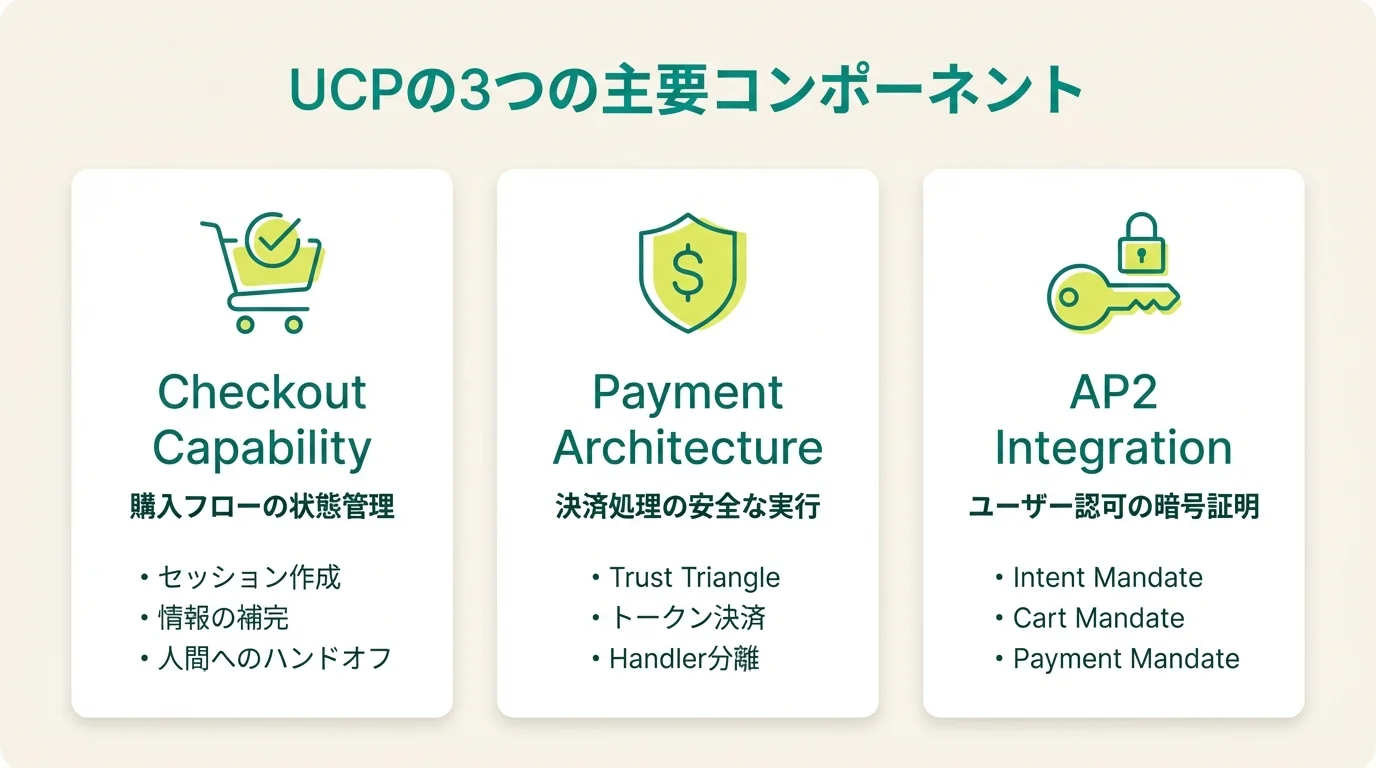
Understanding UCP Technical Specifications: How AI Agents Purchase Products
A deep dive into the technical architecture of Google's Universal Commerce Protocol (UCP). Learn about checkout state transitions, the Trust Triangle payment model, and AP2 mandates for conditional automatic purchases.
Salesforce and Google Jointly Announce "Universal Commerce Protocol," Launching a New Standard for AI Shopping
Salesforce and Google unveil UCP, a new protocol to unify AI-driven shopping experiences. Over 20 global partners join as AI agent-powered e-commerce transactions move toward standardization
Tags
Share this post