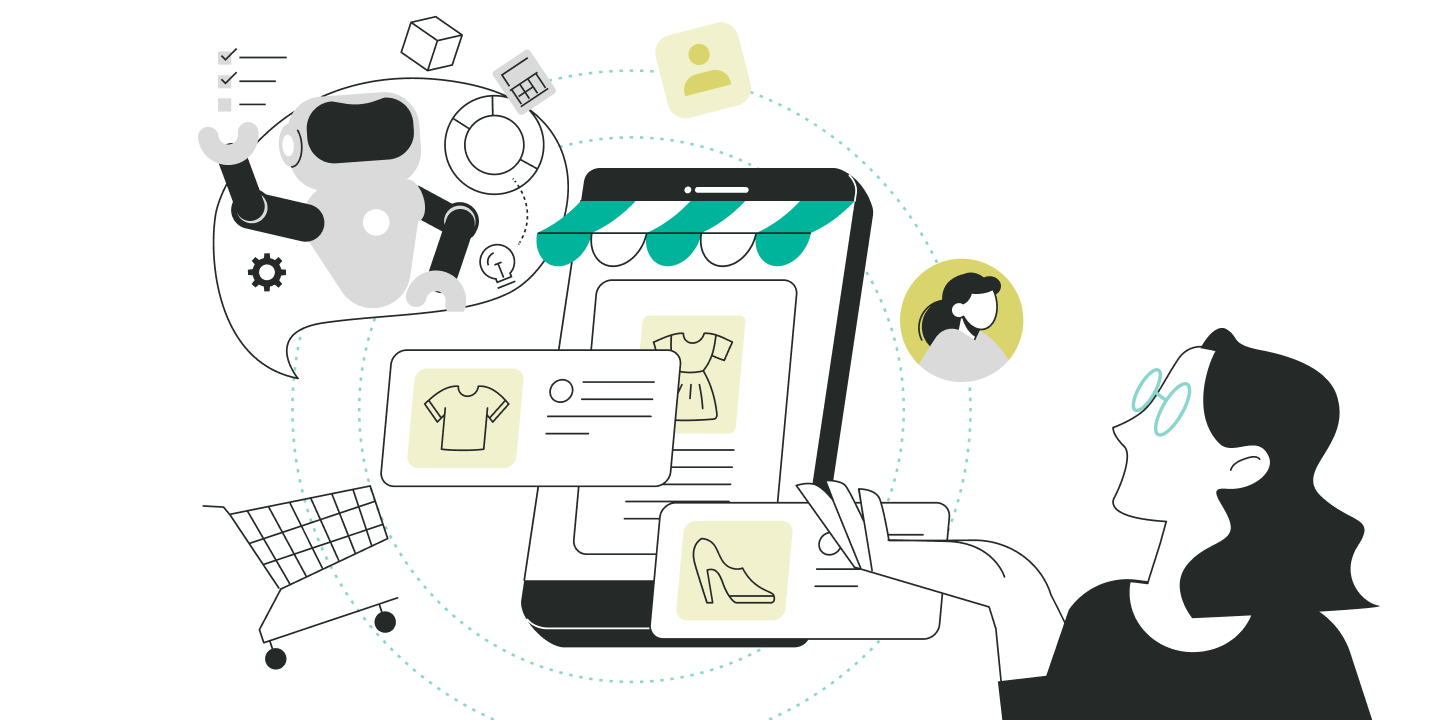
External AI Commerce Dependence Poses Data Ownership and Disintermediation Risks for Retailers

Akihiro Suzuki
Twitter
Source: www.retaildive.com
Key Takeaways
- Major retailers are accelerating partnerships with external AI platforms like ChatGPT and Gemini
- Risk of becoming "fulfillment companies" through data ownership loss and customer touchpoint erosion
- Protecting proprietary data while developing independent AI strategies is now urgent—companies that don't act will be displaced
The Risky AI Commerce Bet Shaking Up Retail

Retail's risky AI commerce bet

As retailers race to meet consumers on external AI platforms, they risk losing data and direct interaction with shoppers. Experts say disruption has only just begun.
In January 2026, the retail industry is rapidly accelerating its entry into AI commerce platforms. Etsy, Target, and Walmart have announced partnerships with Google Gemini and Microsoft Copilot in quick succession, following last year's collaborations with OpenAI ChatGPT. However, this "AI commerce bet" carries serious risks of data ownership loss and disintermediation.
Professor Kartik Hosanagar of the University of Pennsylvania's Wharton School told Retail Dive that "this will shake up the retail industry just as much as the advent of the internet."
90% of Retail Executives Predict Shift to AI Search
According to Deloitte's 2026 Global Retail Outlook, a survey of 330 retail executives revealed striking numbers. 90% of respondents predict that "AI will surpass traditional search engines in usage during 2026."
Even more notable is that 68% of respondents said they would "deploy agentic AI in major business and enterprise activities within the next 12-24 months." Referral traffic from AI chats like ChatGPT has already grown to 15-20% of total traffic for some retailers.
Brand Loyalty Collapse Looms
In the same Deloitte survey, 81% of retail executives believe that "generative AI will weaken brand loyalty by 2027." As AI emphasizes objective factors like price and features, brand value built up over years may diminish.
Additionally, half of respondents predict that "by 2027, the current multi-step shopping journey will collapse and shift to a single AI-driven interaction."
The Fall to "Fulfillment Company" Status
Professor Hosanagar points out the biggest risk of dependence on external AI platforms: "The risk is that as these systems begin to offer things like instant checkout, consumers will do all their product research, discovery, understanding, and purchasing on OpenAI's website rather than Walmart's website."
As a result, he warns, "you're giving up all of your interaction with customers, all of your brand experience, and retailers become something like fulfillment companies."
The Essence of the Power Shift
"Whoever controls the agent has the power," Professor Hosanagar emphasizes. For retailers, direct interaction with customers will decrease, and instead they will be dealing with AI agents as a "new class of customers."
Nikki Baird, Vice President of Strategy and Product at retail software company Aptos, also points out that with Google's AI commerce tools, "Google will own and collect data generated at all three touchpoints."
Three Types of AI Agents and Trust Differentials
Bain & Company's report categorizes AI agents into three types:
- Third-party "objective" agents (ChatGPT, Perplexity, etc.)
- Retailer on-site agents (AI within their own sites)
- Retailer off-site agents (AI deployed externally)
Of these, third-party agents pose the highest disintermediation risk. Currently, consumers trust retailer on-site agents 3x more, but as third-party agent usage expands, this trust gap may narrow.
Competitive Threats from Data Sharing
Retailers participating in AI commerce protocols need to share detailed data on products, inventory, pricing, and customer behavior. According to BCG's analysis, this data will be used for both transactions and AI model training, potentially giving AI platforms the power to deploy competing products and private labels at scale in the long term.
Impact on E-commerce Businesses and Response Strategies
E-commerce businesses need the following strategic responses:
Strengthening Data Protection
- Prioritize protection of first-party data
- Apply watermarks to content
- Negotiate data sharing terms in AI partnerships
Maintaining Customer Touchpoints
- Maintain control of fulfillment and checkout wherever possible
- Ensure data visibility and price accuracy
- Deploy proprietary last-mile services, like Best Buy's site-exclusive Geek Squad protection services
Differentiation Strategies
- Promote direct purchases through exclusive products, premium bundles, and loyalty point multipliers
- Differentiate with value-added services like installation and protection plans
Google's New Standard: Universal Commerce Protocol
Google announced the "Universal Commerce Protocol (UCP)," a new open standard for agentic commerce, in January 2026. This establishes a common language for agents and systems to work together throughout the shopping journey. E-commerce businesses need to consider adapting to such industry standards.
Summary
AI agents are not just another wave of digital innovation—they have the power to fundamentally change the structure of the retail industry. Deloitte estimates that by 2030, up to 30% of global e-commerce transaction value (approximately $17.5 trillion) will be influenced by agentic AI.
Companies that act now, investing in agentic capabilities and building AI-native experiences, will define the next generation of customer engagement, brand relevance, and operational efficiency. Companies that choose to wait risk becoming invisible to customers they once knew and being disintermediated.
For e-commerce businesses, the key is strategic balance—expanding sales channels through partnerships with external AI platforms while protecting proprietary data and customer touchpoints. In an era where "whoever controls the AI agent has the power," swift action based on a clear understanding of one's positioning is essential.
Related Articles

Google Announces Universal Commerce Protocol (UCP), Forms Major Coalition for Agentic Commerce Standardization
Google unveiled UCP at NRF 2026, an open standard co-developed with Shopify, Walmart, and 20+ partners to standardize AI agent-powered shopping experiences.

Deloitte Warns: Agentic Commerce Will Fundamentally Transform Retail Industry - 2026 Outlook Released
Deloitte's 2026 Retail Industry Outlook analyzes how AI agents are transforming commerce. ChatGPT referral traffic has reached 15-20% for some retailers, with 25% of sales expected via AI by 2030. Retailers must urgently leverage customer data and build proprietary agents to prepare for weakening brand loyalty.

What is Agentic Commerce? Explaining the New Era of AI-Powered Purchasing
Explore the full scope of Agentic Commerce. AI agents autonomously execute everything from product selection to payment on behalf of users. Discover shocking data including 4,700% increase in AI-driven traffic and 20% of Walmart's traffic from ChatGPT, along with three essential preparation steps companies should start immediately.
Tags
Share this post