Deloitte Warns: Agentic Commerce Will Fundamentally Transform Retail Industry - 2026 Outlook Released

Akihiro Suzuki
Twitter
Source: www.deloitte.com
Key Takeaways
- Deloitte's 2026 Retail Industry Outlook analyzes the transformation of commerce by AI agents
- ChatGPT referral traffic has reached 15-20% for some retailers, with 25% of sales expected via AI by 2030
- Retailers must urgently leverage customer data and build proprietary agents to prepare for weakening brand loyalty
Deloitte Predicts Structural Changes in Retail Industry
2026 Retail Industry Global Outlook

Deloitte's 2026 Retail Industry Global Outlook examines five dynamics likely to transform the industry in the year ahead
Global consulting firm Deloitte has released its "2026 Retail Industry Global Outlook" based on research conducted between October and November 2025. The report provides detailed analysis of the structural changes that AI agents will bring to the retail industry.
According to the report, in the e-commerce world, consumer behavior is "rapidly shifting from retailer-owned channels to AI intermediaries" throughout the entire journey from product discovery to decision-making and payment. Referral traffic from AI chats like ChatGPT has grown to account for 15% to 20% of total referral traffic for some retailers.
Why Agentic Commerce Matters Now
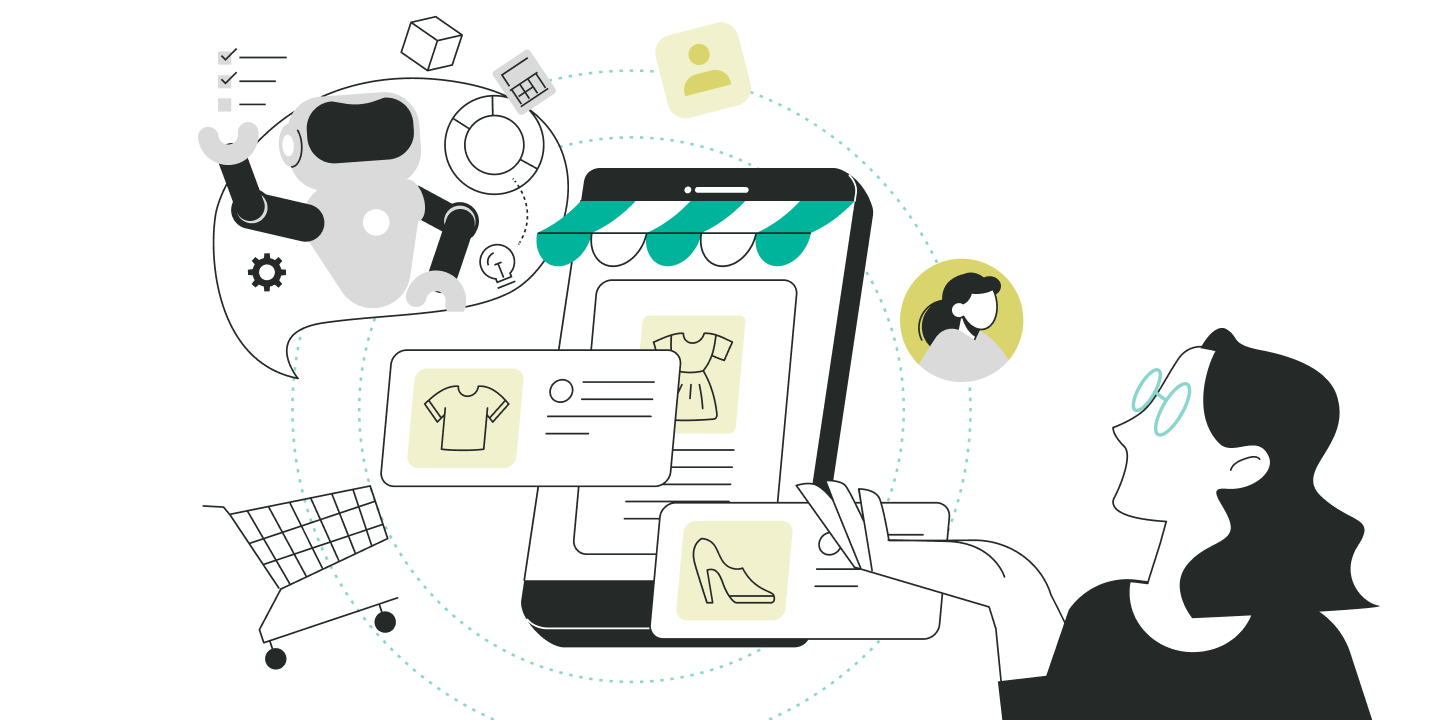
Agentic commerce is a new form of commerce where AI agents autonomously search, compare, and purchase products on behalf of consumers. Deloitte's research shows that approximately 90% of retail executives predict that "AI will be used more than search engines by 2026."
Even more striking, 50% of executives believe that "by 2027, the traditional multi-step shopping journey will collapse and be replaced by a single AI-driven interaction." This suggests that traditional purchasing behavior, where consumers browse multiple sites for comparison, could fundamentally change.
Looking at the industry as a whole, McKinsey predicts the agentic commerce market will reach $1 trillion in the U.S. alone by 2030. According to BCG's analysis, AI-driven traffic has increased 1,200% year-over-year, while traditional search traffic has declined 10%.
Three Strategic Challenges Identified by Deloitte
The Brand Loyalty Crisis
The most notable data from Deloitte's research is that 81% of retail executives believe "generative AI will weaken brand loyalty by 2027." AI agents tend to prioritize objective factors like "value" and "fit," potentially reducing purchasing behavior based on traditional brand recognition.
This is particularly serious for companies that have maintained high profit margins through brand power. When consumers ask AI agents to "choose the product with the best cost-performance in this category," brand premiums become less likely to be considered.
Legacy Systems Inhibiting Innovation
44% of survey respondents recognize that "their legacy systems are slowing innovation." To effectively collaborate with AI agents, ensuring product data accuracy, accessibility, and "AI readability" is essential.
Deloitte points out that "investment in clean, connected data architecture is urgent." With siloed data systems, AI agents cannot efficiently access necessary information, resulting in the risk of products being left out of AI recommendations.
The Path to ROI Maximization
Deloitte's retail and consumer goods strategy leader Brian McCarthy stated in an interview with Retail TouchPoints that "high-ROI AI utilization focuses not just on operational efficiency but on initiatives like agentic commerce that target top-line growth."
The winners will be "companies that can industrialize AI and deploy and coordinate multiple AI agents across the organization," and one-off AI implementations will not build competitive advantage, according to the analysis.
Impact and Applications for E-Commerce Businesses
Three Actions to Start Now
1. Data Foundation Development The first step is organizing product information, inventory data, and pricing information in formats that AI agents can easily read. Deloitte reports that "68% of companies plan to deploy agentic AI for core operations within 12 to 24 months," so delays will mean being overtaken by competitors.
2. Consider Building Proprietary Agents According to BCG research, consumers "trust agents operated by retailers three times more than third-party agents." Building agents that leverage your company's expertise and unique data is a powerful differentiator.
3. Invest in GEO (Generative Engine Optimization) In addition to traditional SEO, optimization to be discoverable by AI agents is becoming a new essential skill. This requires enriched structured data and content design that AI can easily understand.
Timeline for Implementation
Deloitte's research shows that the majority of retail executives predict "AI involvement in the shopping journey will become mainstream by 2028." This means 2026 to 2027 is a critical preparation period.
Conclusion
Deloitte's 2026 Retail Industry Outlook clearly demonstrates that agentic commerce is no longer a future concept but a reality that has "already begun." With AI-driven traffic from ChatGPT and others surging, retailers need to fundamentally reconsider their channel strategies.
Key points to watch going forward include agent-ready initiatives announced by various companies and the expansion of commerce features by AI platforms like Google and OpenAI. In particular, the trajectory of Universal Commerce Protocol (UCP) announced by Google at NRF in January 2026 could significantly influence the formation of industry standards.
References
Related Articles

What is Agentic Commerce According to PwC? The Arrival of AI-Powered Purchasing and Its Business Impact
PwC defines agentic commerce as 'a new form of shopping where AI agents purchase on behalf of consumers.' GenAI-driven traffic surged 1,200% in just 6 months.

What is Agentic Commerce? Explaining the New Era of AI-Powered Purchasing
Explore the full scope of Agentic Commerce. AI agents autonomously execute everything from product selection to payment on behalf of users. Discover shocking data including 4,700% increase in AI-driven traffic and 20% of Walmart's traffic from ChatGPT, along with three essential preparation steps companies should start immediately.

2026: The Year AI Agents Redefine Retail, Say Industry Experts
In 2026, AI agents evolve from 'tools' to 'decision-makers' in retail. Gartner predicts 40% of enterprise apps will feature AI agents. E-commerce businesses must start preparing data infrastructure and agent compatibility now.
Tags
Share this post