Phia: The AI Shopping Agent Founded by Bill Gates' Daughter Raises $35 Million

Akihiro Suzuki
Twitter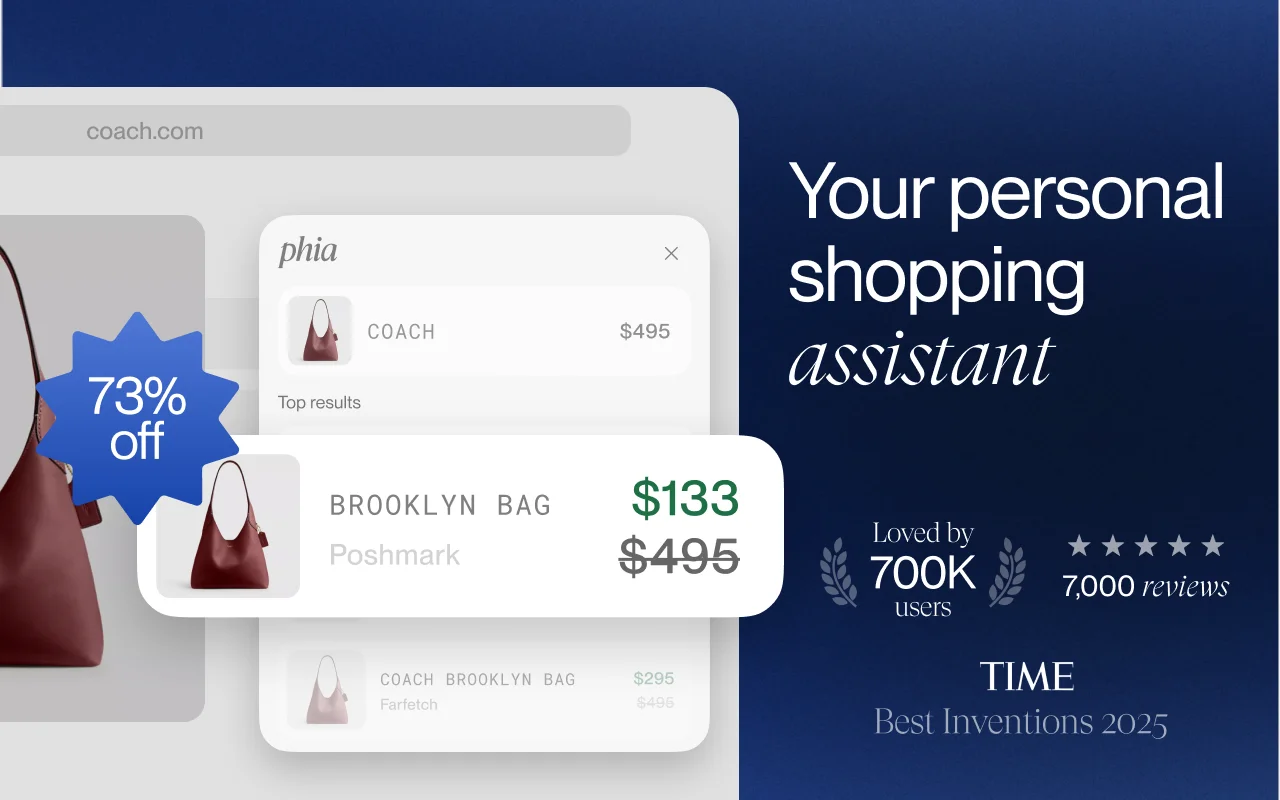
Source: www.globenewswire.com
Key Takeaways
- Phia is an AI shopping agent offering price comparison, resale suggestions, and personalized recommendations
- Zero upfront cost, performance-based model has attracted 6,200+ retail partners
- 11x revenue growth in 10 months, raised $35M at $185M valuation
AI shopping agents—services where AI searches, compares, and suggests optimal products on behalf of users—are rapidly emerging. One of the leading players experiencing explosive growth is Phia.
In January 2026, Phia completed a $35 million Series A funding round at a $185 million valuation. The round was co-led by Khosla Ventures and New Enterprise Associates, with participation from Forerunner Ventures, Weekend Fund, and Gaingels.
Phia Raises $35 Million to Power the Future of AI-Driven Shopping

Phia, the AI-powered shopping platform, today announced it has raised $35 million in Series A funding.
What is Phia?
Phia is an AI shopping agent founded in 2023. The co-founders are Phoebe Gates (Bill Gates' daughter) and Sophia Kianni. Through a mobile app and Chrome extension, they aim to fundamentally transform the consumer shopping experience.
Key Features
Phia offers three main capabilities:
Price Comparison: Automatically aggregates prices for the same product across multiple retail sites and presents the lowest price. When users find a product they want, Phia searches for where to buy it cheaper.
Resale Alternatives: Suggests not only new items but also pre-owned and resale options. For sustainability-conscious consumers, this provides purchasing options with lower environmental impact.
Personalized Recommendations: Learns user preferences and purchase history to suggest products optimized for each individual. Tell it "I want a black dress," and it presents options considering your budget, style, and brand preferences.
User Experience
Phia's distinguishing feature is natural language communication. Users don't need to think of search keywords. Simply express your needs conversationally—"I'm looking for a dress for a wedding next week. My budget is under $200, and I prefer blue or navy"—and Phia finds the optimal products.
Currently, over 1 million users are using Phia.
Business Model
Phia's business model is designed to be extremely attractive for retailers.
Zero Upfront Cost, Performance-Based
When retailers partner with Phia, there are no upfront costs whatsoever. Fees are only charged when an actual purchase occurs through Phia. In other words, it's a performance-based model.
This structure allows retailers to try Phia without any risk. Currently, over 6,200 retail partners have joined Phia.
Benefits for Retailers
Phia reports the following results for partner retailers:
- Conversion Rate: 13% improvement
- Customer Acquisition Cost: 30% reduction
- Return Rate: 50% reduction
- Average Order Value (AOV): 15% increase
The 50% reduction in return rates is particularly noteworthy. By accurately understanding consumer preferences and suggesting products they truly want, AI significantly reduces "this isn't what I expected" returns.
Impressive Growth Metrics
Phia's growth velocity is remarkable.
Revenue grew 11x in just 10 months. User count has surpassed 1 million, and retail partners have reached over 6,200.
This rapid growth justified the high $185 million valuation in the Series A round.
Position in Agentic Commerce
In the agentic commerce landscape, various players are competing for position.
Phia targets the "top of the commerce funnel." By engaging at the stage where consumers decide "what to buy," they aim to influence the entire purchasing journey.
This contrasts with Mastercard's Agent Pay and Agent Suite, which approach from the payment infrastructure side. While Mastercard provides value at the "how to pay" stage, Phia provides value at the "what to buy" stage.
The two are not competitors but rather complementary. A future where consumers choose products with Phia and pay with Agent Pay may become the standard model for agentic commerce.
Implications for E-commerce Businesses
Phia's rapid growth offers important insights for e-commerce operators.
The Importance of AI Shopping Agent Readiness
An era is coming where consumers search for products through AI shopping agents. Beyond traditional SEO strategies, businesses will need measures to ensure AI agents properly recognize and recommend their products.
Considering Performance-Based Partnerships
Performance-based platforms like Phia offer opportunities to test new customer acquisition channels without risk. For businesses struggling with high return rates, AI-powered matching accuracy improvement could be an attractive solution.
Conclusion
Phia is a startup leading the new category of AI shopping agents. Beyond the buzz of being founded by Bill Gates' daughter, the numbers prove the service's fundamental value: 11x revenue growth in 10 months, over 6,200 retail partners, and more than 1 million users.
In the era of agentic commerce, the importance of players who hold influence at the stage where consumers decide "what to buy" will only grow. Phia's future trajectory is worth watching for the entire e-commerce industry.
Related Articles

What is Agentic Commerce? Explaining the New Era of AI-Powered Purchasing
Explore the full scope of Agentic Commerce. AI agents autonomously execute everything from product selection to payment on behalf of users. Discover shocking data including 4,700% increase in AI-driven traffic and 20% of Walmart's traffic from ChatGPT, along with three essential preparation steps companies should start immediately.

What is Agentic Payment? AI-Powered Next-Gen Automated Payments
[2-Minute Read] Learn about Agentic Payment, where AI agents autonomously handle payments. Discover the mechanisms, key players like Visa, Mastercard, and Stripe, and implementation strategies for automated payment systems.

Mastercard Launches "Agent Suite" for Agentic Commerce — AI Agent Building Service for Banks and Merchants
Mastercard announces Agent Suite for AI agent building and deployment. Analysis of the difference from Agent Pay and integrations with Google, Microsoft, and OpenAI
Tags
Share this post