
Amazon's AI Assistant Rufus Contributes $10 Billion in Sales — Agentic Commerce Moves Beyond Debate to Real Results

Akihiro Suzuki
Twitter
Source: www.thedrum.com
Key Takeaways
- Amazon's AI shopping assistant Rufus is on track to contribute $10 billion in additional annual revenue
- On Black Friday, Rufus-assisted sessions achieved 3.5x the conversion rate of non-Rufus sessions
- E-commerce businesses should begin AI optimization (product listings, reviews, Q&A) in 2026
While the Industry Debates, Rufus Is Driving Sales

While everyone debates agentic shopping, Amazon's Rufus is racking up sales | The Drum

While the industry continues to debate the potential of agentic shopping, Amazon's Rufus is already contributing to real sales growth.
While the industry continues to debate the potential of agentic shopping, Amazon's Rufus is already contributing to real sales growth.引用元:The Drum

On January 29, 2026, commerce media columnist Kiri Masters published a contributed article in The Drum. The core message is clear: while the industry debates agentic commerce — a model where AI autonomously supports purchasing behavior — Amazon's AI shopping assistant "Rufus" is already delivering results.
Sensor Tower analyzed over 100,000 Amazon shopping sessions during the 2025 holiday season and found that Rufus-assisted sessions accounted for approximately 40% of Black Friday traffic while generating about 66% of purchases.
Industry Landscape
Agentic commerce has been the biggest buzzword from 2025 into 2026. OpenAI embedded a direct checkout feature into ChatGPT, and Perplexity launched an AI-powered browser. According to Modern Retail's reporting, if 2025 was the year of building foundations, 2026 is the year of competing for whose AI agent becomes the standard shopping interface.
Yet while many players remain in the planning stage, Amazon is steadily building its track record. In the Q3 2025 earnings call in October, CEO Andy Jassy announced that Rufus is on track to contribute $10 billion in additional revenue annually. In less than two years since its February 2024 beta launch, Rufus has acquired 250 million active users.
Rufus Demonstrates Overwhelming Results Through Practical AI
The most notable aspect of The Drum's article is that Sensor Tower's independent research corroborated Amazon's own claims. According to Sensor Tower's report, the conversion rate of Rufus-assisted sessions on Black Friday was 3.5 times that of non-Rufus sessions. This gap was consistently maintained from October through December.
Amazon's strategic design philosophy also became apparent. Rufus intentionally excludes features like recipe suggestions and lifestyle content, focusing instead on the core shopping functions of product discovery, comparison, and purchase confidence.
Sensor Tower also identified user behavior patterns. The most common "search assistant" type (about 28% of sessions, 35% conversion rate) represents users who turn to Rufus when they cannot find what they want through regular search. Even more noteworthy is the "cart reconsideration" type (about 7% of sessions, 50% conversion rate), where users ask Rufus for final confirmation on items already in their cart.
However, challenges have also been identified. According to Retail Technology Innovation Hub's analysis, 83% of Rufus recommendations favor Amazon's own products, and recommendation accuracy stands at only 32%. Additionally, Amazon blocks external AI agents from accessing its site, revealing its intent to protect its $56 billion advertising business.
Impact and Strategies for E-Commerce Businesses
The rise of Rufus demands a fundamental rethinking of listing optimization for businesses selling on Amazon.
AI-optimized content is now essential. A shift from traditional keyword-centric SEO to "Knowledge Graph Optimization (KGO)" is required. Rufus actively indexes not just product descriptions but also customer Q&A and reviews as "ground truth" — trusted information sources.
Strategic management of reviews and Q&A. Rufus trusts user-generated content (UGC) more than seller-provided claims. Thoughtful responses to Q&A sections and comprehensive reviews directly impact visibility within Rufus.
Images are now AI data sources too. In 2026, images serve as data not just for humans but for AI. If product images do not clearly convey features and characteristics, Rufus will judge those product claims as "weak."
Adapting to new features. An automatic purchase feature based on price target settings has been added for Prime members, making competitive pricing even more critical.
Conclusion
The most important message from The Drum's article is that the winner in agentic commerce will not be "fully autonomous AI" but rather "practical AI assistants." Seemingly modest features like Q&A and product comparison are already significantly changing shopping behavior.
While Sensor Tower's research leaves open the correlation-versus-causation question of whether Rufus users may have been a higher-intent audience to begin with, the fact that nearly all incremental holiday season growth came through AI assistants cannot be ignored. Businesses that begin AI optimization in 2026 will gain a significant advantage as Rufus goes mainstream in late 2026 through 2027.
Related Articles
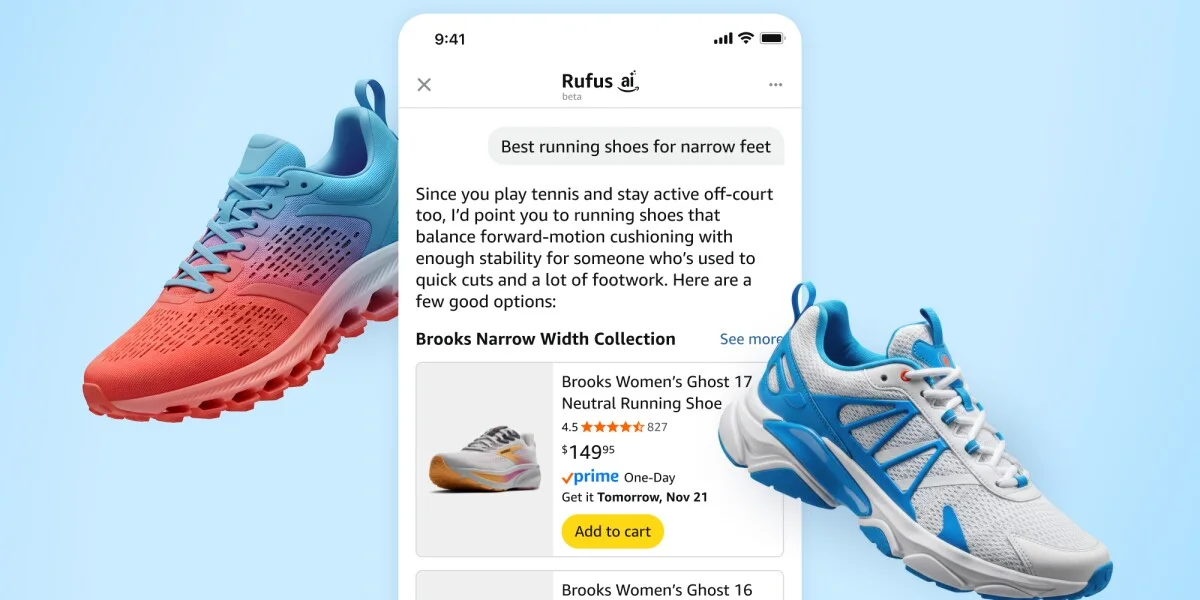
Amazon Rufus: The Full Picture of the AI Shopping Assistant Used by 250 Million People
Amazon Rufus reaches 250 million users and drives $10 billion in additional sales. Deep dive into its technology, features, and implications for e-commerce.

What is Agentic Commerce? Explaining the New Era of AI-Powered Purchasing
Explore the full scope of Agentic Commerce. AI agents autonomously execute everything from product selection to payment on behalf of users. Discover shocking data including 4,700% increase in AI-driven traffic and 20% of Walmart's traffic from ChatGPT, along with three essential preparation steps companies should start immediately.
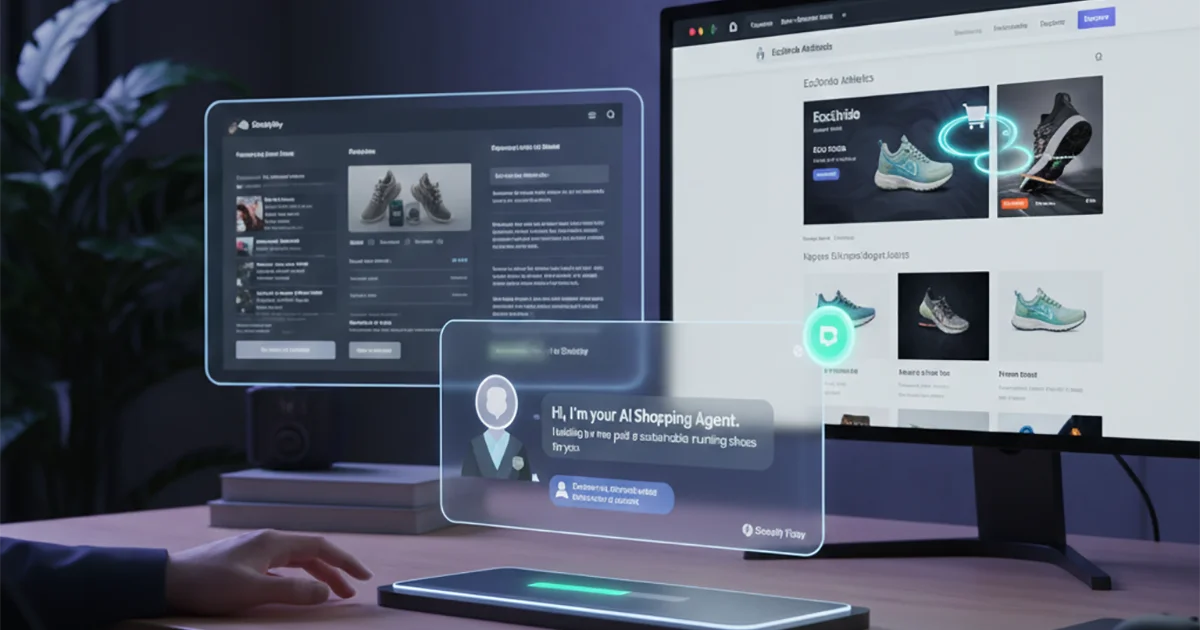
OpenAI Sets 4% Fee on ChatGPT Purchases, Launching New AI Commerce Revenue Model
OpenAI to charge 4% fee on ChatGPT Instant Checkout sales starting January 26. Significantly lower than Amazon's 15% referral fee, AI commerce transforms marketplace economics
Tags
Share this post