O'Reilly Explains 'The Agentic Commerce Revolution' — Redesigning Business for the AI-First Era Beyond Protocols

Akihiro Suzuki
Twitter
Source: www.oreilly.com
Key Takeaways
- O'Reilly Media publishes long-form article providing comprehensive overview of agentic commerce
- Two philosophies compete — ACP (OpenAI/Stripe) vs UCP+AP2 (Google/Shopify alliance) — fundamentally changing commerce structure
- E-commerce operators urgently need API-first adaptation and preparation for "Agent SEO" as a new competitive arena
O'Reilly Radar Presents "Redesigning Commerce"

The Agentic Commerce Revolution – O'Reilly

Beyond protocols: How to rearchitect your business for an AI-first world
On February 5, 2026, technology publisher O'Reilly Media published a long-form article titled "The Agentic Commerce Revolution" on their O'Reilly Radar platform. The author is Heiko Hotz, an expert in AI and ML.
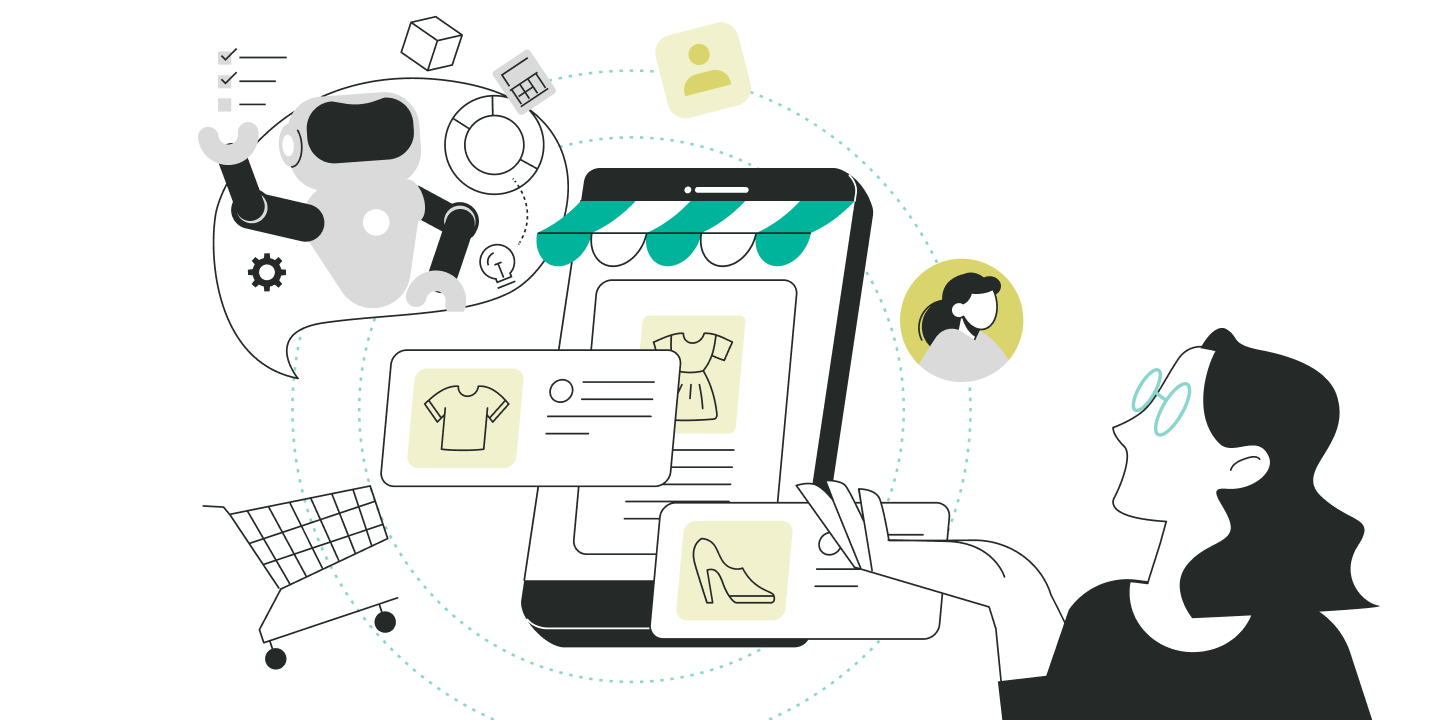
The article's core message is clear: digital commerce, which has operated on the model of "going to a website to shop" for 30 years, is about to be fundamentally overturned by the rise of AI agents. Product "discovery" shifts from search bars to conversations, "comparison" moves from manual human effort to autonomous agent processing, and "payment" transforms from click operations to background API calls.
A 2025 survey by BearingPoint of over 320 C-suite executives predicts that by 2028, more than half of B2B transactions will be conducted through conversational interfaces.
Background and Industry Trends
Movement around agentic commerce has rapidly materialized since late 2025. In September 2025, Google announced the Agent Payments Protocol (AP2) and began partnering with over 60 companies including Adyen, American Express, Mastercard, and PayPal. Around the same time, OpenAI and Stripe jointly developed the Agentic Commerce Protocol (ACP) and released instant checkout functionality in ChatGPT.
In January 2026, Google announced the "Universal Commerce Protocol (UCP)." This open standard, co-developed with Shopify, Etsy, Wayfair, and Target, covers the entire commerce lifecycle from discovery to purchase and order management. Over 20 global partners (Visa, Mastercard, Stripe, Best Buy, Walmart, etc.) have already expressed support.
With these developments occurring simultaneously, O'Reilly's article is attracting attention as providing a "roadmap" for this chaotic landscape.
O'Reilly's "Two Philosophies" and Three-Layer Architecture
The greatest contribution of Hotz's article is organizing the proliferating protocols into "two design philosophies."
Philosophy 1: Conversational Checkout (Convenience-First) — The approach promoted by OpenAI's ACP and Stripe. It can be described as an "impulse buying" model where you find products in chat and complete purchases on the spot. Using disposable tokens called Secure Payment Tokens (SPT), agents complete payments without touching credit card information. According to Stripe's official blog, businesses already processing payments through Stripe can enable agent payments with just one line of code. However, this model is designed with the assumption that "a human is present" and cannot fully accommodate autonomous purchasing behavior.
Philosophy 2: Autonomous Trust Layer (Verification-First) — The UCP + AP2 approach promoted by Google, Shopify, and others. UCP standardizes product catalog publishing, cart management, and order processing, while AP2 ensures payment security with cryptographically signed "mandates." Two types of mandates are key: "Intent Mandates" that execute purchases based on pre-approved rules (such as "buy these sneakers for under $300") even when users are absent, and "Cart Mandates" used when humans make final confirmations for high-value items.
O'Reilly's article makes a further important point: these two philosophies are not a competition of "which will win" but rather "two models that are needed in parallel."
The article also proposes the architectural principle of "three-layer separation" in the commerce stack. By separating the "conversation layer" (the agent itself), "payment vault" (secure management of authentication information), and "merchant API" (machine-readable catalog), teams can evolve at different development speeds.
Impact on E-Commerce Operators and How to Use It
O'Reilly's article presents specific action guidelines for CTOs, CMOs, and CFOs respectively. Here's a summary of points e-commerce operators should address immediately.
CTO/Engineering Department — Preparation for "headless architecture" is top priority. You need a structure that separates commerce logic from the frontend and can publish it as a machine-readable API. UCP standardizes a discovery endpoint called /.well-known/ucp, and direct checkout from Google Search's AI mode and Gemini app will be released soon.
CMO/Marketing Department — A new competitive arena called "Agent SEO" is emerging. This isn't traditional keyword optimization but rather an effort to prepare information that AI agents can parse: structured data, verifiable reviews, and accurate product attributes. In a world where agents become the new gatekeepers, "accuracy of machine-readable data" trumps visuals and ad copy.
CFO/Commerce Department — Risk management and fraud detection systems need to be redesigned into a "two-speed structure." High-volume, low-ticket conversational checkout (ACP-type) and high-value, auditable autonomous purchasing (AP2-type) each require different risk models.
What's important is that a "wait-and-see" stance won't suffice. O'Reilly's article clearly warns that "wait-and-see is not a neutral strategy. It carries the risk of falling structurally behind."
Summary
The most important message from O'Reilly's article is that "protocols are just plumbing." Debating which of ACP, UCP, or AP2 is "best" misses the point. The true winners will be organizations where CTOs, CMOs, and CFOs can break down silos and execute a unified "agent-first strategy."
For e-commerce operators, 2026 is the year to build the foundation for becoming "a store chosen by AI agents." The first step should be to audit the machine-readability of your product data and plan the transition to an API-first architecture.
Related Articles
What is Agentic Commerce? Explaining the New Era of AI-Powered Purchasing
Explore the full scope of Agentic Commerce. AI agents autonomously execute everything from product selection to payment on behalf of users. Discover shocking data including 4,700% increase in AI-driven traffic and 20% of Walmart's traffic from ChatGPT, along with three essential preparation steps companies should start immediately.

Google Announces Universal Commerce Protocol (UCP), Forms Major Coalition for Agentic Commerce Standardization
Google unveiled UCP at NRF 2026, an open standard co-developed with Shopify, Walmart, and 20+ partners to standardize AI agent-powered shopping experiences.

What is Agentic Payment? AI-Powered Next-Gen Automated Payments
[2-Minute Read] Learn about Agentic Payment, where AI agents autonomously handle payments. Discover the mechanisms, key players like Visa, Mastercard, and Stripe, and implementation strategies for automated payment systems.
Tags
Share this post