Google vs OpenAI: The Agentic Commerce Business Model War

Akihiro Suzuki
Twitter
Source: fourweekmba.com
Key Takeaways
- Google and OpenAI are deploying different revenue models in agentic commerce
- Google: Advertising revenue model (Direct Offers), OpenAI: Transaction fee model
- Both companies' protocols (UCP/ACP/AP2) are competing to become industry standards
A Turning Point in AI Commerce Business Models

The Google-OpenAI Agentic Commerce Business Model War

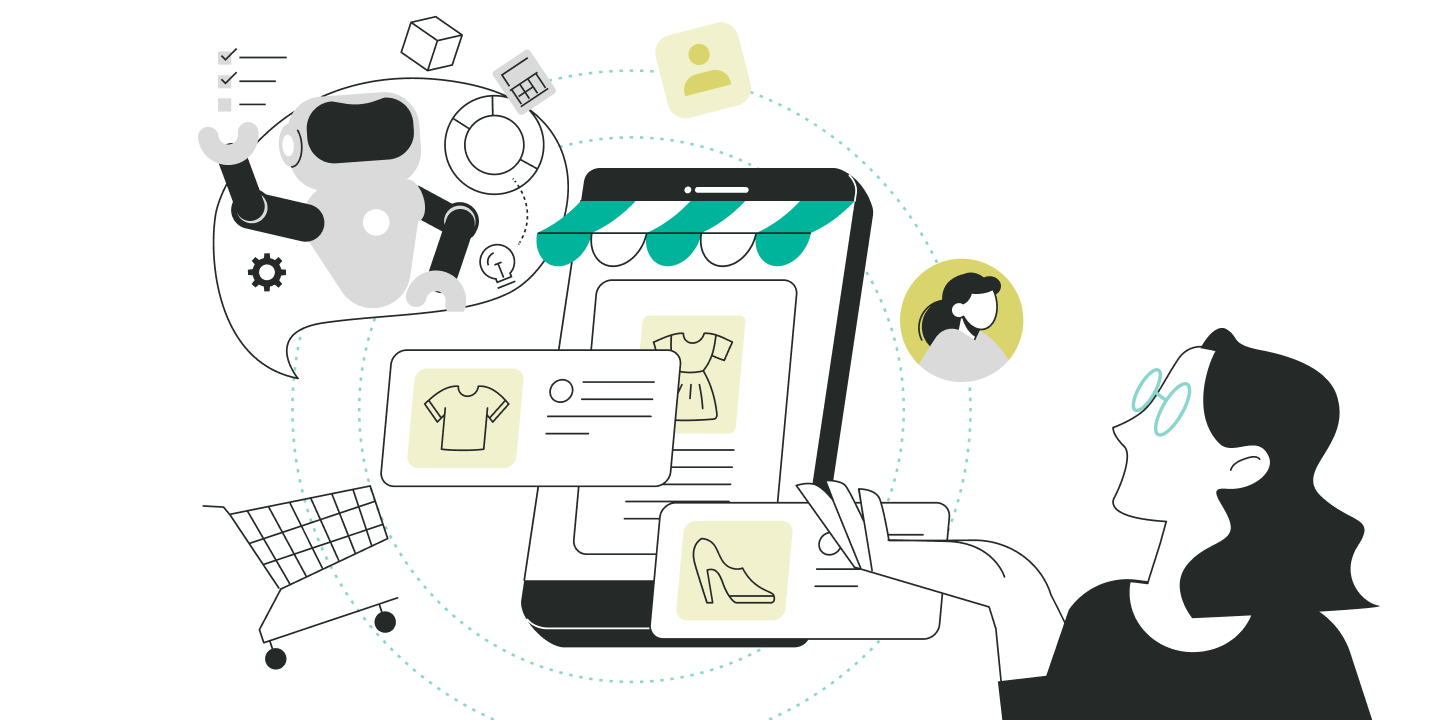
Two giants, two fundamentally different bets on how AI commerce should work. Google preserves its advertising empire by embedding 'Direct Offers' into conversational AI. OpenAI takes transaction fees on actual purchases—no ads, purely organic.
From 2025 to 2026, the battle for dominance in agentic commerce has intensified. However, this is not merely a feature competition. Google and OpenAI are waging an economic war, betting on fundamentally different business models for commerce in the AI era. The winner of this battle will determine the economic structure of AI commerce for the next decade.
Google's Strategy: Defending the Advertising Empire
Maintaining the Ad Model Through Direct Offers
At the NRF (National Retail Federation) conference in January 2026, Google announced the introduction of "Direct Offers" to the AI mode shopping experience. This is a new advertising pilot program that allows retailers to present limited offers within AI mode search results.
Behind this strategy lies the need to protect Google's annual advertising revenue exceeding $237 billion. In traditional Google search, advertising revenue was generated when users clicked on search results to visit retail sites. However, when transactions are completed within AI mode, click counts decrease, threatening advertising revenue.
Google's approach maintains the CPC (cost-per-click) billing model while incorporating advertising into purchases via AI agents. They don't take fees on purchases themselves; instead, they sell advertising space to retailers.
Deploying Universal Commerce Protocol (UCP)
On January 11, 2026, Google announced a new open standard for AI agents called "Universal Commerce Protocol (UCP)." This protocol was co-developed with major companies including Shopify, Etsy, Wayfair, Target, and Walmart.
Currently, more than 20 companies support UCP, including Home Depot, Best Buy, Macy's, Mastercard, Visa, and PayPal.
Shopping Graph Advantage
Google holds a strong competitive advantage with the combination of Gemini AI and Shopping Graph. Shopping Graph contains over 50 billion product listings and is updated more than 2 billion times per hour. Prices, reviews, and inventory status are reflected in real-time.
The Gemini app currently has 650 million monthly active users and has recorded approximately 15% year-over-year growth. The ability to provide AI shopping experiences through UCP to this user base is a significant strength for Google.
OpenAI's Strategy: Betting on the Transaction Fee Model
Instant Checkout and Transaction Fees
In September 2025, OpenAI introduced the "Instant Checkout" feature to ChatGPT. This feature allows users to purchase products directly within the chat. Importantly, this feature is monetized through a transaction fee model rather than advertising.
OpenAI's approach has a clear philosophy. Product recommendations are completely organic (ad-free) and ranked by relevance only. Retailers pay a small fee only for completed purchases, and it's free for users with no price impact.
Sam Altman stated he is "open to receiving transaction fees when someone books a hotel." The reason is that the fee doesn't influence ChatGPT's recommendations, maintaining user trust.
Agentic Commerce Protocol (ACP)
OpenAI co-developed the "Agentic Commerce Protocol (ACP)" with Stripe. This protocol is open-sourced under the Apache 2.0 license and designed to be vendor-agnostic.
The core of ACP is the "Shared Payment Token (SPT)." This token is tied to specific retailers and purchase amounts, enabling transaction completion without exposing buyer payment information.
Currently, U.S. Etsy sellers and over 1 million Shopify stores (including Glossier, SKIMS, Spanx) are compatible. Walmart, Target, L'Oreal, Pandora, and Saks have also announced participation.
Strengthening PayPal Partnership
In October 2025, OpenAI announced a partnership with PayPal. This enables millions of ChatGPT users to use Instant Checkout with PayPal. PayPal also supports payment processing for retailers using OpenAI Instant Checkout.
The Protocol War: ACP vs AP2 vs UCP
The Roles of Three Protocols
Multiple protocols have emerged around the standardization of agentic commerce. Rather than competing, they play complementary roles.
| Protocol | Leading Company | Role | Features |
|---|---|---|---|
| ACP | OpenAI/Stripe | Checkout layer | Purchase flow in conversational AI |
| AP2 | Authorization layer | Trust and consent communication standard | |
| UCP | Integration layer | Full commerce journey integration |
Importance of Interoperability
Large companies don't need to choose just one protocol. Shopify participates in both OpenAI's ACP and Google's UCP. Similarly, Walmart partnered with OpenAI in October 2025 and announced a partnership with Google in January 2026.
This "both sides" strategy is a prudent choice to diversify risk in an environment where it's uncertain which AI platform consumers will favor.
The Essence of the Business Model War
Attention Economy vs Transaction Economy
The essence of this battle lies in the fundamental difference of "what generates profit."
Google's Model: Profiting from Attention- Collect user attention and sell to advertisers
- Monetize through ad insertion in search results and AI responses
- Revenue generated from clicks even without completed purchases
- Fees only collected upon actual transaction completion
- Maintain organic recommendations without advertising
- User trust is the foundation of the business
Market Size and Growth Projections
According to McKinsey projections, the retail market through AI tools and agentic commerce could become a $3-5 trillion opportunity globally by 2030.
Salesforce data shows that AI and agents drove approximately 20% of retail sales (about $272 billion globally) during the 2025 holiday season. Adobe reports that AI-driven site traffic during the holiday period increased 693% year-over-year.
Impact and Applications for E-commerce Businesses
The Need for Multi-Platform Support
For e-commerce businesses, betting on one side by predicting whether Google or OpenAI will win is a high-risk choice. Like Walmart and Shopify, adapting to both platforms ensures you don't miss sales opportunities regardless of which AI becomes mainstream.
Payment Experience Importance
For purchases via AI agents, seamless payment directly impacts competitiveness. Support for major payment methods like Google Pay, PayPal, and Shop Pay is essential. Attention to new mechanisms like SPT (Shared Payment Token) is also necessary.
Conclusion
The Google vs OpenAI agentic commerce war is not merely a technology competition. It's a business model war between Google, which wants to protect $237 billion in annual advertising revenue, and OpenAI, which wants to build a new transaction fee revenue model.
Google is betting that "users will accept advertising within AI." OpenAI is betting they "won't." Which is correct will become clear in the coming years.
What's important for e-commerce businesses is to adapt to both platforms without leaning toward a specific camp. As protocol standardization (UCP, ACP, AP2) progresses, companies that establish early compatibility will gain competitive advantage.
Related Articles
What is Agentic Commerce? Explaining the New Era of AI-Powered Purchasing
Explore the full scope of Agentic Commerce. AI agents autonomously execute everything from product selection to payment on behalf of users. Discover shocking data including 4,700% increase in AI-driven traffic and 20% of Walmart's traffic from ChatGPT, along with three essential preparation steps companies should start immediately.

Google Announces Universal Commerce Protocol (UCP), Forms Major Coalition for Agentic Commerce Standardization
Google unveiled UCP at NRF 2026, an open standard co-developed with Shopify, Walmart, and 20+ partners to standardize AI agent-powered shopping experiences.

What is Instant Checkout? Revolutionary Feature for In-Chat Purchase Completion
[2-Minute Read] Learn about Instant Checkout mechanisms and benefits. Discover how completing product discovery to purchase within AI chat reduces abandonment and boosts conversion in Agentic Commerce implementation.
Tags
Share this post