
Alibaba Integrates Shopping into Qwen AI App: The Dawn of Agentic AI Era

Akihiro Suzuki
Twitter
Source: www.alizila.com
Key Takeaways
- Alibaba integrates Taobao, Alipay, and Fliggy into Qwen app, enabling complete purchases through conversation alone
- Chinese tech giants investing billions monthly in fierce AI×EC market competition
- E-commerce businesses urgently need to prepare for conversational commerce and payment/logistics integration
Alibaba Delivers Major Qwen App Upgrade
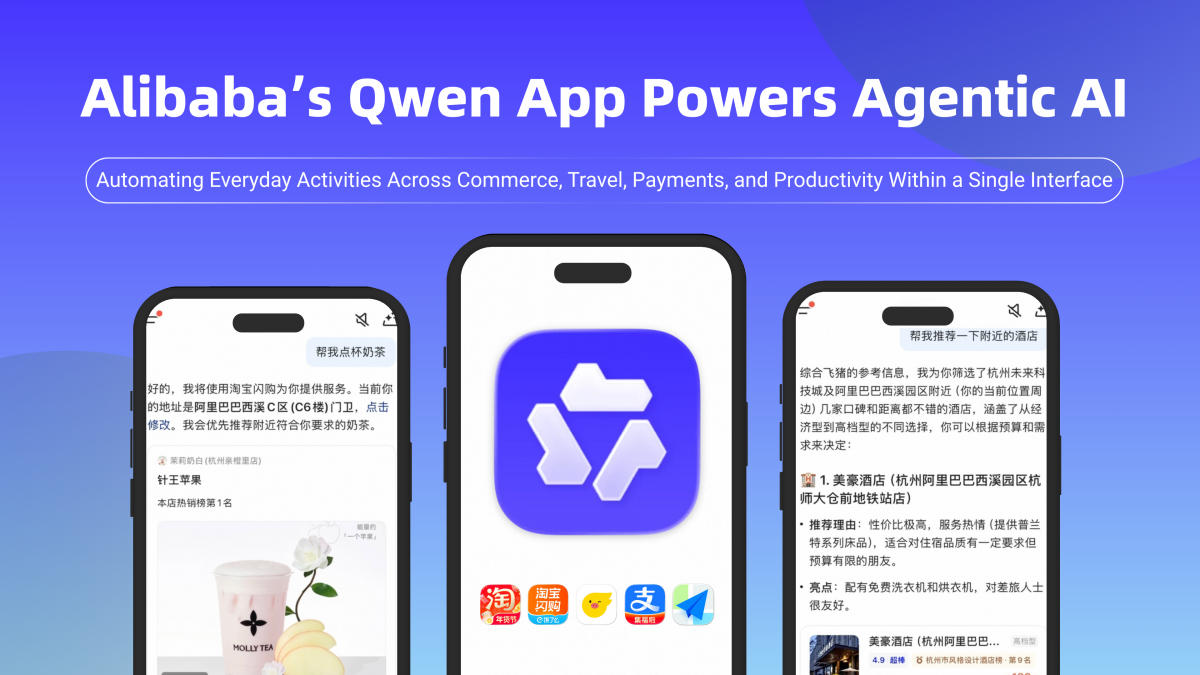
Alibaba's Qwen App Advances Agentic AI Strategy

Alibaba turns core ecosystem services into executable AI capabilities with major Qwen app update.
On January 15, 2026, China's largest e-commerce company Alibaba implemented a major update to its flagship AI assistant app "Qwen." The update integrates major services from its ecosystem including Taobao, Alipay, travel booking service Fliggy, and map service Amap.
Users can now complete everything from product search to purchase and payment using just voice or text commands, without switching between apps. Alibaba Vice President Wu Jia described it as "the transformation from AI that understands to AI that acts" at the announcement event.
The Qwen app surpassed 100 million monthly active users (MAU) just two months after its public beta launch in November 2024. In November, it recorded an astonishing 149% month-over-month growth rate, becoming the world's fastest-growing AI app.
Background and Industry Trends: Fierce Competition in China's AI×EC Market
The Battle for Supremacy with ByteDance
In China's AI consumer market, Alibaba and ByteDance are engaged in intense competition. ByteDance's AI app "Doubao" has 172 million MAU as of September 2025, establishing itself as China's most-used AI app.
In mid-October 2025, ByteDance integrated EC shopping features into Doubao ahead of competitors. When users type "recommend a humidifier for northern homes," five products are suggested within seconds, linking directly to Douyin's shopping platform. The design allows completion from product browsing to payment in about 30 seconds.
The Reality of Massive Investment
China's top three tech companies (ByteDance, Alibaba, Tencent) are estimated to be investing approximately 300 million yuan (about $42 million) monthly in AI shopping tools. This investment came ahead of the 2025 "Singles Day" sale, demonstrating the intensity of competition for market share.
China's EC market size reaches approximately 15 trillion yuan (about $2.1 trillion) annually. Douyin captured a 3.5 trillion yuan share in 2024, accounting for 23% of the market. Meanwhile, Alibaba's platforms maintain their lead with over 8 trillion yuan in volume.
Qwen App New Features in Detail
End-to-End Shopping Experience
The main features enabled by this update are as follows:
Shopping Features (Taobao Integration)- Discover and recommend products through conversation
- Handle vague requests and complex requirements
- Leverage Taobao's product data and consumer reviews
- Currently in pilot testing for select categories
- Native AI payments without leaving the conversation
- Complete transactions with explicit user approval only
- Support from food delivery to travel booking
- Itinerary design and comparison
- Booking for flights, hotels, and attractions
- Route guidance and navigation
- Make actual phone calls to restaurants
- Generate call transcriptions
- Process up to 100 documents simultaneously
- Build web applications
Demonstration Examples
The announcement event featured live demonstrations of actual use cases.
Vice President Wu Jia ordered 40 drinks from a local milk tea chain using only voice commands. The app automatically applied discounts and completed payment within the app. Demonstrations also included recommending robot vacuum cleaners for cat-owning households and booking flights and hotels for a family trip to Hainan Island.
However, it was also revealed that integration across all categories is not yet complete, such as being unable to generate purchase links for hiking sweaters at this time.
The Big Picture of Alibaba's AI Ecosystem
Open Source Strategy Success
The "Qwen" family of large language models developed by Alibaba has surpassed 700 million cumulative downloads on developer platform Hugging Face. As of October 2024, it overtook Meta's Llama to become the world's most-used open-source AI system.
December 2025's single-month downloads exceeded the combined total of the top 8 models from Meta, DeepSeek, OpenAI, Mistral, Nvidia, Zhipu AI, Moonshot, and MiniMax.
The Qwen family supports 119 languages and dialects, publishing approximately 400 models ranging from 600 million parameter small models to tens of billions of parameter large models. Derivative versions have reached over 180,000.
$53 Billion+ Major Investment
Alibaba CEO Eddie Wu announced investments of over 380 billion yuan (approximately $53 billion) in AI infrastructure over the next three years. This exceeds the total investment in AI and cloud computing over the past decade.
Investment plans include opening first overseas data centers in Brazil, France, and the Netherlands, with expansion to Malaysia, Dubai, Mexico, Japan, and South Korea. Wu stated the goal is to become "a world-leading full-stack AI service provider."
Impact and Applications for E-commerce Businesses
The Transformation Brought by "Agentic AI"
This Qwen update symbolizes a new trend called "agentic commerce." While traditional chatbots only "answer questions," agentic AI has the ability to "actually execute tasks."
Global tech giants like Amazon, Meta, and Google are also moving in the same direction. Companies with "super apps" like Alibaba and Tencent, which have already integrated hundreds of services, are considered to have an early-stage advantage.
Points for Japanese E-commerce Businesses to Consider
Short-term Response (1-2 years)-
Consider Implementing Conversational Interfaces
- Advance chatbot sophistication
- Prepare for voice command support
- Strengthen LINE and messenger integrations
-
Structure Product Data
- Prepare AI-friendly product descriptions
- Enhance attribute information and review data
- Consider multilingual support
-
Payment and Logistics Integration Strategy
- Design one-stop experiences
- API integration with payment service providers
- Connection to instant delivery infrastructure
-
Participation in AI Ecosystems
- Leverage major platform AI features
- Consider integration with proprietary AI assistants
- Optimize product data feeds
Risks to Watch
Attention should be paid to the "AI shopping paradox" seen in the Chinese market. Despite technical sophistication, monetization models have not been established. The more neutral AI recommendations become, the more conflict may arise with traditional advertising and commission models.
It is also telling that standalone AI startups face entry barriers. Platform operators with payment, logistics, and merchant networks have the advantage, and this should be understood as a "platform war" rather than an "application competition."
Conclusion
Alibaba's Qwen app integration represents a turning point where AI technology brings fundamental transformation to the e-commerce industry. The experience of "completing purchases through conversation alone" has the potential to fundamentally change consumer purchasing behavior.
In the Chinese market, ByteDance and Alibaba are already investing billions of yen monthly, competing for supremacy in the AI×EC market. Innovation born from this competition is expected to spread to global markets sooner or later.
For Japanese e-commerce businesses, it is important to watch these developments while making gradual preparations such as conversational interfaces and product data structuring. Building systems for the agentic AI era may determine future competitive advantage.
Related Articles

What is Agentic Commerce? Explaining the New Era of AI-Powered Purchasing
Explore the full scope of Agentic Commerce. AI agents autonomously execute everything from product selection to payment on behalf of users. Discover shocking data including 4,700% increase in AI-driven traffic and 20% of Walmart's traffic from ChatGPT, along with three essential preparation steps companies should start immediately.
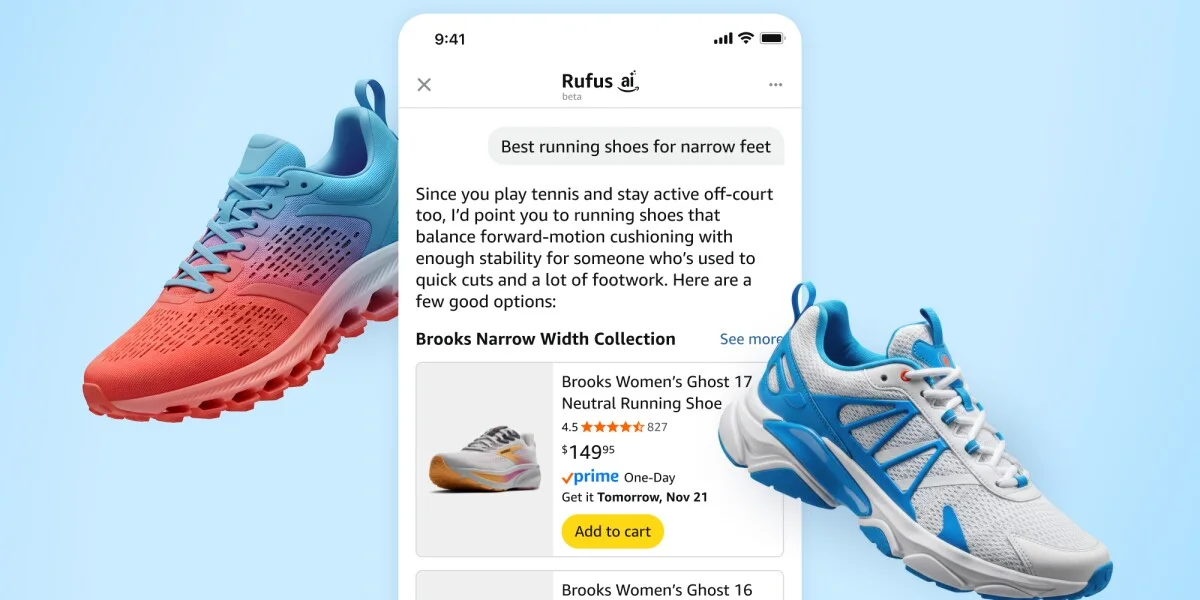
Amazon Rufus: The Full Picture of the AI Shopping Assistant Used by 250 Million People
Amazon Rufus reaches 250 million users and drives $10 billion in additional sales. Deep dive into its technology, features, and implications for e-commerce.

What is Apps in ChatGPT? Complete Guide to Features and Use Cases
Learn about Apps in ChatGPT, the new feature that lets you use third-party apps directly within conversations. Discover how Instacart and DoorDash enable shopping from chat to checkout, and explore the future of conversational commerce.
Tags
Share this post