Wayfair Partners with Google to Co-develop New Standards for Agentic Commerce

Akihiro Suzuki
Twitter
Source: www.pymnts.com
Key Takeaways
- Wayfair co-develops Google's Universal Commerce Protocol (UCP), establishing new standards for AI-driven shopping
- Direct checkout from Wayfair now available through Google Search AI Mode and Gemini app, announced January 2026
- The agentic commerce market is projected to reach $3-5 trillion by 2030
Wayfair Joins Google's Agentic Commerce Initiative
Wayfair Participates in Google's New Standard for Agentic Commerce

Wayfair said it participated in Google's Universal Commerce Protocol and will soon enable checkout from Wayfair without leaving Google.
On January 12, 2026, Wayfair, a leading U.S. e-commerce platform specializing in furniture and home goods, announced its participation as a co-development partner in Google's Universal Commerce Protocol (UCP). UCP is an open standard that enables seamless and secure interactions between AI agents and retail platforms.
Through this partnership, Wayfair customers will be able to check out directly on Wayfair when discovering products through Google Search's AI Mode or the Gemini app, without leaving Google's platform. Importantly, Wayfair will serve as the "merchant of record," maintaining control over pricing, delivery, and customer support.
Fiona Tan, Wayfair's Chief Technology Officer, stated: "Wayfair is investing in AI-powered product discovery—not just within our own app, but across external AI platforms. The Universal Commerce Protocol serves as a common language for this new ecosystem."
Background and Industry Trends
What is Agentic Commerce?
"Agentic commerce" refers to a next-generation shopping experience where AI agents execute product searches, comparisons, and purchases on behalf of users. Unlike traditional e-commerce, where consumers navigate multiple sites to manually compare and purchase, agentic commerce enables AI to understand user intent through conversation and complete the entire journey from product recommendation to purchase.
Google announced UCP on January 11, 2026, as a common protocol to enable this new era of commerce. By having AI agents, retailers, and payment providers communicate in a unified "language," UCP eliminates the need for individual system integrations, delivering a smooth purchasing experience.
Market Size and Industry Expectations
According to a report published by McKinsey in October 2025, AI-powered tools and agentic commerce are projected to create a $3-5 trillion global opportunity in the retail market by 2030. This represents a paradigm shift for the entire e-commerce industry.
Against this backdrop, industry leaders such as Shopify, Etsy, Target, and Walmart have joined as UCP co-developers, while more than 20 companies including Adyen, American Express, Best Buy, Mastercard, Stripe, The Home Depot, and Visa have endorsed the protocol.
How UCP Works and Wayfair's Strategy
Technical Features of Universal Commerce Protocol
UCP is an open standard that functions across the entire shopping journey, from product discovery to purchase and post-purchase support. Key features include:
- Establishing a Common Language: AI agents and retail systems communicate using a unified protocol, reducing the burden of individual integrations
- Multi-Platform Support: Consistent purchasing experience across Google Search, Gemini, and other AI platforms
- Security and Privacy: Retailers maintain control over customer data and transactions as merchant of record
- Payment Flexibility: Compatible with multiple payment providers
On January 11, Google CEO Sundar Pichai announced UCP at the National Retail Federation (NRF) event, targeting adoption across the entire retail industry.
Wayfair's Strategic Objectives
As an e-commerce platform specializing in furniture and home goods, Wayfair is building an environment where customers can discover its products regardless of where they start their shopping journey. As CTO Fiona Tan noted, the strategy is to "extend AI-powered discovery not just within our own app but across external AI platforms."
By participating in UCP, Wayfair gains the following advantages:
- Extended Reach: Direct access to Google Search and Gemini's massive user base
- Enhanced Customer Experience: Reduced abandonment rates through seamless checkout
- Brand Control: Maintaining price and service quality as merchant of record
- First-Mover Advantage: Influence over the standardization process as a UCP co-developer
Impact on E-commerce Businesses and How to Leverage UCP
Integration with Major Platforms Becomes Essential
The Wayfair-Google partnership sends an important signal to e-commerce businesses. As AI agents become the primary entry point for purchases, integration with Google, Amazon, and other AI platforms—not just proprietary e-commerce sites—will be key to competitiveness.
Particularly noteworthy is that UCP is an "open standard." This means it can connect with multiple AI agents and payment providers without depending on a specific platform. Small and medium-sized e-commerce businesses may also be able to enter agentic commerce by leveraging UCP-compatible platforms like Shopify and Stripe.
Practical Preparations
To prepare for the agentic commerce era, e-commerce businesses should consider the following actions:
- Structure Product Data: Organize structured data (Schema.org, etc.) so AI agents can accurately understand product information
- Strengthen API Integration: Consider implementing UCP-compatible APIs or migrating to compatible platforms (Shopify, etc.)
- Ensure Payment Flexibility: Support multiple payment methods and providers
- Optimize Customer Support: Provide consistent support experiences even for purchases made through AI agents
As the Wayfair case demonstrates, the key strategy is maintaining your brand and customer relationships as "merchant of record" while leveraging the reach of external platforms.
When Will It Be Available?
According to Wayfair's announcement, the checkout feature through Google Search AI Mode and the Gemini app is expected to launch "soon." While no specific date has been announced, deployment is anticipated within the first quarter of 2026.
For other e-commerce businesses to leverage UCP, integration will require using APIs and SDKs provided by platforms like Google and Shopify. UCP specifications are open, and detailed documentation and developer tools are expected to be released in the coming months.
Summary
The Wayfair-Google partnership symbolizes the dawn of a new shopping experience called agentic commerce. With the emergence of the Universal Commerce Protocol (UCP) as a common foundation, AI agents will seamlessly connect retailers and payment providers, enabling consumers to discover and purchase optimal products from any platform.
For e-commerce businesses, this change represents an opportunity rather than a threat. By actively participating in the new ecosystem where AI agents thrive, rather than being confined to proprietary sites, businesses can expand their reach and enhance customer experience. Like Wayfair's early investment as a UCP co-developer, companies that adapt to industry standards over the coming years will build competitive advantages.
Next to watch: the release of detailed UCP technical specifications and the moves of other major e-commerce players (Amazon, Rakuten, etc.). Agentic commerce is just beginning, and 2026 will be a pivotal year for establishing its foundation.
References
- Wayfair Official Press Release - Wayfair Partners with Google to Advance AI-Powered Shopping for the Home
- Google Official Blog - New tech and tools for retailers to succeed in an agentic shopping era
- McKinsey - The agentic commerce opportunity: How AI agents are ushering in a new era for consumers and merchants
- PYMNTS.com - Wayfair Participates in Google's New Standard for Agentic Commerce
- TechCrunch - Google announces a new protocol to facilitate commerce using AI agents
- CNBC - Google bolsters bet on AI-powered commerce with new platform for shopping agents
- Sundar Pichai's remarks at NRF 2026
Related Articles
Google Announces Universal Commerce Protocol (UCP), Forms Major Coalition for Agentic Commerce Standardization
Google unveiled UCP at NRF 2026, an open standard co-developed with Shopify, Walmart, and 20+ partners to standardize AI agent-powered shopping experiences.
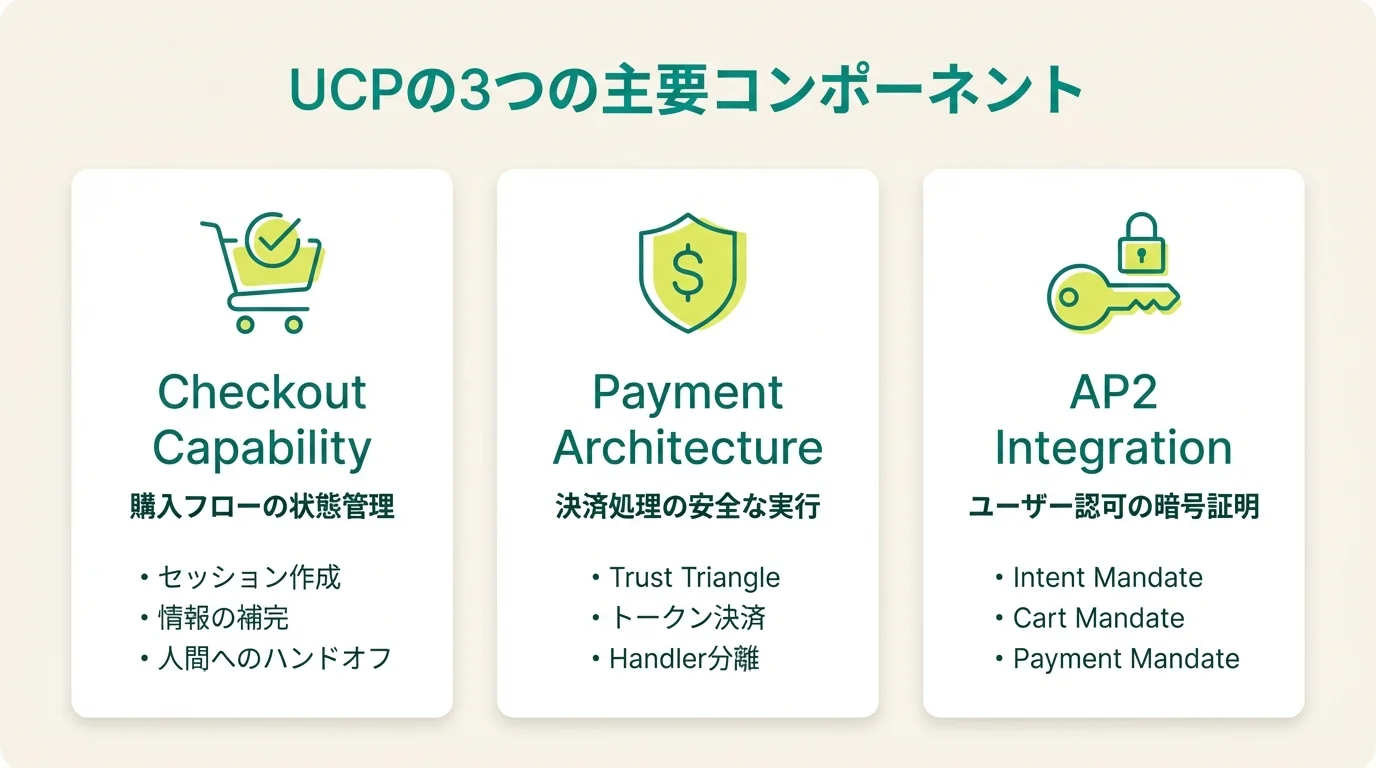
Understanding UCP Technical Specifications: How AI Agents Purchase Products
A deep dive into the technical architecture of Google's Universal Commerce Protocol (UCP). Learn about checkout state transitions, the Trust Triangle payment model, and AP2 mandates for conditional automatic purchases.
Shopify Partners with Both Google and Microsoft for Agentic Commerce, Pursues All-Encompassing Strategy
Shopify co-develops Google's UCP while also integrating with Microsoft Copilot Checkout. Building a 'buy from any AI' environment as an e-commerce platform.
Tags
Share this post