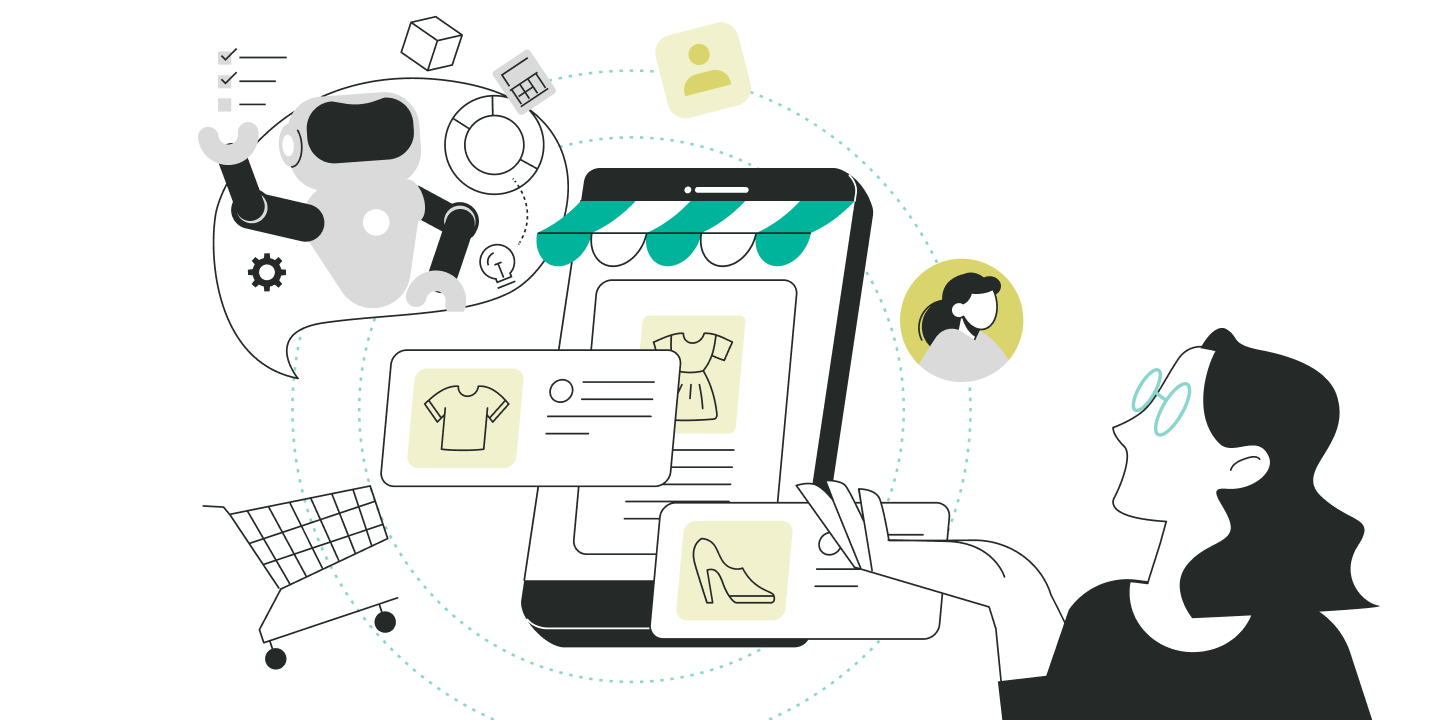
Salesforce and Google Jointly Announce "Universal Commerce Protocol," Launching a New Standard for AI Shopping

Akihiro Suzuki
Twitter
Source: smallbiztrends.com
Key Takeaways
- Salesforce and Google announce UCP, a new protocol to unify AI-driven shopping experiences
- Over 20 global partners join as AI agent-powered e-commerce transactions move toward standardization
- E-commerce merchants can gain direct purchases from Google Search AI Mode and Gemini apps through UCP adoption
Salesforce Announces Support for Google's UCP
Salesforce and Google Launch Universal Commerce Protocol for AI-Driven Shopping

Discover how Salesforce and Google are revolutionizing online shopping with the launch of the Universal Commerce Protocol, an innovative framework designed to enhance AI-driven shopping experiences. Learn about its implications for retailers and consumers alike.
On January 14, 2026, Salesforce announced an expanded partnership with Google, revealing support for a new open standard called the "Universal Commerce Protocol (UCP)." UCP is a framework for connecting AI agents with merchant backend systems in a standardized way.
Merchants using Salesforce's "Agentforce Commerce" will be able to deliver new AI-driven shopping experiences on Google's AI surfaces, including Google Search's "AI Mode" and the Gemini app, through native UCP support.
Background and Industry Context
The emergence of UCP reflects a structural shift in online shopping. Consumers are increasingly discovering products through AI search engines like Gemini, ChatGPT, and Perplexity, while direct visits to retail sites are declining.
According to Salesforce, AI drove $262 billion in sales during the 2025 Cyber Week period. This figure demonstrates that AI's impact on commerce has already reached a level that cannot be ignored.
Against this backdrop, Google officially announced UCP at the NRF (National Retail Federation) annual conference on January 11, 2026. Major retailers including Shopify, Etsy, Wayfair, Target, and Walmart participated in its development, with over 20 ecosystem partners including payment providers such as Adyen, American Express, Mastercard, Visa, and Stripe.
UCP Technical Architecture and Salesforce Integration Details
UCP is a common language for the era of "agentic commerce" — where AI agents execute everything from product discovery to purchase on behalf of consumers. Its design has three key characteristics.
First, "capability declaration and discovery." Merchants publish profiles of their supported capabilities (inventory checks, loyalty programs, custom features, etc.). AI agents dynamically discover these profiles and proceed with transactions within supported scope.
Second, "flexible integration methods." UCP supports multiple connection methods including APIs, Agent2Agent (A2A), and Model Context Protocol (MCP), enabling adoption suited to each merchant's technical environment.
Third, "payment architecture separation." UCP adopts a unique design that separates consumer payment methods (such as Google Pay) from payment processors. This makes scaling across diverse payment providers easier.
For the Salesforce integration, it will be offered as a native pre-built integration within Agentforce Commerce. Salesforce's Nitin Mangtani (SVP & GM, Agentforce Commerce and Retail) stated that merchants can "expand their reach while maintaining direct customer relationships and full operational control."
Meanwhile, Google's Ashish Gupta (VP/GM, Merchant Shopping) noted that "UCP connects AI-driven shopping experiences with merchant systems as an open standard, enabling more retailers to participate."
Impact and Practical Applications for E-Commerce Merchants
UCP's impact on e-commerce merchants can be broadly divided into three areas.
First, "acquiring new sales channels." Merchants can complete checkout at the exact moment consumers are researching products on Google Search's AI Mode or the Gemini app. This is an AI-native customer acquisition channel distinct from traditional SEO or listing ads.
Second, "reducing integration costs." Standardized protocols eliminate the need to build custom integrations for each AI platform. Merchants already using Agentforce Commerce can leverage pre-built integrations for rapid market entry.
Third, "maintaining merchant control." Even in UCP transactions, merchandising, fulfillment, customer service, and post-purchase support all remain under merchant control. Even when AI agents autonomously complete transactions, "graceful handoff" to human staff is built into the design.
However, specific rollout timelines and merchant eligibility criteria are not yet finalized. Salesforce says it is developing "technical requirements, merchant eligibility, deployment sequencing, and support models" with Google and ecosystem partners.
Summary
UCP is not just an API specification — it's an infrastructure standard for the era when AI agents become a primary commerce channel. In addition to major players like Shopify, Walmart, and Target, small and mid-sized merchants also gain access through Salesforce's Agentforce Commerce.
The immediate action for e-commerce merchants is to keep their Google Merchant Center data attributes up to date. With UCP, product information accuracy directly impacts AI agent recommendation precision. Furthermore, merchants using Salesforce Commerce Cloud should watch for updates on Agentforce Commerce's UCP support and prepare for early onboarding.
The era when shopping becomes a "conversation" rather than a "destination" is drawing steadily closer.
Related Articles

Google Announces Universal Commerce Protocol (UCP), Forms Major Coalition for Agentic Commerce Standardization
Google unveiled UCP at NRF 2026, an open standard co-developed with Shopify, Walmart, and 20+ partners to standardize AI agent-powered shopping experiences.
Salesforce Unveils Major Agentforce Commerce Updates with Two-Way AI Communication at NRF 2026
Salesforce announces new Agentforce Commerce features at NRF 2026, enabling two-way AI conversations via SMS, WhatsApp, and email. Companies using AI agents achieved 59% higher growth rates.
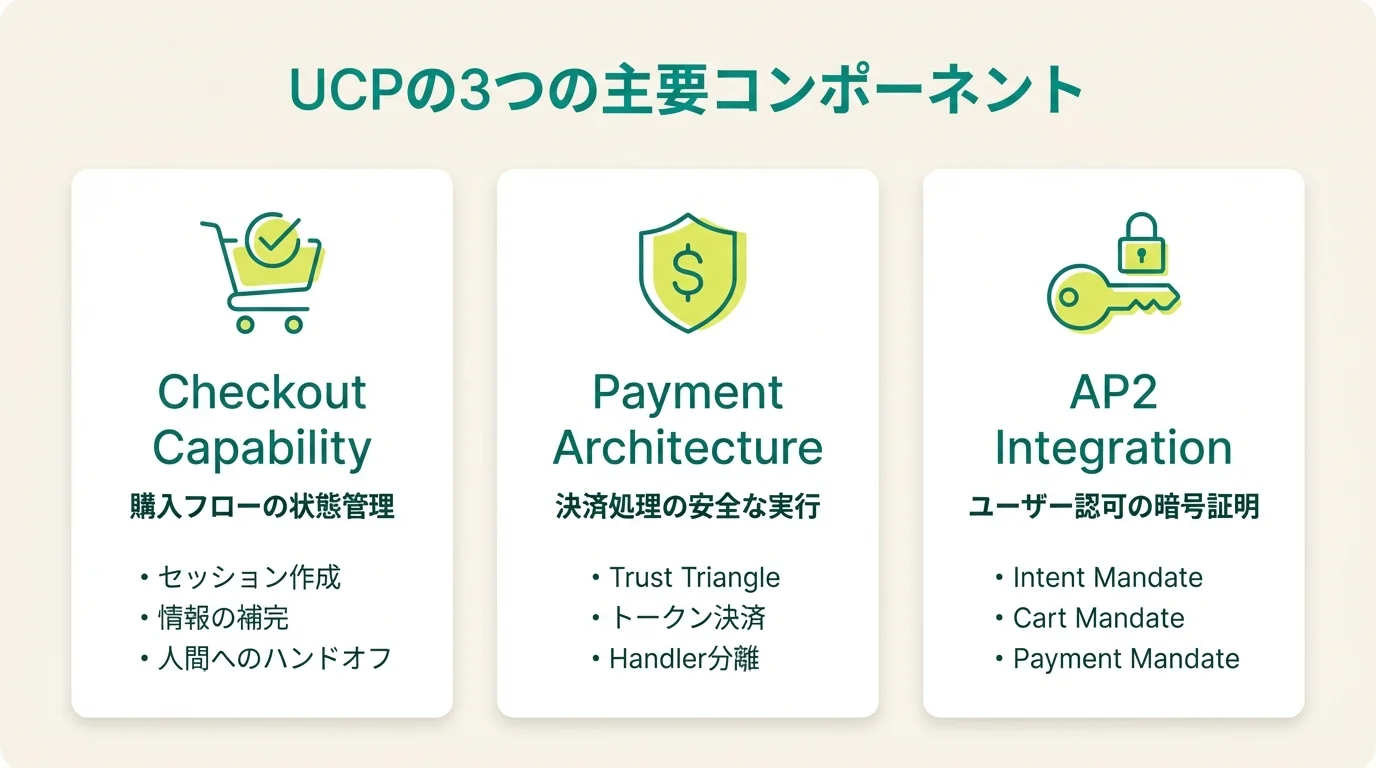
Understanding UCP Technical Specifications: How AI Agents Purchase Products
A deep dive into the technical architecture of Google's Universal Commerce Protocol (UCP). Learn about checkout state transitions, the Trust Triangle payment model, and AP2 mandates for conditional automatic purchases.
Tags
Share this post