
Pacsun's "Agentic Checkout" Revolution—The Frontline of AI Shopping Reaching Gen Z

Akihiro Suzuki
Twitter
Source: www.mytotalretail.com
Key Takeaways
- Pacsun implements Salesforce Agentforce Commerce, enabling conversational shopping and direct purchases on ChatGPT
- McKinsey predicts the agentic commerce market could reach up to $5 trillion globally by 2030
- E-commerce operators should begin preparing product data and considering AI platform integrations now
Pacsun Achieves Next-Generation CX with Agentic Checkout

Pacsun Uses Agentic Checkout for Seamless CX

While at the 2026 NRF Big Show, Editor-in-Chief Joe Keenan discussed agentic checkout with Shirley Gao of Pacsun and Sharon Gee of Commerce.
US youth apparel retail giant Pacsun has achieved conversational shopping on ChatGPT and seamless checkout experiences by leveraging Salesforce's Agentforce Commerce platform.
Pacsun's Chief Digital & Information Officer, Shirley Gao, stated in Salesforce's official announcement: "The integration of Agentforce Commerce and OpenAI is a powerful opportunity for us to deploy our products on AI platforms like ChatGPT. This allows us to turn conversations into meaningful engagement and build lasting relationships with our Gen Z and Gen Alpha customers."
This move symbolizes the "agentic commerce" trend that has been rapidly advancing since late 2025. A new purchasing experience that overturns conventional e-commerce norms is becoming reality—where consumers discover products through AI assistants, compare them, and complete purchases directly.
Why "Agentic Commerce" Now?
Agentic commerce is a new commerce model where AI agents autonomously perform product searches, comparisons, price negotiations, and purchases on behalf of consumers. According to McKinsey's report, the market is predicted to reach up to $5 trillion globally by 2030, with US B2C retail alone reaching $1 trillion.
McKinsey analyzes that this transformation will progress faster than the spread of the internet or smartphones. The reason is clear: AI agents can leverage existing digital infrastructure as-is, without needing to wait for new infrastructure to be built.
Indeed, the numbers support this rapid growth. According to Adobe, AI-driven e-commerce traffic during the 2025 holiday season increased 693% year-over-year. Salesforce data shows that AI agents were involved in 17% of online orders (totaling $13.5 billion) during the 2025 Thanksgiving weekend.
Pacsun's Strategy and Agentforce Commerce Features
Pacsun's Chosen Agentic Strategy
Pacsun's CEO, Brie Olson, emphasized in a Modern Retail interview that "agentic commerce is not a new topic for us. We've been watching how agentic commerce would unfold over the past 12-18 months."
While acknowledging surprise at the rapid movement since August, Olson states they are "adapting to the agentic world with a careful and strategic approach."
Under CIO Shirley Gao's leadership, Pacsun developed an 18-month AI implementation roadmap. They completed their migration to Snowflake as a data foundation early, building the groundwork for AI utilization. "Gen Z and Gen Alpha don't say anything when they leave. We need the speed to detect signals before they go," Gao explains.
Specific Features of Agentforce Commerce
Salesforce's Agentforce Commerce is designed as the first platform that allows retailers to control the entire agentic shopping journey. Key features include:
Guided Shopping (Currently Available)
Provides conversational shopping experiences with rich content, interactive image carousels, and one-click checkout. Achieves twice the performance speed of traditional solutions.
Order Routing for Order Management (Scheduled for Winter 2026 Release)
Optimally routes orders across complex fulfillment networks, balancing cost reduction and revenue maximization.
Agentic Commerce Protocol (ACP) IntegrationThrough integration with Stripe, direct purchases and payments within ChatGPT become possible. Consumers can seamlessly complete everything from product discovery to purchase completion without leaving the conversation.
Industry-Wide Trends
Pacsun's initiative is not an isolated case. Google announced the Universal Commerce Protocol (UCP) at NRF 2026, co-developed with Shopify, Etsy, Wayfair, Target, and Walmart. More than 20 companies including Visa, Mastercard, American Express, and Stripe have expressed support.
Microsoft is also rolling out Copilot Checkout, providing an experience where "intent to transaction completes in seconds without leaving the conversation" (Shopify VP Mani Fazeli).
Meanwhile, Amazon released an agentic tool called "Buy For Me" while blocking external AI agents from accessing their site—a strategy seen as protecting their $56 billion advertising business.
Impact on E-commerce Operators: Three Actions to Start Now
1. "AI Optimization" of Product Data
In the agentic commerce era, whether AI can "understand" products holds the key to sales. It's important to leverage tools like Feedonomics to optimize and provide product information to AI search engines and shopping assistants.
Gao explains: "Predictive AI fails without first-party data. But with data, when a customer asks 'where should I buy?', we can ensure Pacsun appears as an accurate and relevant answer."
2. Consider Integration with Major AI Platforms
Integration with AI assistants that consumers use daily—ChatGPT, Google Gemini, Microsoft Copilot—becomes key to expanding sales channels. At present, integration through platforms like Salesforce, Shopify, and BigCommerce is the realistic option.
3. Reassess Strategies for Reaching Younger Demographics
According to Salesforce, 39% of consumers and the majority of Gen Z are already using AI for product discovery. Morgan Stanley research shows 23% of Americans made AI-driven purchases within the past month. Beyond traditional SEO and listing ads, optimization for "being chosen by AI" is becoming a new marketing challenge.
Summary: E-commerce Operators Stand at a Turning Point Toward "AI First"
Pacsun's implementation of agentic checkout isn't just an advanced case study—it signals the beginning of transformation across the entire e-commerce industry.
As Retail Brew called "2025 the birth year of agentic commerce," 2026 is predicted to be the year when major tech companies, retailers, and startups compete over "whose AI agent will become the default shopping interface."
However, challenges remain. Forrester analyst Emily Pfeiffer points out that she is "surprised by the gap between promise and reality," acknowledging that practical use cases are still limited.
Nevertheless, given the speed of change, starting preparations now is important. Organizing product data, understanding AI platform trends, and responding to changes in young consumers' purchasing behavior—these preparations will determine competitive advantage in the agentic commerce era.
Related Articles
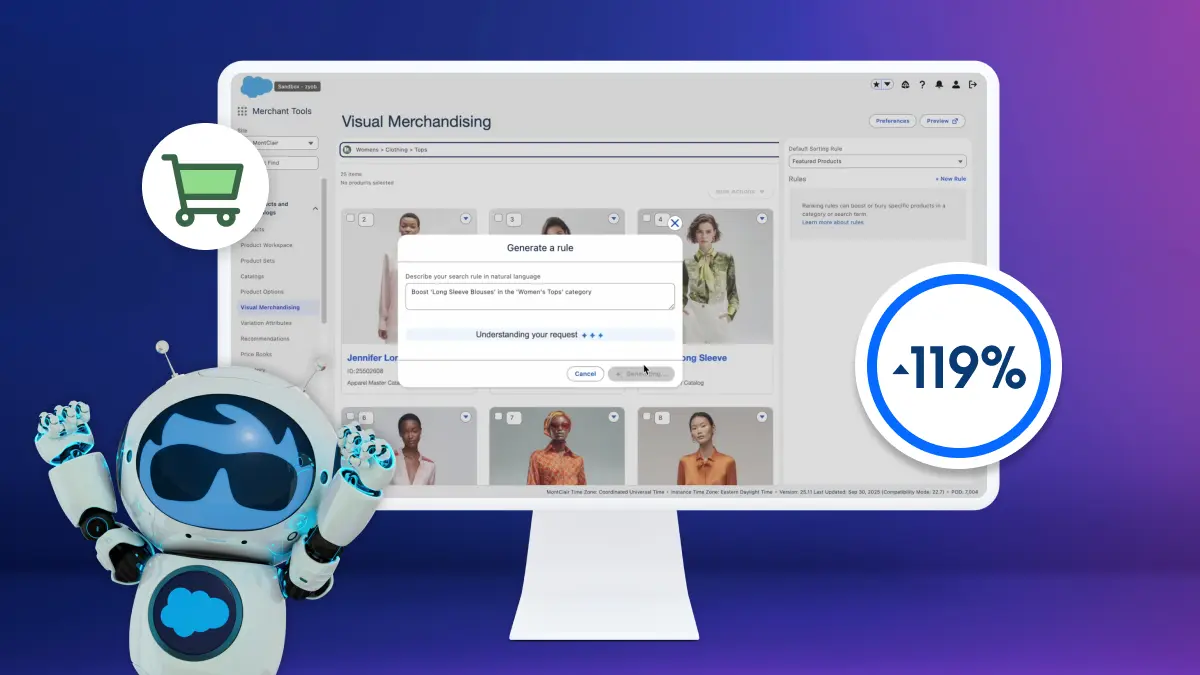
Salesforce Unveils Major Agentforce Commerce Updates with Two-Way AI Communication at NRF 2026
Salesforce announces new Agentforce Commerce features at NRF 2026, enabling two-way AI conversations via SMS, WhatsApp, and email. Companies using AI agents achieved 59% higher growth rates.

What is Apps in ChatGPT? Complete Guide to Features and Use Cases
Learn about Apps in ChatGPT, the new feature that lets you use third-party apps directly within conversations. Discover how Instacart and DoorDash enable shopping from chat to checkout, and explore the future of conversational commerce.
Shopify Partners with Both Google and Microsoft for Agentic Commerce, Pursues All-Encompassing Strategy
Shopify co-develops Google's UCP while also integrating with Microsoft Copilot Checkout. Building a 'buy from any AI' environment as an e-commerce platform.
Tags
Share this post