Google's UCP Announcement Reshapes Agentic Commerce Landscape, Questions Amazon's Retail Dominance

Akihiro Suzuki
Twitter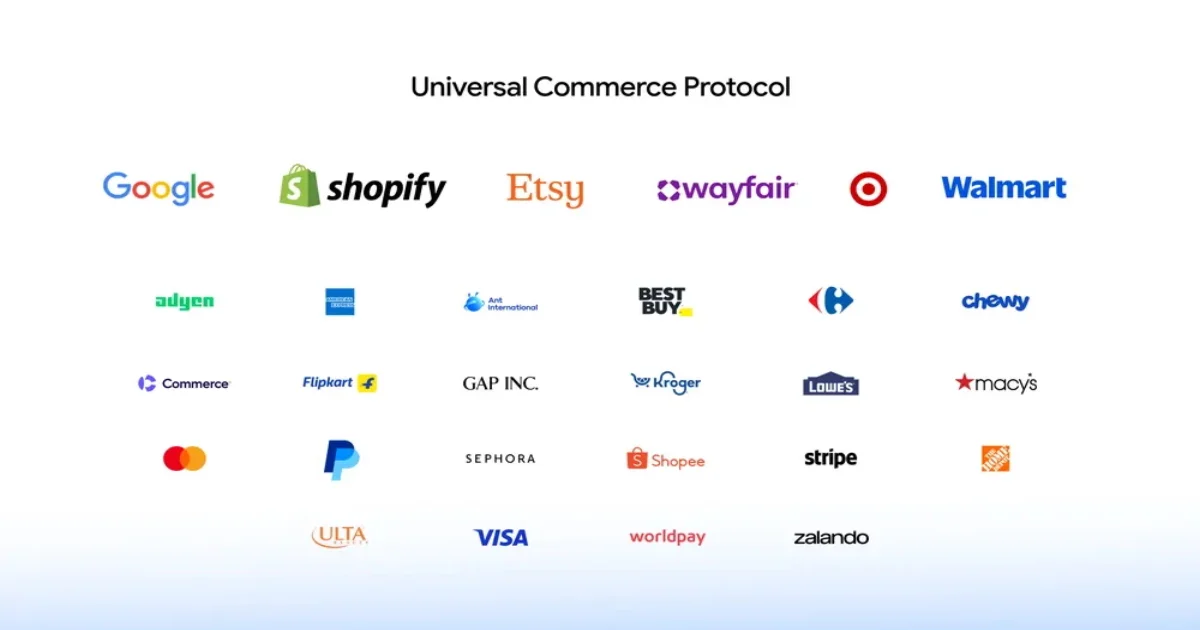
Source: www.geekwire.com
Key Takeaways
- Google announces UCP with over 20 partners including Walmart and Shopify, while Amazon is notably absent
- An "anti-Amazon coalition" may be forming as Amazon takes a defensive stance with Perplexity lawsuit and blocking external AI bots
- E-commerce operators should monitor both camps and prepare for multi-agent compatibility
Google Announces Universal Commerce Protocol, Amazon Absent

Google makes a big move into agentic commerce, raising questions about Amazon's retail dominance

Google is making a big push into AI-powered shopping with the release of Universal Commerce Protocol (UCP), a new open technical standard that has backing from major retailers and payment players. Notably, one e-commerce giant is not included.
On January 11, 2026, Google announced the "Universal Commerce Protocol (UCP)" at National Retail Federation (NRF) 2026, a standard for AI agent-powered shopping. CEO Sundar Pichai took the stage to reveal that this open standard was developed with over 20 partners including Walmart, Shopify, Target, Wayfair, Etsy, and payment players Visa, Mastercard, and Stripe.
Notably, Amazon, the world's largest e-commerce platform, is not included in this partner list. This "absence" may significantly influence the power dynamics of the agentic commerce era.
Background and Industry Trends
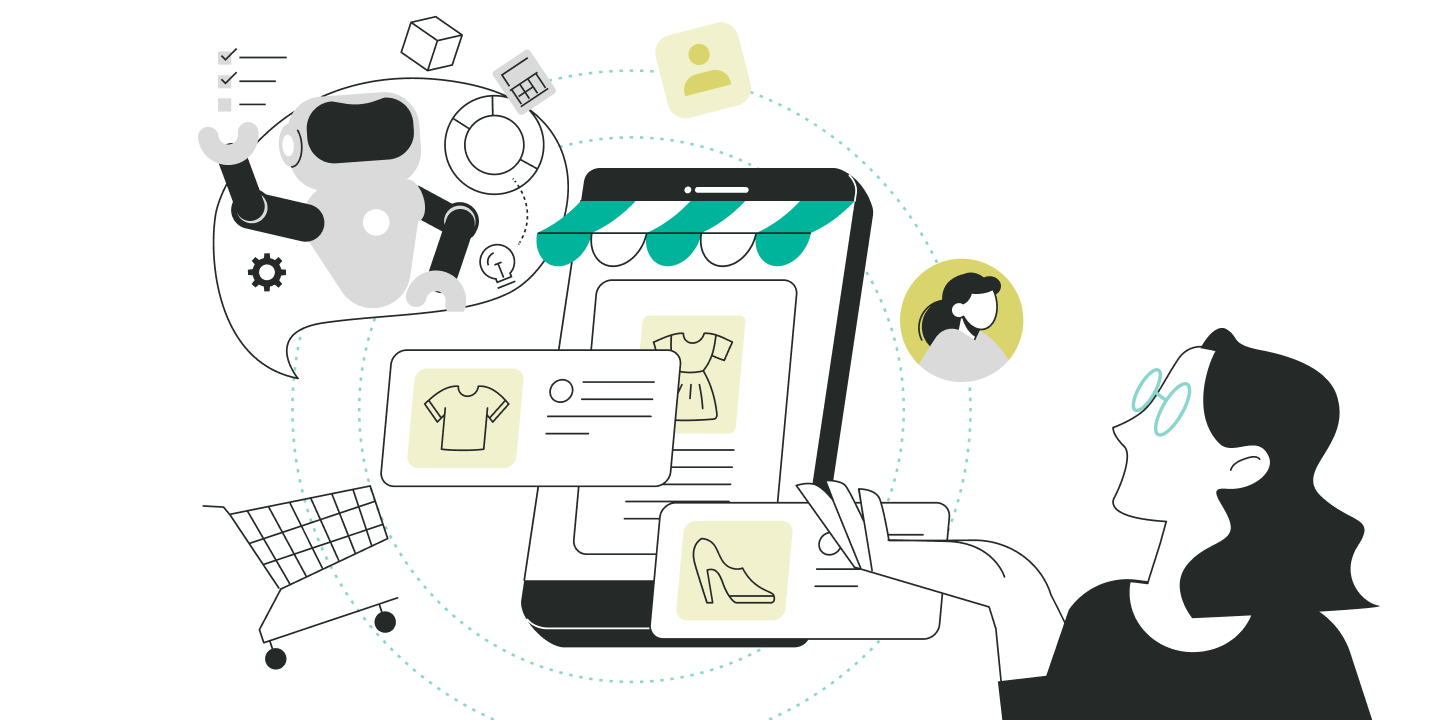
Agentic commerce refers to a new shopping paradigm where AI agents automatically perform product searches, purchases, and delivery arrangements on behalf of consumers. According to McKinsey's forecast, this could become a $1 trillion market in US retail by 2030.
In September 2025, OpenAI announced Instant Checkout, enabling product purchases within ChatGPT. Microsoft also announced Copilot Checkout, as major tech companies rush into the AI shopping market. Amid this, Google is attempting to take the lead by proposing an industry-standard protocol.
UCP's Technical Features and the Formation of an "Anti-Amazon Coalition"
UCP provides a common language for AI agents to operate seamlessly across different platforms. According to Google's official blog, the main features are:
Technical Features:
- Compatibility with Agent2Agent (A2A), Agent Payments Protocol (AP2), and Model Context Protocol (MCP)
- Covers the entire purchase process from product discovery to purchase and after-sales support
- Easy integration with existing retail infrastructure
Partner Companies:
- Co-developers: Shopify, Etsy, Wayfair, Target, Walmart
- Supporting companies: Adyen, American Express, Best Buy, Flipkart, Macy's, Mastercard, Stripe, The Home Depot, Visa, Zalando
- Retailers participating at launch: Lowe's, Michaels, Poshmark, Reebok
Looking at this lineup, nearly all major retailers competing with Amazon are covered. Walmart's incoming CEO John Furner stated, "The transition from traditional web or app search to agent-led commerce represents the next great evolution in retail," taking the stage jointly with Google's Pichai.
Amazon's Defensive Strategy
Meanwhile, Amazon is taking a defensive stance toward external AI agents.
Perplexity Lawsuit (November 2025): Amazon sued AI search startup Perplexity in November 2025. Regarding Perplexity's shopping agent Comet's ability to make purchases on Amazon, the company claims it "disguises itself as Google Chrome browser and accesses without identifying as an agent."
Blocking External AI: Amazon has blocked 47 AI bots, preventing data scraping by external AI crawlers. This is said to be a measure to protect the company's $56 billion advertising business. Since AI agents don't see ads, when users purchase via AI, advertising revenue is lost.
Possibility of Selective Partnerships: However, Amazon CEO Andy Jassy stated he would "consider partnerships with external agents in the future," suggesting it's not a completely closed approach. He cited conditions including "personalization, reflecting purchase history, accurate delivery predictions, and accurate pricing," criticizing current AI agents for not meeting these standards.
Impact and Implications for E-commerce Operators
This shift in power dynamics forces important strategic decisions for e-commerce operators.
Short-term Response (First Half of 2026):
- Adapt to new data attributes in Google Merchant Center
- Prepare for UCP compliance (Shopify users may get automatic support)
- Establish AI agent response policies for your own site
Medium to Long-term Strategy:
- Multi-agent support: Flexible system design compatible with both Google (UCP) and OpenAI (ACP)
- Reconsider Amazon dependency: Consider strengthening non-Amazon channels (DTC, other marketplaces)
- Leverage customer data: Organize data to provide accurate information to AI agents
Important Note: Google's official announcement clearly states that "merchants remain the Merchant of Record and fully retain their customer relationships, data, and post-purchase experience." There's no need to worry about losing customers to platforms for now.
Summary
Google's UCP announcement can be seen as the opening shot of the "standards war" in the agentic commerce era. While an "anti-Amazon coalition" of major retailers including Walmart, Shopify, and Target is forming, Amazon is taking a defensive strategy to protect its own ecosystem.
2026 will be the year when competition intensifies over which AI agent becomes the default for shopping. E-commerce operators should monitor developments in both camps while preparing for multi-agent compatibility. The next point of attention is whether Amazon will join UCP or announce its own agentic commerce protocol.
Reference Links
- Google Official: New tech and tools for retailers to succeed in an agentic shopping era
- Sundar Pichai NRF 2026 Remarks
- TechCrunch: Google announces a new protocol to facilitate commerce using AI agents
- Walmart Official: Walmart and Google Turn AI Discovery Into Effortless Shopping Experiences
- Retail Dive: Amazon sues Perplexity over AI shopping agents
- Modern Retail: Why the AI shopping agent wars will heat up in 2026
Related Articles
Google Announces Universal Commerce Protocol (UCP), Forms Major Coalition for Agentic Commerce Standardization
Google unveiled UCP at NRF 2026, an open standard co-developed with Shopify, Walmart, and 20+ partners to standardize AI agent-powered shopping experiences.
The AI Commerce Three-Way Battle: Google, Amazon, and OpenAI Clash Over the Next-Gen E-Commerce Market
Google, Amazon, and OpenAI are competing with different approaches in the AI commerce market. McKinsey predicts a $3-5 trillion market opportunity by 2030. E-commerce businesses need to prepare for multi-protocol support.
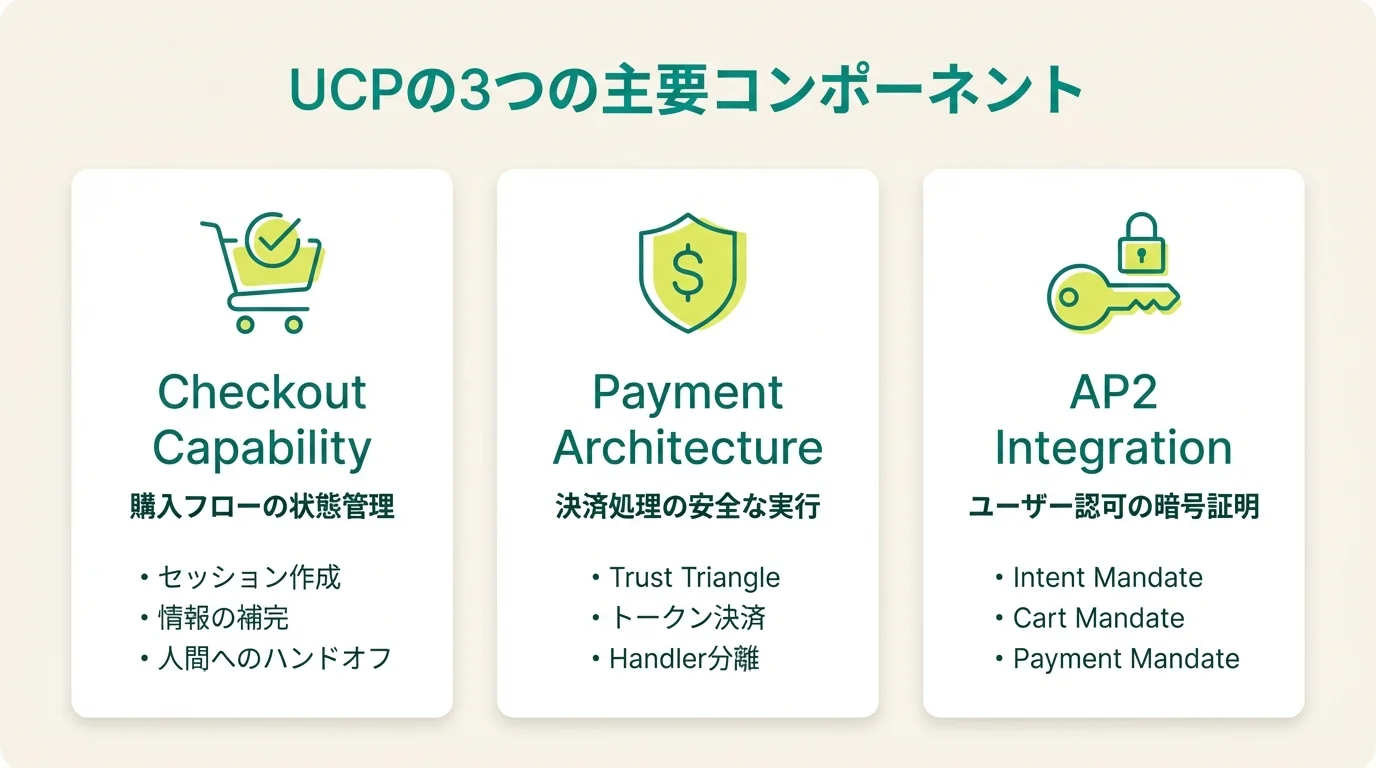
Understanding UCP Technical Specifications: How AI Agents Purchase Products
A deep dive into the technical architecture of Google's Universal Commerce Protocol (UCP). Learn about checkout state transitions, the Trust Triangle payment model, and AP2 mandates for conditional automatic purchases.
Tags
Share this post