
EC & AI Commerce News Digest (January 14, 2026)

Akihiro Suzuki
Twitter
Source: ico.org.uk
Key Takeaways
- UK ICO warns about data protection for AI shopping agents, expects widespread adoption within 5 years
- US holiday e-commerce spending reaches $257.8B, AI-driven traffic up 693% YoY
- JD Sports launches AI commerce on ChatGPT, Copilot, and Gemini in the US
Today's Headlines
UK ICO Warns About Data Protection for AI Shopping Agents

AI'll get that! Agentic commerce could signal the dawn of personal shopping 'AI-gents'

A new report from the UK Information Commissioner's Office explains how agentic AI could transform our lives, particularly personal shopping AI assistants that may emerge within five years
On January 14, the UK Information Commissioner's Office (ICO) released a new report on the impact of agentic AI on personal data, warning that stronger data protection measures are essential as AI agents become more prevalent in shopping.
According to the ICO report, personal AI agents are expected to be able to "make purchasing decisions, book flights, and manage household finances independently" within five years. Shopping AI will automatically handle budget checks, seasonal sales, and price negotiations, but will also need to process large amounts of personal data.
The ICO emphasized that "while agentic AI will enable decision-making, interaction with the environment, and real-time problem solving, safe management of personal information is key to building public trust and enabling safe AI adoption." The agency is urging businesses to strengthen their data protection foundations before deploying AI agents.
This warning comes amid advances in agentic commerce infrastructure, including Google's Universal Commerce Protocol (UCP) announced last week, highlighting that balancing technological innovation with privacy protection will be a critical challenge going forward.
US Holiday E-Commerce Spending Reaches $257.8B, AI Contribution Stands Out

US e-commerce spend reached nearly $258B over the holidays
US online commerce during the holiday season reached record levels
According to the latest Adobe Analytics data, US online spending during the holiday season from November 1 to December 31, 2025 reached $257.8 billion, a 6.8% increase year-over-year.
The contribution of generative AI tools is particularly noteworthy. AI-powered shopping experiences drove a 693.4% increase in traffic to retail sites compared to the previous year. This is attributed to AI search engines like ChatGPT handling everything from product discovery to direct checkout.
Industry analysts are calling "direct checkout from AI-based search the biggest online shopping innovation in the past decade," indicating a shift from brand-driven search to conversational, intent-based search.
This growth supports the possibility that 2026 will be the inaugural year of agentic commerce. Visa predicts that "by the 2026 holiday season, millions of consumers will be completing holiday purchases using AI agents."
Agentic Commerce
Gartner Predicts 40% of Enterprise Apps Will Feature AI Agents by End of 2026
Gartner Predicts 40% of Enterprise Apps Will Feature Task-Specific AI Agents by 2026
Research firm Gartner's forecast on enterprise AI agent adoption
Research firm Gartner predicts that 40% of enterprise applications will feature task-specific AI agents by the end of 2026, up significantly from less than 5% in 2025.
Gartner analyst Anushree Verma stated, "AI agents are evolving rapidly, transitioning from task-specific to agentic ecosystems. This shift will transform enterprise applications from tools that support individual productivity to platforms that enable seamless autonomous collaboration and dynamic workflow orchestration."
Looking further ahead, Gartner predicts that in the best-case scenario, agentic AI could generate approximately 30% of enterprise application software revenue (over $450 billion) by 2035, up from 2% in 2025.
However, Gartner also predicts that more than 40% of agentic AI projects will be canceled by the end of 2027, citing increased costs, unclear business value, and inadequate risk management as reasons. The firm recommends that "at this early stage, agentic AI should only be pursued when it provides clear value or ROI."
AI Shopping Agent Wars Heat Up
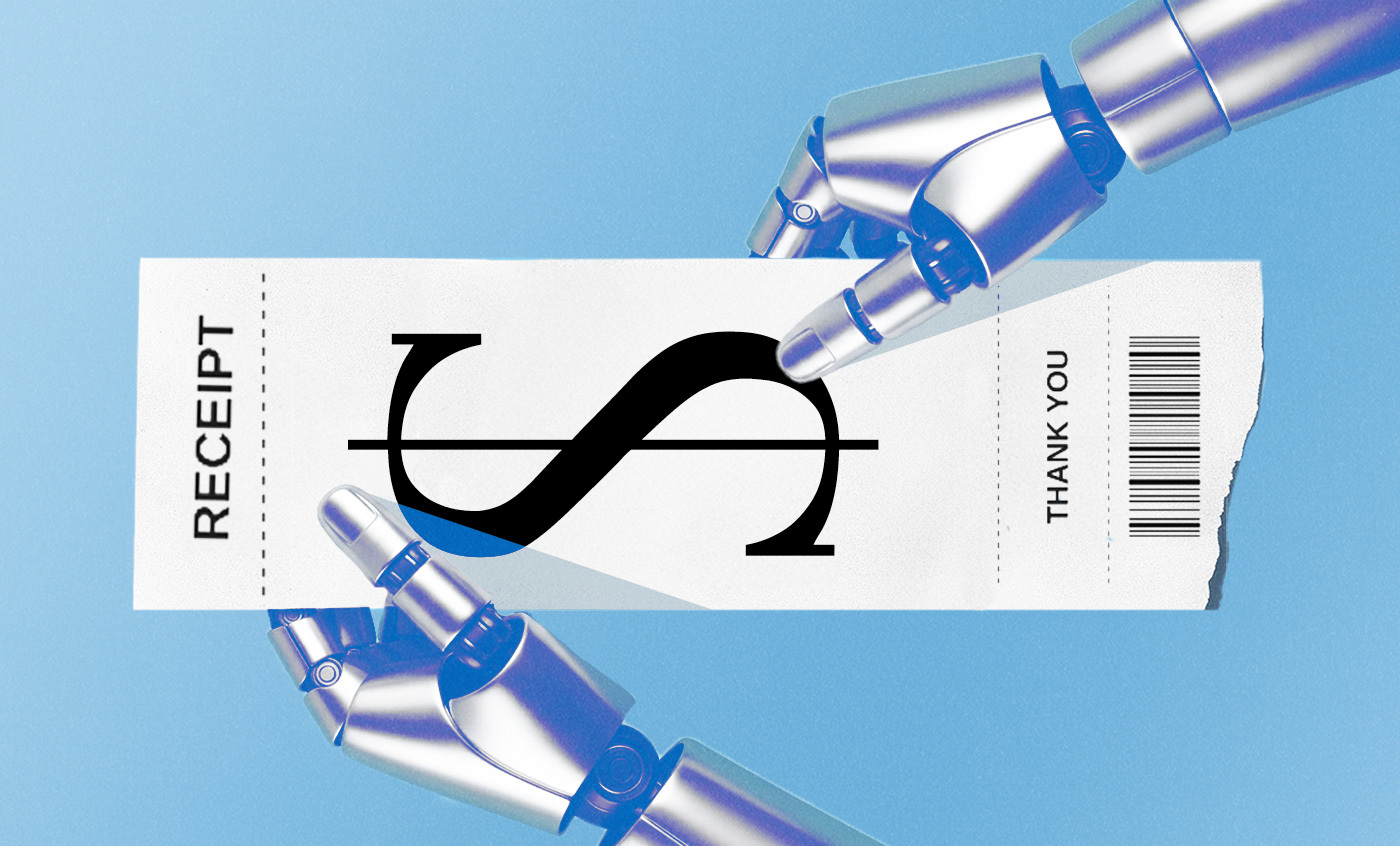
Why the AI shopping agent wars will heat up in 2026
As retailers and tech giants compete to build AI shopping agents, 2026 will be a crucial year to see whether consumers embrace these tools
2026 is shaping up to be the year when retailers and tech giants compete fiercely to build AI shopping agents. Major players like Amazon, OpenAI, and Perplexity are vying for the position of default shopping interface.
Amazon has added automatic purchasing capabilities to its Rufus assistant, OpenAI has integrated checkout functionality into ChatGPT, and Perplexity has launched its own AI shopping browser. Currently, ChatGPT sees about 50 million shopping queries per day, though this represents only 2% of total queries.
The key to success lies in AI agents gaining access to more detailed product data and earning consumer trust in transactions. However, current product catalogs lack the detailed context that AI agents need to make accurate recommendations.
Consumer adoption rates remain low, with privacy concerns limiting willingness to complete purchases through third-party agents. Amazon's dominance and established user trust make disrupting incumbent players difficult despite innovations from competitors.
AI x Brand Strategy
Brands Now Have to Convince AI

Brands Now Have To Convince AI They're Awesome So AI Will Convince You
Brands used to have to convince the wage earner or household purchasing decision maker. Now they have to convince AI. This is an entirely new game
According to a Forbes article, while brands have traditionally focused on persuading household decision-makers directly, the rise of agentic commerce is fundamentally changing this dynamic. Now, brands must first convince AI, which then recommends products to consumers - a new form of marketing.
AI shopping agents learn user preferences and automatically handle budgets, sale information, and price negotiations. For brands, this means "AIO (AI Optimization)" is becoming more important than SEO. Instead of traditional advertising and displays, brands need to provide structured data and rich contextual information so AI can accurately understand products and recommend them in appropriate situations.
Mesh CEO Bam Azizi predicts that "the real growth engine for agentic commerce is B2B applications, particularly micropayment processing, rather than consumer shopping," stating that AI agents will execute thousands of fast, small transactions via API calls and cross-border services.
AI Commerce Tools
Spangle AI Raises $15M, Reaches $100M Valuation

Spangle Raises $15 Million Series A
AI-powered e-commerce software provider achieves $100M valuation in latest funding round
AI e-commerce startup Spangle AI, founded by former Amazon executives, announced on January 8 that it raised $15M in Series A funding, reaching a $100M valuation. NewRoad Capital Partners led the round, with participation from Madrona, DNX Ventures, and Streamlined Ventures. Total funding raised now stands at $21M.
Spangle was founded in 2024 by Maju Kuruvilla, former CEO and CTO of Bolt, and Fei Wang, a Principal Engineer at Amazon who worked on Alexa. The company's system leverages cutting-edge generative AI tools, focusing on intent and context (such as browsing, comparison shopping, or ready to purchase) rather than relying on user identity or history for personalization.
Since exiting stealth mode in March 2025, Spangle has acquired nine major enterprise customers, including fashion retailers REVOLVE, Alexander Wang, and Steve Madden, with combined online sales of approximately $3.8 billion.
Kuruvilla told TechCrunch that brands using Spangle are seeing approximately 50% increases in revenue per visit, 2x return on ad spend, and 15% increases in average order value. Spangle reports that traffic through its platform has grown by an average of 57% month-over-month, with revenue run rate quadrupling from Q3 to Q4 2025.
The investment will be used to improve AI models and hire engineers.
SAP Announces "Retail Intelligence" AI Solution for Retailers

SAP Builds AI Into the Core of Retail at NRF 2026
At NRF 2026, SAP announced a new generation of AI-enhanced retail innovations for an environment where AI is no longer optional
At NRF 2026 in January, SAP announced "Retail Intelligence," a solution designed specifically for retailers and D2C businesses. The solution is expected to be generally available in the first half of 2026.
Powered by SAP Business Data Cloud, the solution integrates real-time data from sales, inventory, customers, and suppliers to provide accurate demand and inventory planning. By leveraging AI-generated simulations, planners can predict outcomes and optimize inventory.
Key features include:
- Improved demand forecasting accuracy through real-time data integration and analysis
- Inventory optimization using AI-generated simulations
- Reduced manual planning and lower inventory costs
- Support for retailers' omnichannel expansion
SAP states that "AI is no longer optional for the retail industry, but has become an essential foundation," delivering a new generation of innovations that embed AI into the core of retail operations.
Retail Leaders Emphasize Importance of AI Recommendation Systems
Retail leaders see AI-powered recommendations redefining shopping in 2026
Retail industry leaders predict how AI recommendation systems will transform shopping experiences in 2026
Retail industry leaders predict that AI-powered recommendation systems will redefine shopping experiences in 2026. Several key trends are emerging.
Pinterest's Julie Towns noted that the company's multimodal visual search model is "outperforming major off-the-shelf models by more than 30 percentage points" and reported that their taste graph has expanded by more than 70% over two years.
Ogilvy's Griffin Smith explained that as AI agents begin to handle "the cognitive grunt work of comparing products, reviews, prices, and specifications," brands will need to optimize how they appear in agent recommendations.
INCRMNTL's CEO discussed AI-generated content feeds that blur the lines between entertainment and commerce, offering "products seamlessly embedded in personalized narratives."
However, despite technological advances, retail leaders emphasize that human creativity remains essential. The CEO of Made by Gather stated, "Human creativity and design create experiences that people remember."
Corporate News
JD Sports Launches AI Commerce in the US

US Consumers Will Soon Be Able to Shop From JD Sports Directly on ChatGPT, Copilot + Other AI Platforms
US consumers will soon be able to use AI platforms as a one-stop shop to find and purchase JD Sports products
UK-based sports fashion retailer JD Sports Fashion announced on January 12 the launch of "AI commerce" in the US market, enabling direct product search and purchase on major AI chatbots including ChatGPT, Microsoft Copilot, and Google Gemini. JD Sports becomes the first major retailer to adopt commercetools' Agentic Jumpstart solution and Stripe Agentic Commerce Suite (ACS).
JD Sports' largest market is the US, accounting for over 40% of sales, with more than 2,500 stores including JD, DTLR, Shoe Palace, and Hibbett. This initiative is positioned as a key pillar of the "Beyond Physical Retail" strategy. According to Adobe Express's 2025 survey, 60% of US consumers use AI while shopping, and JD Sports aims to capture this trend.
Akeneo Announces Winter Release for the Agentic AI Era

Akeneo Accelerates Commerce Velocity as Agentic AI Transforms Digital Engagement
Akeneo Winter Release features Digital Showroom, Stripe Agentic Commerce Suite integration, MCP Server integration, and Custom Components to lead the AI-driven economy
Product experience (PX) leader Akeneo announced its Winter Release on January 12. The release includes features aimed at accelerating "Commerce Velocity" in the agentic commerce era.
Key new features include Digital Showroom (transforming product information into live sales and collaboration environments), Stripe Agentic Commerce Suite integration (enabling product discovery, checkout, and payment by AI agents through a single integration), Native MCP Server (governance layer for product intelligence), and Custom Components (industry-specific interface extensions).
AWS x SAP Announce MCF and Buy with Prime Integration for S/4HANA

Amazon Multi-Channel Fulfillment and Buy with Prime Accelerators for SAP S/4HANA now available
Amazon MCF and Buy with Prime Accelerators for SAP S/4HANA enable SAP customers to leverage Amazon's fulfillment infrastructure for business growth and enhanced customer experience
Amazon Web Services (AWS) and SAP announced on January 12 the availability of Amazon Multi-Channel Fulfillment (MCF) and Buy with Prime Accelerators for SAP S/4HANA. This integration allows SAP customers to connect to Amazon's fulfillment infrastructure using their existing S/4HANA implementations.
Buy with Prime is a service that enables brands to offer Prime shipping and returns on their own sites, contributing to improved conversion rates and increased repeat usage. MCF is a third-party logistics option that allows use of Amazon's fulfillment network as a shared inventory pool.
Global E-Commerce Trends
Primark Sales Growth Slows Amid Consumer Demand Pressure
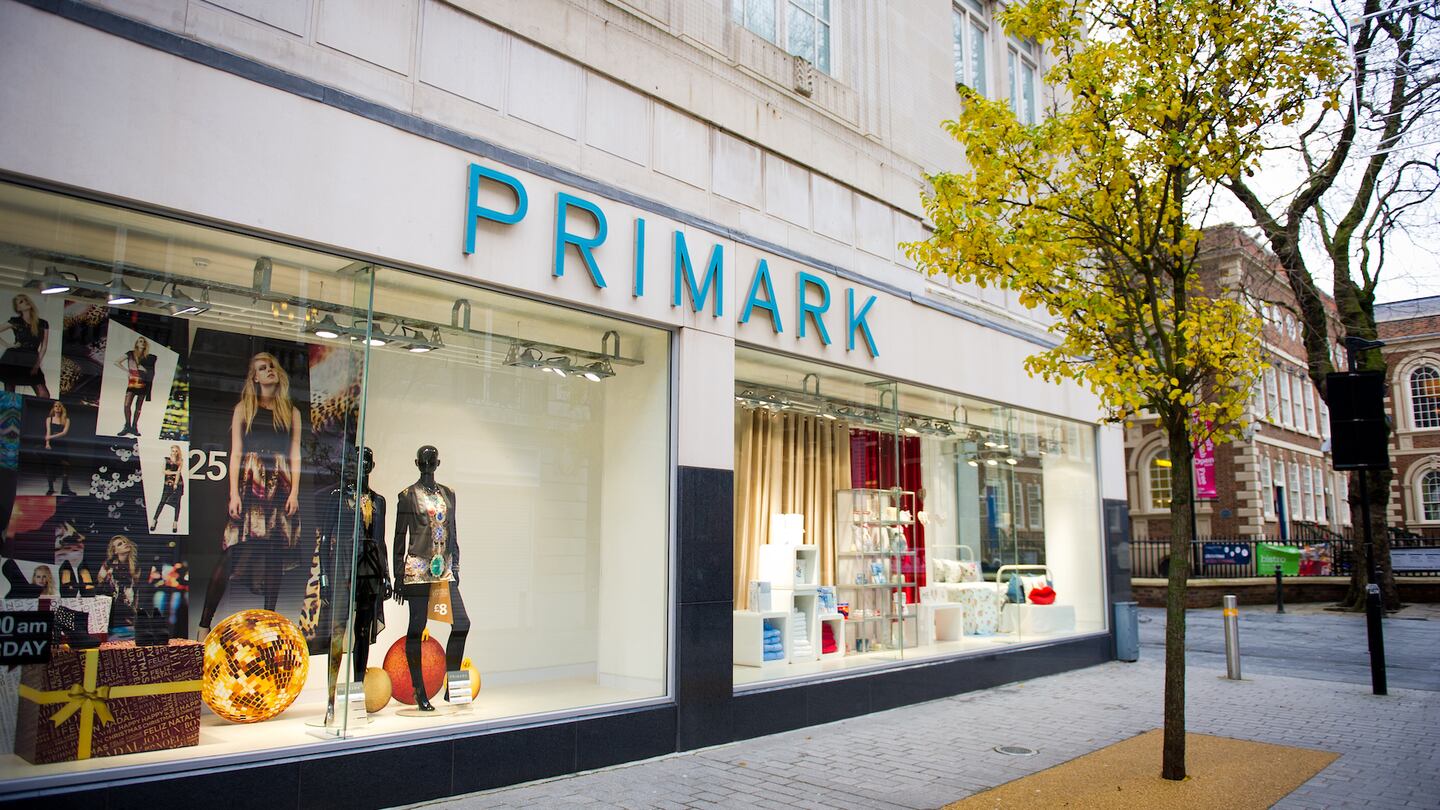
Primark Sales Slow as Demand Drops
Slowdown contributed to owner AB Foods warning that annual profits would decline as consumers in the US and Europe tighten spending
UK retailer Associated British Foods (ABF) reported that Primark sales increased 1% on a constant currency basis for the 16 weeks to January 3, 2026, but like-for-like sales declined 2.7%, revealing pressure on consumer demand.
In the UK market, Primark showed "encouraging" progress with sales growing approximately 3% and like-for-like sales up approximately 1.7%. This was achieved in a challenging apparel market, particularly during the Christmas period. The retailer gained market share in the UK through targeted actions to strengthen its customer proposition.
However, in Continental Europe, like-for-like sales declined 5.7% as consumer confidence remained weak and efforts to improve value and engagement are still in early stages. UK growth was offset by European softness and "volatility" in the US retail environment.
The ongoing store expansion program contributed approximately 4% to sales growth, including the opening of the first franchise store in Kuwait.
To manage inventory levels in the tough trading environment, Primark increased markdowns, which pressured profitability. Overall, Primark's sales growth for the period fell below earlier expectations, and the retailer now expects first-half 2026 sales growth to be in the low single digits.
Zippin Expands Checkout-Free Stores at Melbourne Cricket Ground
Zippin-powered checkout-free stores at Melbourne Cricket Ground
Two new Zippin-powered checkout-free stores opened at Melbourne Cricket Ground on Boxing Day
On Boxing Day, two new Zippin-powered checkout-free stores opened at Melbourne Cricket Ground (MCG), bringing the total number of such stores at the venue to four.
Of the record 94,199 spectators on day one of the Boxing Day Test, approximately 28,000 shoppers used the Zippin-powered checkout-free stores. This demonstrates high demand for checkout-free technology at stadiums.
MCG Express represents a significant milestone as Australia's first Zippin site, introducing pioneering walk-in, walk-out technology to the Melbourne Cricket Ground. The first two MCG Express outlets opened in the Ponsford Stand at the City End of the stadium.
Stuart Fox, CEO of Melbourne Cricket Club (MCC), explained, "All visitors need to do is tap, shop, and go. If they pick up an item and change their mind, they just put it back and won't be charged. It's a really cool concept... because it gets them back to their seats faster."
Zippin's checkout-free technology is used at numerous stadiums, including Empower Field at Mile High (Denver Broncos), Gainbridge Fieldhouse (Indiana Pacers), and Allegiant Stadium (Las Vegas Raiders).
Regulatory Developments
India Asks Quick-Commerce Firms to Drop 10-Minute Delivery Promise

India reportedly tells quick-commerce firms to drop 10-minute delivery promise
India's labor ministry is pressuring the country's rapidly growing quick-commerce sector to prioritize gig worker safety and health
According to TechCrunch, India's Ministry of Labor is pressuring the country's rapidly growing quick-commerce sector to prioritize gig worker safety and health. Specifically, it is reported that the ministry is asking major players such as Blinkit, Zepto, and Swiggy Instamart to drop their "10-minute delivery" promises.
India's quick-commerce market is expected to reach over $40 billion by 2029, experiencing rapid growth. However, concerns have been raised that extremely short delivery time promises put excessive pressure on delivery workers and increase safety risks.
This move, separate from discussions about agentic commerce and AI shopping, highlights the challenge of balancing "speed" and "worker safety" that the entire e-commerce industry faces. Cases where regulators actively intervene, as in India, may influence quick-commerce operators in other countries.
Summary
On January 14, 2026, the EC and AI commerce industry clearly demonstrated a transition to a new era marked by the practical application of agentic commerce and the emergence of associated regulatory and privacy challenges.
The UK ICO's warning reaffirms the importance of data protection and privacy management against the rapid pace of technological innovation. Meanwhile, the record-breaking holiday e-commerce spending and the high contribution of AI tools indicate that consumers are increasingly embracing AI-powered shopping experiences.
On the investment front, funding continues to flow into agentic commerce infrastructure, as exemplified by Spangle AI's $15M raise. Major enterprise AI product launches, such as SAP's Retail Intelligence solution, Akeneo's Winter Release, and AWS x SAP's fulfillment integration, are also accelerating.
Notably, JD Sports launched "AI commerce" enabling direct purchases on ChatGPT, Copilot, and Gemini in the US. As the first major retailer to adopt commercetools and Stripe ACS, this signals that agentic commerce has entered a concrete implementation phase.
Changes are also visible in brand strategy. As Forbes points out, brands must now convince "AI," not just consumers, requiring a shift from SEO to AIO (AI Optimization).
On the regulatory front, India's government asking quick-commerce companies to withdraw 10-minute delivery promises highlights the challenge of balancing "speed" with "worker safety."
According to Gartner's predictions, while 40% of enterprise apps will feature AI agents by the end of 2026, more than 40% of projects may also be canceled. This suggests that AI adoption is transitioning from a "trial and error phase" to a "selection phase."
Related Articles

What is Agentic Commerce? Explaining the New Era of AI-Powered Purchasing
Explore the full scope of Agentic Commerce. AI agents autonomously execute everything from product selection to payment on behalf of users. Discover shocking data including 4,700% increase in AI-driven traffic and 20% of Walmart's traffic from ChatGPT, along with three essential preparation steps companies should start immediately.

2026: The Year AI Agents Redefine Retail, Say Industry Experts
In 2026, AI agents evolve from 'tools' to 'decision-makers' in retail. Gartner predicts 40% of enterprise apps will feature AI agents. E-commerce businesses must start preparing data infrastructure and agent compatibility now.

What is Agentic Commerce According to PwC? The Arrival of AI-Powered Purchasing and Its Business Impact
PwC defines agentic commerce as 'a new form of shopping where AI agents purchase on behalf of consumers.' GenAI-driven traffic surged 1,200% in just 6 months.
Tags
Share this post