2026: The Year AI Agents Redefine Retail, Say Industry Experts

Akihiro Suzuki
Twitter
Source: www.emarketer.com
Key Takeaways
- In 2026, AI agents evolve from "tools" to "decision-makers" in retail
- Gartner predicts 40% of enterprise apps will feature AI agents (up from less than 5% in 2025)
- E-commerce businesses must start preparing "data infrastructure" and "agent compatibility" now
AI Agents Are Transforming Retail

How agentic AI will reshape shopping in 2026

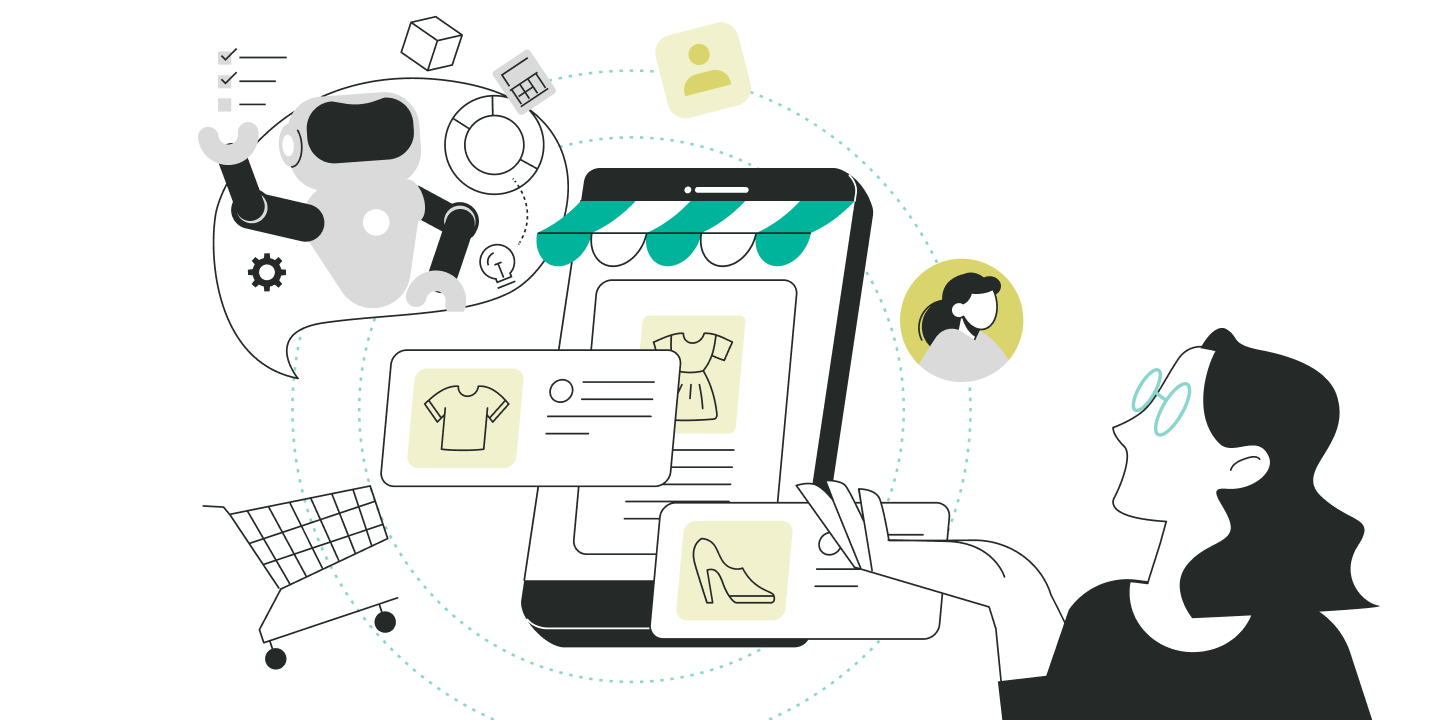
Agentic AI is reshaping commerce by removing friction from the middle of the funnel. As shoppers delegate comparison, evaluation, and planning to AI agents, the journey from intent to action is accelerating.
2026 marks a turning point where AI agents fundamentally transform how retail businesses operate. AI is no longer just an analytics tool—it's beginning to function as an autonomous "digital employee" that makes judgments and takes action independently.
According to EMARKETER, 38% of consumers are already using AI for shopping, and 80% indicate they plan to increase usage going forward. Consumers are beginning to delegate "tedious tasks" like price comparisons, review verification, and return policy checks to AI agents.
Background and Industry Trends
Why "Agentic AI" Now?
Traditional AI reported to humans about "what's happening." But in 2026, that role is changing dramatically. SiliconANGLE reports that "AI is becoming the operating system for retail."
Kaare Wesnaes, Head of Innovation at Ogilvy North America, predicts: "Consumers won't open 10 tabs or read 20 reviews anymore. They'll ask AI agents to 'understand my needs, research the market, and consider price, delivery, sustainability, return policies, and my purchase history.'"
Three Parallel Universes
Currently, three "parallel universes" are forming in the retail industry:
- Discovery Commerce: Product discovery through TikTok, Instagram, and YouTube
- Retail Media: Platforms like Amazon, Walmart, Instacart, and Target
- Agentic Commerce: Shopping via AI agents
Each has its own KPIs, operational rules, and organizational owners. E-commerce businesses need to address all three.
Current State and Predictions for the AI Agent Market
Gartner's Striking Prediction
Gartner predicts that "by the end of 2026, 40% of enterprise applications will feature task-specific AI agents." Considering this was less than 5% at the beginning of 2025, this rapid growth is remarkable.
Gartner analyst Anushree Verma states: "AI agents will rapidly evolve from task- and application-specific to agentic ecosystems. Enterprise applications will transform from tools supporting individual productivity to platforms enabling seamless autonomous collaboration and dynamic workflow orchestration."
Major Player Developments
According to Modern Retail, intense competition has begun in the AI shopping agent market:
- Amazon: While blocking external agents, expanding its Rufus assistant with auto-purchase capabilities
- OpenAI/ChatGPT: Partnering with Target, Instacart, and DoorDash to enable direct checkout integration
- Perplexity: Launched AI shopping agent in late 2024
- Startups: Daydream (fashion-focused), Phia (price comparison), OneOff (celebrity recommendations), and more
Notably, about 2% of ChatGPT queries (approximately 50 million daily) are already shopping-related.
The Trust Challenge
However, complete trust hasn't been established yet. According to EMARKETER research, only 46% of consumers "fully trust" AI recommendations, and 89% verify information themselves before purchasing. 88% of consumers want clear source information, and 87% want verified reviews.
Impact and Applications for E-Commerce Businesses
Three Preparations to Start Immediately
1. Data Infrastructure Development
AI agents don't function well with catalog data built for traditional keyword search. They need detailed contextual information and structured metadata. It's urgent to increase product information granularity and organize it in a format AI can "understand."
2. Unified Data Orchestration
You need to provide consistent information across all channels where AI agents operate—marketplaces, social media, and your own site. Synchronizing prices, inventory, and product descriptions is essential.
3. Human-AI Role Division
AtData CEO Tom Burke points out: "Consumers won't browse anymore. They'll delegate." However, purchases involving identity (fashion, hobbies, etc.) will resist automation. "The head (rational judgment) gets automated quickly. The heart (emotional judgment) takes longer."
Risks to Watch
- Two-speed economy risk: Growing gap between companies investing in AI infrastructure and those that aren't
- Project cancellation risk: Gartner warns "over 40% of agentic AI projects will be canceled by end of 2027"
- Trust-building importance: Excessive automation may damage customer relationships
Conclusion
2026 is a turning point where AI agents evolve from retail "tools" to "infrastructure." Gartner's prediction of "40% of enterprise apps featuring AI agents" speaks to the scale of this transformation.
For e-commerce businesses, the key is to start preparing now. Data preparation, channel integration, and deciding "what to delegate to AI and what humans should handle"—these will determine competitiveness from 2026 onward.
As VML's Megan Hoppenjans points out, "Consumer behavior changes that used to take over 10 years are now happening in 12-24 months." There's no time to wait.
References
- How agentic AI will reshape shopping in 2026 - EMARKETER
- Why the AI shopping agent wars will heat up in 2026 - Modern Retail
- Gartner: 40% of Enterprise Apps Will Feature AI Agents by 2026
- Retail 2026: When AI becomes the operating system - SiliconANGLE
- 2026 Predictions: The Promises and Perils of AI - Retail TouchPoints
Related Articles

What is Agentic Commerce? Explaining the New Era of AI-Powered Purchasing
Explore the full scope of Agentic Commerce. AI agents autonomously execute everything from product selection to payment on behalf of users. Discover shocking data including 4,700% increase in AI-driven traffic and 20% of Walmart's traffic from ChatGPT, along with three essential preparation steps companies should start immediately.

Agentic AI Becomes Retail's 'Make-or-Break Battleground': Industry Leaders Sound Alarm at NRF 2026
At NRF 2026, SAP, Dunnhumby, and Mirakl emphasized the importance of agentic commerce. E-commerce businesses urgently need 'AI-friendly data design' and 'discoverability.' Projections show AI agents will mediate $900 billion to $1 trillion in the US retail market by 2030.

What is Agentic Commerce According to PwC? The Arrival of AI-Powered Purchasing and Its Business Impact
PwC defines agentic commerce as 'a new form of shopping where AI agents purchase on behalf of consumers.' GenAI-driven traffic surged 1,200% in just 6 months.
Tags
Share this post