
eBay's AI×EC Vision: Three Transformations in Authentication, Sustainability, and Development

Akihiro Suzuki
Twitter
Source: www.ecommercebytes.com
Key Takeaways
- eBay executives announce 3 key ways AI will impact ecommerce
- Over 10 million sellers use AI tools, generating 300+ million listings
- Developers use Claude Code to reduce bug triage time from 2-3 days to 1-2 hours
eBay Announces Three Pillars of AI Adoption

eBay Identifies 3 Ways AI Will Impact Ecommerce

eBay executives wrote about AI trends to watch in 2026 and identified 3 specific ways AI will impact ecommerce
On January 18, eBay executives shared their views on three significant ways AI will impact ecommerce. The Global Product Head, Chief Sustainability Officer, and VP each outlined specific transformation points from their respective areas of expertise.
Background and Industry Trends
In the ecommerce industry, AI adoption is transitioning from experimental to full-scale implementation. Particularly from late 2025 through 2026, the business application of generative AI tools has accelerated, with eBay emerging as a pioneering example.
eBay currently provides generative AI tools to over 10 million sellers, with more than 300 million listings generated to date. This scale demonstrates that AI is no longer exclusive to major tech companies but has permeated to small and medium-sized sellers as well.
Three Transformation Points
From Static Authentication to Continuous Verification
Global Product Head Avritti Khandurie Mittal points out that the fundamental approach to ensuring trust will change.
"We're moving from static authentication to continuous verification. The era is coming when AI will simultaneously evaluate identity, intent, product authenticity, and regulatory compliance in real-time."
Traditional authentication was performed at a single point before transactions, but going forward, AI will conduct continuous verification throughout the entire transaction process. This could more effectively prevent counterfeit goods and fraudulent transactions.
Sustainability and Circular Economy
Chief Sustainability Officer Renée Morin stated that AI will promote circular commerce.
Through conversational agents and image recognition technology, consumers will more easily find pre-owned alternatives when they intend to purchase new products. She also emphasized that AI-powered sorting and identification of recyclable materials before disposal could be a "game changer."
eBay has always been a leader in the resale market, and AI adoption in this area further strengthens the company's competitive advantage.
Dramatic Improvement in Development Productivity
VP Senthil Padmanabhan reported on the transformation of development processes through AI adoption.
eBay developers are using Claude Code to reduce bug triage time from the previous 2-3 days to approximately 1-2 hours. By understanding business context and corporate history, AI can significantly accelerate product development and debugging processes.
This improvement directly leads to shorter release cycles for new features and improved service quality.
Impact and Applications for E-Commerce Businesses
Implications for Small and Medium Sellers
eBay's example shows that AI tools benefit not only large enterprises but also small and medium-sized sellers. The fact that 10 million sellers already use AI tools demonstrates that barriers to entry are lowering.
Specific applications include:
- Listing creation efficiency: Auto-generation of product descriptions and titles
- Price optimization: Dynamic pricing based on market trends
- Customer support: Automated inquiry handling
Implications for Development and Operations Teams
The reduction in bug triage time through Claude Code (2-3 days → 1-2 hours) demonstrates the value of introducing AI into your own development processes. Effects can be expected particularly in these areas:
- Automated code review
- Test case generation
- Documentation creation
Investment in Trust and Authentication
To prepare for the era of continuous verification, e-commerce businesses should consider:
- Improving product data quality (formatting for easier AI verification)
- Exploring AI for authentication and fraud detection
- Enhancing fraud detection systems
Summary
The three transformation points eBay identified—continuous verification, sustainability, and development efficiency—all point to AI solving fundamental challenges in ecommerce.
Particularly noteworthy is that these are not conceptual future visions but are already implemented at a scale of 10 million sellers and 300 million listings. The development efficiency gains through Claude Code have also been demonstrated with concrete numbers (2-3 days → 1-2 hours).
Going forward, these AI applications are likely to spread beyond eBay to other platforms, becoming industry standards. E-commerce businesses should consider AI adoption ahead of competitors.
Related Articles

What is Agentic Commerce? Explaining the New Era of AI-Powered Purchasing
Explore the full scope of Agentic Commerce. AI agents autonomously execute everything from product selection to payment on behalf of users. Discover shocking data including 4,700% increase in AI-driven traffic and 20% of Walmart's traffic from ChatGPT, along with three essential preparation steps companies should start immediately.
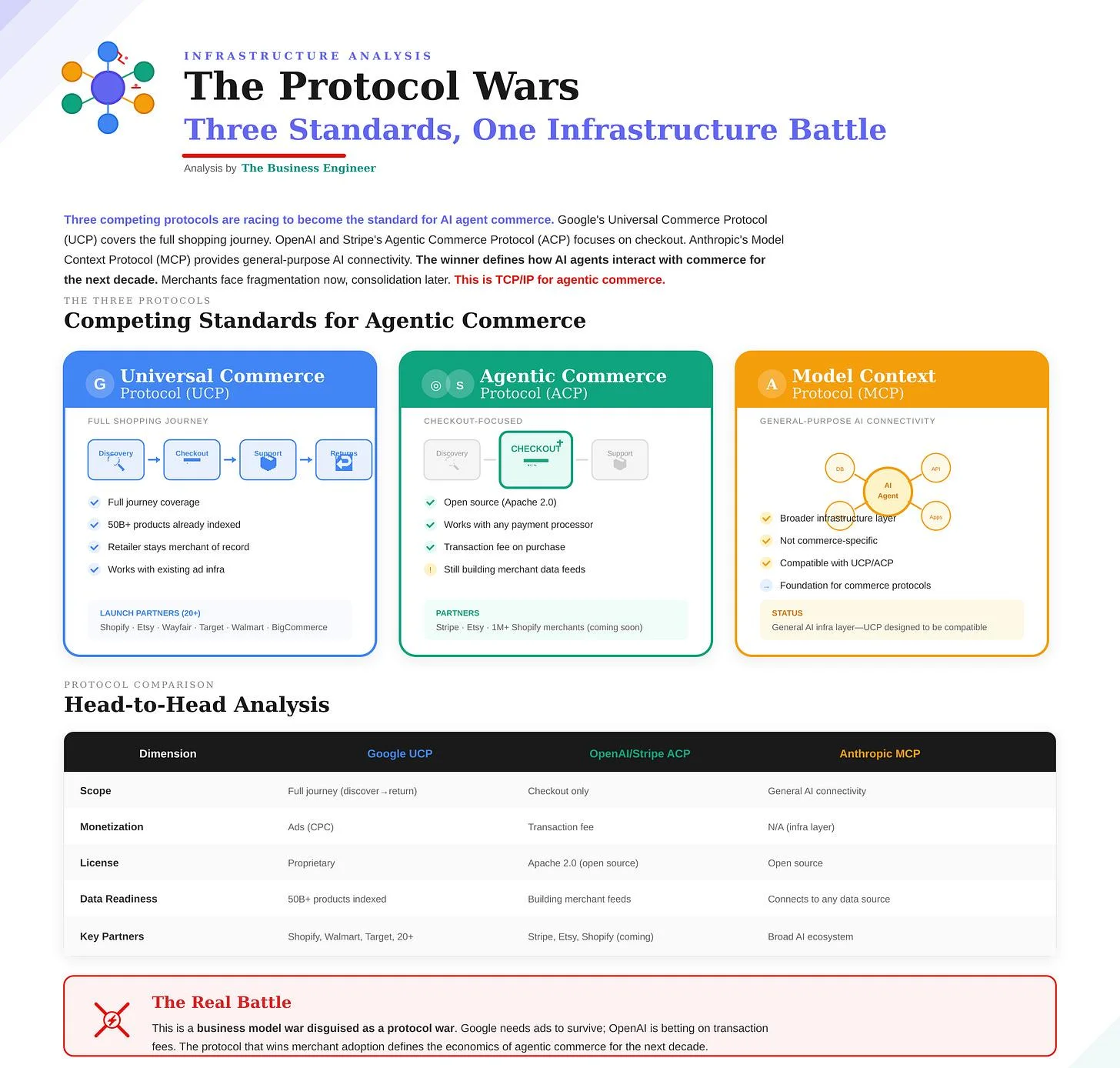
Microsoft Copilot Checkout Arrives: AI Commerce Market Now Has Four Major Players
Google, OpenAI, Microsoft, and Perplexity compete for AI commerce dominance with different protocols and revenue models. Here's what e-commerce businesses need to know about each player's strategy.

EC & AI Commerce News Digest (January 19, 2026)
eBay announces 3 ways AI will impact ecommerce, JD launches buyout of Deppon Logistics at 35% premium for $544M, China's Spring Festival e-commerce accelerates cross-border trade reaching 2.75 trillion yuan in 2025.
Tags
Share this post