
Agentic AI Becomes Retail's 'Make-or-Break Battleground': Industry Leaders Sound Alarm at NRF 2026

Akihiro Suzuki
Twitter
Source: www.thedrum.com
Key Takeaways
- At NRF 2026, SAP, Dunnhumby, and Mirakl emphasized the critical importance of agentic commerce
- Projections show AI agents will mediate $900 billion to $1 trillion in the US retail market by 2030
- E-commerce businesses urgently need "AI-friendly data design" and "discoverability"
NRF 2026 Reveals Industry Turning Point

How agentic AI is becoming retail's make-or-break battleground

Agentic AI emerges as the new competitive axis determining retail success or failure
In January 2026, at NRF 2026 (National Retail Federation Annual Conference) held in New York, agentic AI was featured as the most critical theme in the retail industry. Leaders from industry-leading companies including SAP, Dunnhumby, and Mirakl unanimously warned that "agentic commerce will become table stakes (the minimum requirement)."
According to McKinsey's forecast, $900 billion to $1 trillion worth of transactions will be mediated by AI agents in the US retail market by 2030. This figure indicates the reality that AI agent support is shifting from "nice to have" to "essential for survival."
Background and Industry Trends
Agentic commerce refers to a new purchasing format where AI agents search, compare, and purchase products on behalf of consumers. In traditional e-commerce, consumers searched for products through search engines or on-site search, but in agentic commerce, AI assistants like ChatGPT handle the entire purchasing process.
Salesforce research shows that AI already influences 20% of sales, and AI-adopting companies have achieved 7x sales growth compared to non-adopters. Furthermore, 58% of Gen Z and Millennials want to delegate price comparisons and optimal product recommendations to AI agents, showing that consumer readiness is steadily progressing.
Industry Leaders' Perspectives
SAP Reveals the Essence of "Data Utilization"
SAP Chief Marketing Officer Sarah Richter pointed out that the core of agentic AI lies in "data utilization." She stated, "When thinking about AI agents, it's all about data. How to activate vast amounts of data that are often siloed in real-time—that's what matters."
SAP announced multiple new features at NRF 2026. Notable is the "Storefront MCP Server," which transforms retailers' storefronts into AI-readable formats, enabling purchasing experiences through platforms like ChatGPT. This makes "channel-less commerce"—seamless transactions across both human and AI touchpoints—a reality.
Dunnhumby Warns of the Importance of "Human Judgment"
Dunnhumby's Eric Kerner offered an important perspective from a different angle. While stating that traditional retailers can maintain competitive advantage by combining physical store networks with data and experimentation, he cautioned against excessive enthusiasm for AI adoption.
He argued that "retailers with physical store infrastructure who can fuse digital and physical have an advantage," while also maintaining that the value of human judgment by category managers should be preserved. AI is merely a tool and doesn't replace human expertise—a realistic perspective.
Mirakl Points to "Discoverability" as the New Battleground
Mirakl's Head of Agentic Commerce Amelia Van Camp emphasized that discoverability will become a new competitive axis. Since AI agents collect data from multiple sources including Wikipedia, Reddit, and third-party sites, traditional SEO measures alone are insufficient.
The warning that "if you can't solve discoverability, ranking, and transaction problems, the real risk is extinction" is shocking content for many e-commerce businesses. According to Mirakl's analysis, nearly 60% of consumers have already started shopping with AI, and the time window for securing competitiveness is rapidly shrinking.
Impact on E-Commerce Businesses and Practical Applications
The perspectives shown at NRF 2026 clarify the measures e-commerce businesses should implement immediately.
First is "data structuring." AI agents judge products not by design but by data structure. Building infrastructure that can accurately provide product information, pricing, and inventory status in real-time becomes the top priority.
Next is "information design to be chosen by AI." In addition to traditional search engine optimization (SEO), exposure strategies to information sources that AI agents reference are needed. Product data standardization and external platform integration become important.
Furthermore is "omnichannel data integration." As SAP's Richter pointed out, building systems that can utilize siloed data in real-time becomes a source of competitive advantage. Companies that integrate online and offline customer data to provide consistent experiences will gain the upper hand.
Summary
The message that industry leaders uniformly delivered at NRF 2026 is clear. Agentic commerce is becoming a "requirement" in retail, just as online search was in the 2000s.
However, this doesn't negate the importance of retail fundamentals: price, promotion, and product. Rather, an era has arrived where only companies that deeply understand these elements and can correctly communicate them to AI agents will survive. The next 12-24 months will be a watershed moment determining whether many retailers can secure competitiveness.
References
- How agentic AI is becoming retail's make-or-break battleground - The Drum
- NRF 2026: SAP Builds AI Into the Core of Retail - SAP News Center
- NRF 2026: Powering growth in the agentic commerce era - Mirakl
- What is Agentic Commerce? - Mirakl
- Decoding the Future of Retail: Embracing AI Shopping Agents - AWS
Related Articles

Adobe Launches AI Agents and Commerce Optimizer: Automated E-Commerce Experience Optimization Goes Mainstream
Adobe launches general availability of AI agents for AEM and Commerce Optimizer. AI traffic conversions up 31% compared to traditional sources, changing the competitive landscape for e-commerce businesses. Generative AI content and automated A/B testing enable reduced operational costs and increased sales.
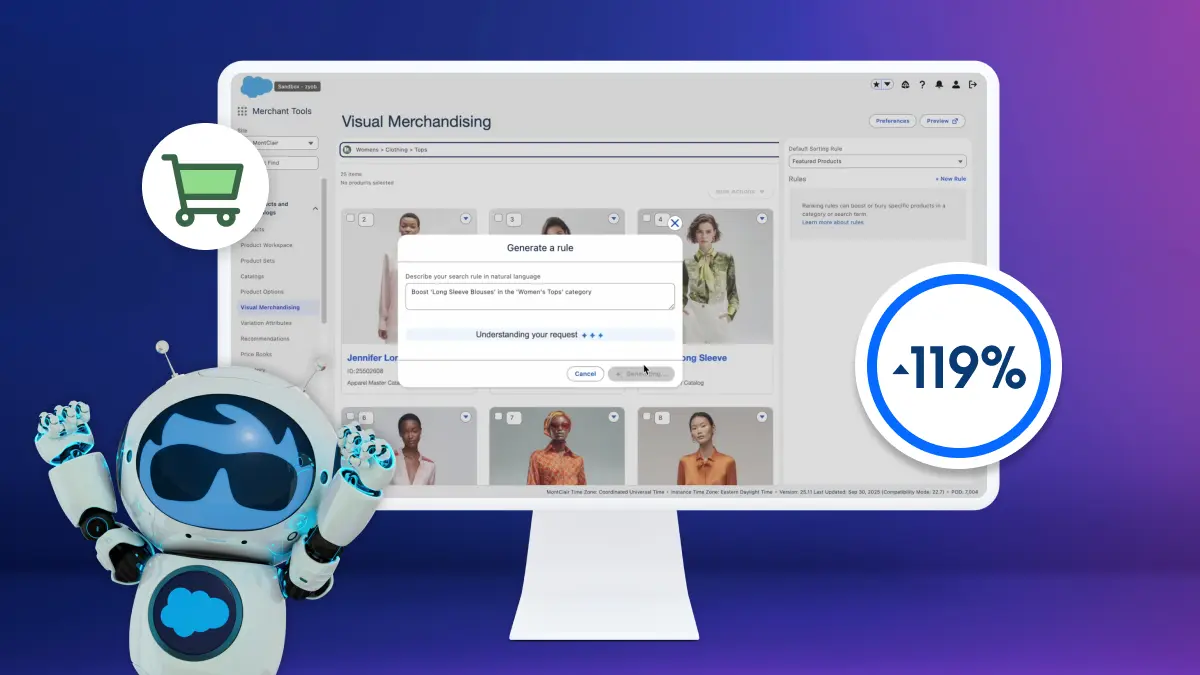
Salesforce Unveils Major Agentforce Commerce Updates with Two-Way AI Communication at NRF 2026
Salesforce announces new Agentforce Commerce features at NRF 2026, enabling two-way AI conversations via SMS, WhatsApp, and email. Companies using AI agents achieved 59% higher growth rates.

Microsoft Announces Copilot Checkout at NRF 2026, Enabling In-AI Purchases with Stripe, PayPal, and Shopify
Microsoft announces Copilot Checkout at NRF 2026, enabling purchases within AI conversations. Shopify merchants auto-enrolled. E-commerce businesses need early preparation for this new sales channel.
Tags
Share this post